State Key Laboratory of Ophthalmology, Zhongshan Ophthalmic Center, Sun Yat-sen University, Guangdong Provincial Key Laboratory of Ophthalmology and Visual Science, Guangzhou, Guangdong 510060, China.
Guangdong-Hongkong-Macau Institute of CNS Regeneration, Jinan University, Guangzhou, Guangdong 510632, China.
Zool Res. 2023 Jan 18;44(1):153-168. doi: 10.24272/j.issn.2095-8137.2022.254.
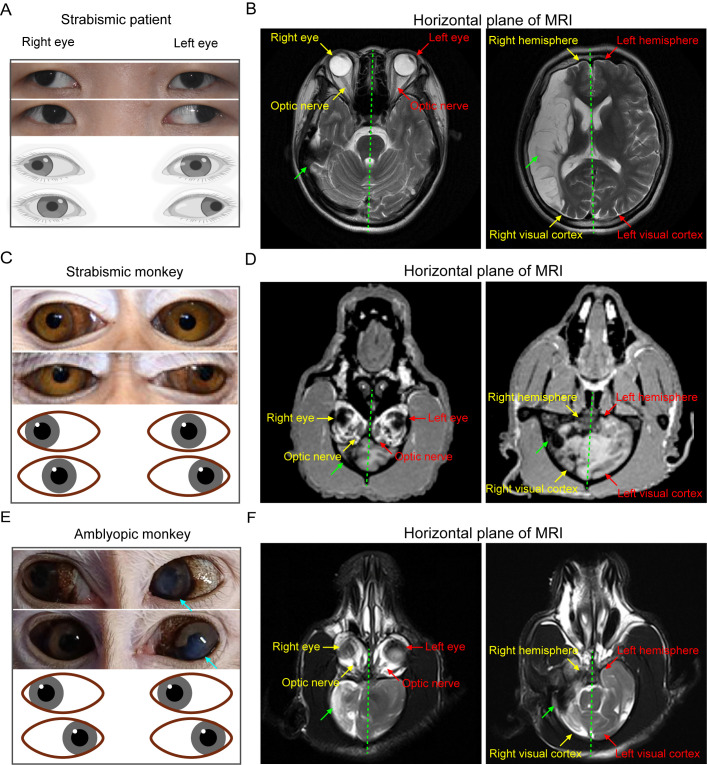
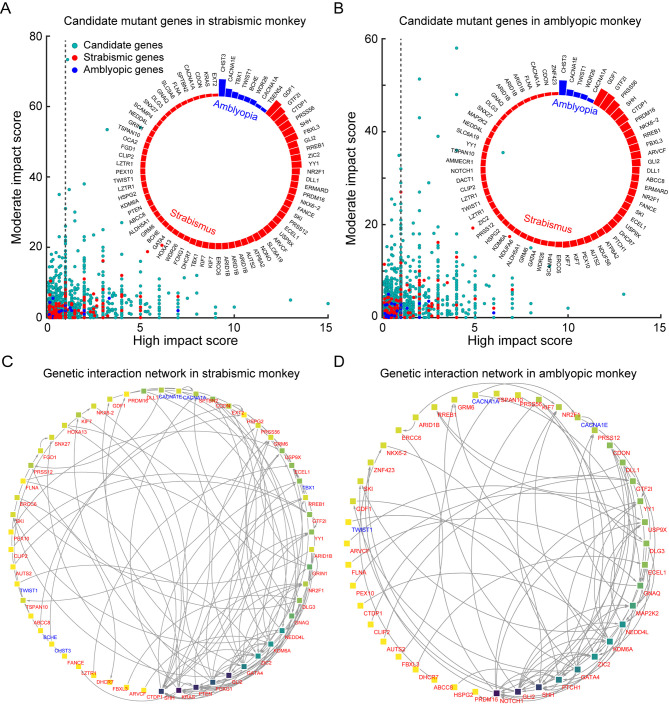
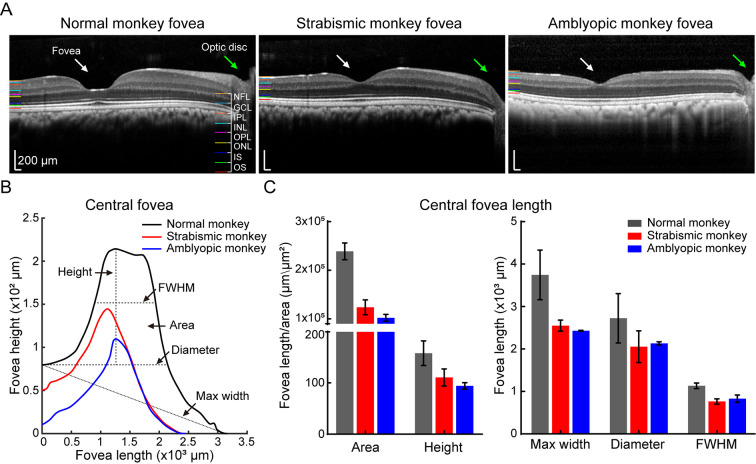
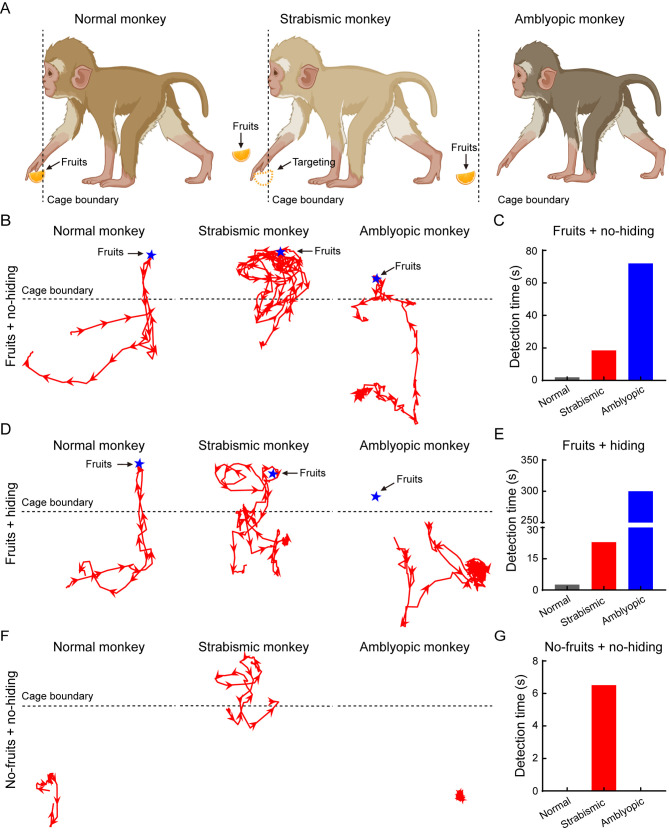
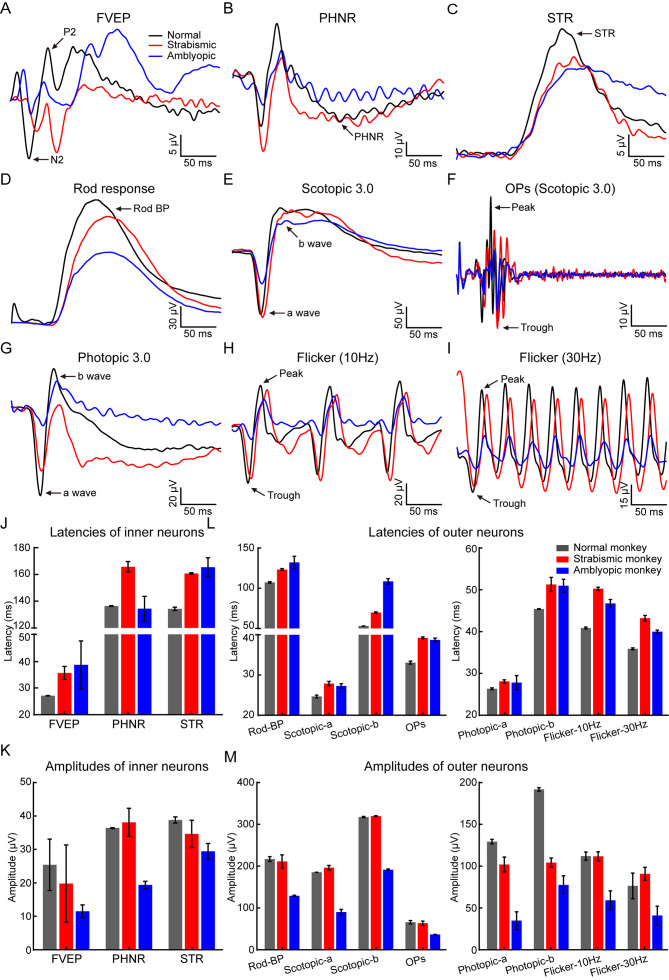
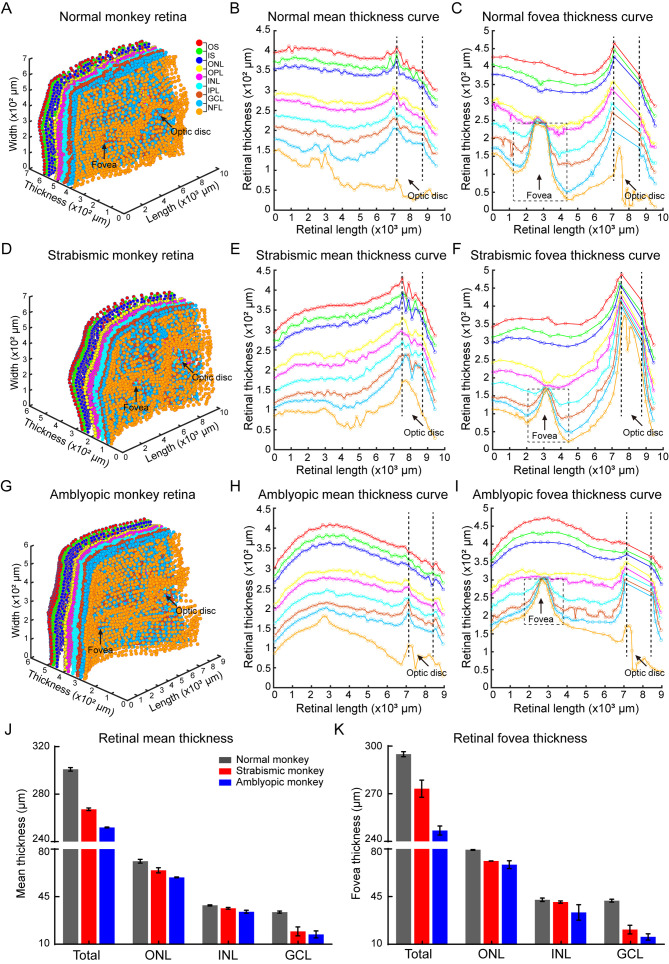
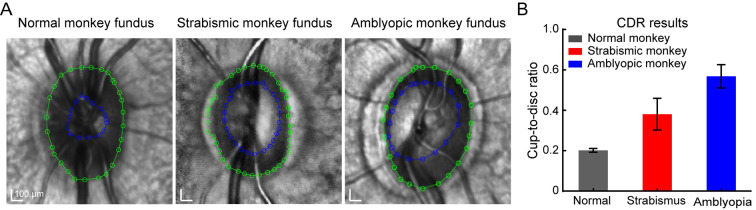
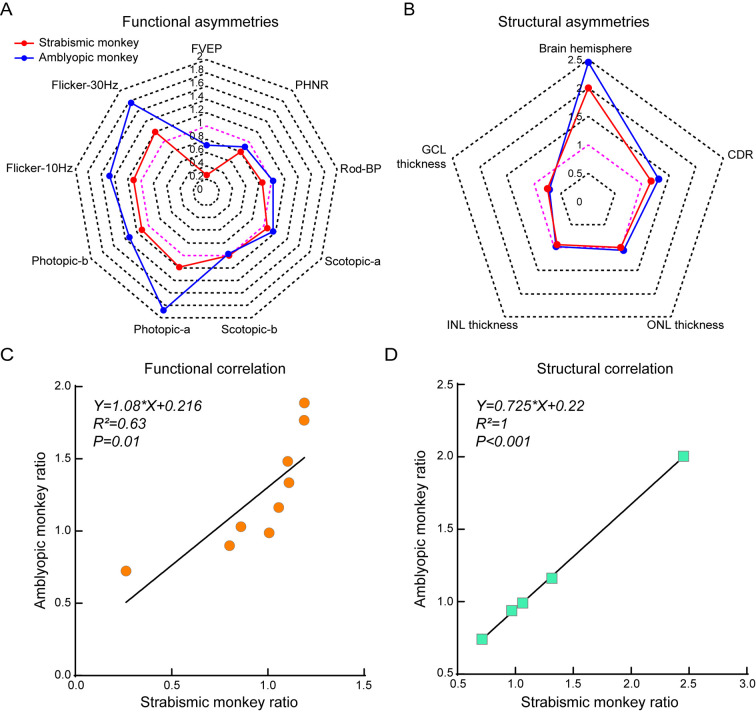
Strabismus and amblyopia are common ophthalmologic developmental diseases caused by abnormal visual experiences. However, the underlying pathogenesis and visual defects are still not fully understood. Most studies have used experimental interference to establish disease-associated animal models, while ignoring the natural pathophysiological mechanisms. This study was designed to investigate whether natural strabismus and amblyopia are associated with abnormal neurological defects. We screened one natural strabismic monkey ( ) and one natural amblyopic monkey from hundreds of monkeys, and retrospectively analyzed one human strabismus case. Neuroimaging, behavioral, neurophysiological, neurostructural, and genovariation features were systematically evaluated using magnetic resonance imaging (MRI), behavioral tasks, flash visual evoked potentials (FVEP), electroretinogram (ERG), optical coherence tomography (OCT), and whole-genome sequencing (WGS), respectively. Results showed that the strabismic patient and natural strabismic and amblyopic monkeys exhibited similar abnormal asymmetries in brain structure, i.e., ipsilateral impaired right hemisphere. Visual behavior, visual function, retinal structure, and fundus of the monkeys were impaired. Aberrant asymmetry in binocular visual function and structure between the strabismic and amblyopic monkeys was closely related, with greater impairment of the left visual pathway. Several similar known mutant genes for strabismus and amblyopia were also identified. In conclusion, natural strabismus and amblyopia are accompanied by abnormal asymmetries of the visual system, especially visual neurophysiological and neurostructural defects. Our results suggest that future therapeutic and mechanistic studies should consider defects and asymmetries throughout the entire visual system.
斜视和弱视是常见的眼科发育性疾病,由异常的视觉体验引起。然而,其潜在发病机制和视觉缺陷仍未完全阐明。大多数研究都使用实验干扰来建立与疾病相关的动物模型,而忽略了自然的病理生理机制。本研究旨在探讨自然性斜视和弱视是否与异常的神经缺陷有关。我们从数百只猴子中筛选出一只自然性斜视猴()和一只自然性弱视猴,并回顾性分析了一例人类斜视病例。分别采用磁共振成像(MRI)、行为任务、闪光视觉诱发电位(FVEP)、视网膜电图(ERG)、光学相干断层扫描(OCT)和全基因组测序(WGS)系统评估神经影像学、行为、神经生理、神经结构和基因变异特征。结果表明,斜视患者和自然性斜视及弱视猴的脑结构均存在类似的异常不对称性,即同侧右侧半球受损。猴子的视觉行为、视觉功能、视网膜结构和眼底均受损。斜视和弱视猴之间双眼视觉功能和结构的异常不对称性密切相关,左侧视觉通路受损更为严重。还鉴定出几个与斜视和弱视相似的已知突变基因。总之,自然性斜视和弱视伴有视觉系统的异常不对称性,特别是视觉神经生理和神经结构缺陷。我们的研究结果表明,未来的治疗和机制研究应考虑整个视觉系统的缺陷和不对称性。