Department of Food Science and Human Nutrition, College of Agriculture and Veterinary Medicine, Qassim University, Buraydah 51452, Saudi Arabia.
Department of Food Technology, Faculty of Agriculture, Benha University, Moshtohor 13736, Egypt.
Int J Environ Res Public Health. 2022 Nov 29;19(23):15918. doi: 10.3390/ijerph192315918.
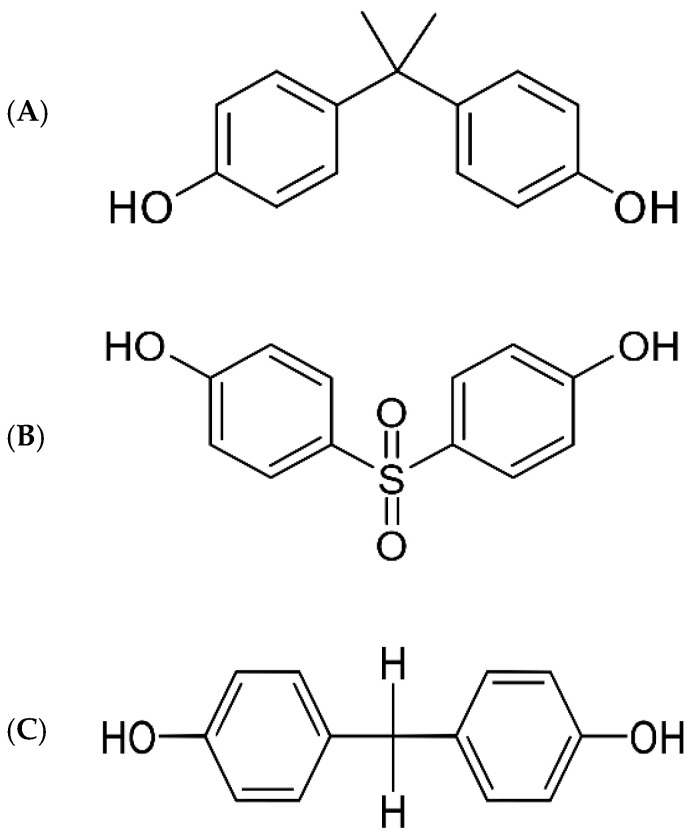
Bisphenol A, a well-known endocrine-disrupting chemical, has been replaced with its analogs bisphenol S (BPS) and bisphenol F (BPF) over the last decade due to health concerns. BPS and BPF are present in relatively high concentrations in different products, such as food products, personal care products, and sales receipts. Both BPS and BPF have similar structural and chemical properties to BPA; therefore, considerable scientific efforts have investigated the safety of their exposure. In this review, we summarize the findings of relevant epidemiological studies investigating the association between urinary concentrations of BPS and/or BPF with the incidence of obesity or diabetes. The results showed that BPS and BPF were detected in many urinary samples at median concentrations ranging from 0.03 to 0.4 µg·L. At this exposure level, BPS median urinary concentrations (0.4 µg·L) were associated with the development of obesity. At a lower exposure level (0.1-0.03 µg·L), two studies showed an association with developing diabetes. For BPF exposure, only one study showed an association with obesity. However, most of the reported studies only assessed BPS exposure levels. Furthermore, we also summarize the findings of experimental studies and regarding our aim; results support the possible obesogenic effects/metabolic disorders mediated by BPS and/or BPF exposure. Unexpectedly, BPS may promote worse obesogenic effects than BPA. In addition, the possible mode of action underlying the obesogenic effects of BPS might be attributed to various pathophysiological mechanisms, including estrogenic or androgenic activities, alterations in the gene expression of critical adipogenesis-related markers, and induction of oxidative stress and an inflammatory state. Furthermore, susceptibility to the adverse effects of BPS may be altered by sex differences according to the results of both epidemiological and experimental studies. However, the possible mode of action underlying these sex differences is still unclear. In conclusion, exposure to BPS or BPF may promote the development of obesity and diabetes. Future approaches are highly needed to assess the safety of BPS and BPF regarding their potential effects in promoting metabolic disturbances. Other studies in different populations and settings are highly suggested.
双酚 A 是一种众所周知的内分泌干扰化学物质,由于健康问题,在过去十年中已被其类似物双酚 S(BPS)和双酚 F(BPF)取代。BPS 和 BPF 存在于食品、个人护理产品和销售收据等各种产品中,浓度相对较高。BPS 和 BPF 与 BPA 具有相似的结构和化学性质,因此,科学界进行了大量研究来评估其暴露的安全性。在这篇综述中,我们总结了相关流行病学研究的结果,这些研究调查了 BPS 和/或 BPF 的尿浓度与肥胖或糖尿病发病率之间的关联。结果表明,在许多尿液样本中检测到 BPS 和/或 BPF,中位数浓度范围为 0.03 至 0.4 µg·L。在这种暴露水平下,BPS 的中位数尿浓度(0.4 µg·L)与肥胖的发生有关。在较低的暴露水平(0.1-0.03 µg·L)下,两项研究表明与糖尿病的发生有关。对于 BPF 的暴露,只有一项研究与肥胖有关。然而,大多数报道的研究仅评估了 BPS 的暴露水平。此外,我们还总结了关于我们目标的实验研究的结果;结果支持 BPS 和/或 BPF 暴露可能产生致肥胖作用/代谢紊乱。出乎意料的是,BPS 可能比 BPA 产生更严重的致肥胖作用。此外,BPS 致肥胖作用的可能作用模式可能归因于各种病理生理机制,包括雌激素或雄激素活性、关键脂肪生成相关标志物的基因表达改变以及氧化应激和炎症状态的诱导。此外,根据流行病学和实验研究的结果,BPS 不良影响的易感性可能因性别差异而改变。然而,这些性别差异背后的可能作用模式尚不清楚。总之,暴露于 BPS 或 BPF 可能会促进肥胖和糖尿病的发展。未来需要采取措施来评估 BPS 和 BPF 的安全性,以了解它们在促进代谢紊乱方面的潜在影响。建议在不同人群和环境中开展其他研究。