D'Amico Filippo, Barucco Gaia, Licheri Margherita, Valsecchi Gabriele, Zaraca Luisa, Mucchetti Marta, Zangrillo Alberto, Monaco Fabrizio
Department of Anesthesia and Intensive Care, IRCCS San Raffaele Scientific Institute, 20132 Milan, Italy.
Faculty of Medicine, Vita-Salute San Raffaele University, 20132 Milan, Italy.
J Clin Med. 2022 Nov 25;11(23):6955. doi: 10.3390/jcm11236955.
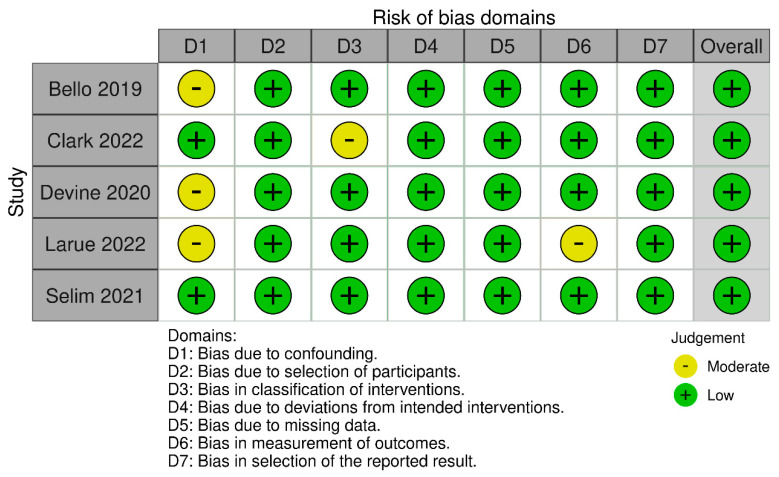
Introduction: Recent studies showed that balanced opioid-free anesthesia is feasible and desirable in several surgical settings. However, in thoracic surgery, scientific evidence is still lacking. Thus, we conducted the first systematic review and meta-analysis of opioid-free anesthesia in this field. Methods: The primary outcome was the occurrence of any complication. Secondary outcomes were the length of hospital stay, recovery room length of stay, postoperative pain at 24 and 48 h, and morphine equivalent consumption at 48 h. Results: Out of 375 potentially relevant articles, 6 studies (1 randomized controlled trial and 5 observational cohort studies) counting a total of 904 patients were included. Opioid-free anesthesia compared to opioid-based anesthesia, was associated with a lower rate of any complication (74 of 175 [42%] vs. 200 of 294 [68%]; RR = 0.76; 95% CI, 0.65−0.89; p < 0.001; I2 = 0%), lower 48 h morphine equivalent consumption (MD −14.5 [−29.17/−0.22]; p = 0.05; I2 = 95%) and lower pain at 48 h (MD −1.95 [−3.6/0.3]; p = 0.02, I = 98%). Conclusions: Opioid-free anesthesia in thoracic surgery is associated with lower postoperative complications, and less opioid demand with better postoperative analgesia at 48 h compared to opioid-based anesthesia.
近期研究表明,在多种手术环境中,平衡的无阿片类药物麻醉是可行且理想的。然而,在胸外科手术中,仍缺乏科学证据。因此,我们对此领域的无阿片类药物麻醉进行了首次系统评价和荟萃分析。方法:主要结局是任何并发症的发生情况。次要结局包括住院时间、恢复室停留时间、术后24小时和48小时的疼痛情况以及48小时的吗啡等效剂量消耗量。结果:在375篇可能相关的文章中,纳入了6项研究(1项随机对照试验和5项观察性队列研究),共计904例患者。与基于阿片类药物的麻醉相比,无阿片类药物麻醉与任何并发症的发生率较低相关(175例中的74例[42%] vs. 294例中的200例[68%];RR = 0.76;95% CI,0.65−0.89;p < 0.001;I2 = 0%),48小时吗啡等效剂量消耗量较低(MD −14.5 [−29.17/−0.22];p = 0.05;I2 = 95%),且48小时疼痛较轻(MD −1.95 [−3.6/0.3];p = 0.02,I = 98%)。结论:与基于阿片类药物的麻醉相比,胸外科手术中的无阿片类药物麻醉与术后并发症较少、阿片类药物需求量较少以及48小时时更好的术后镇痛相关。