Capecchi Marco, Abbattista Maria, Ciavarella Alessandro, Uhr Mario, Novembrino Cristina, Martinelli Ida
Division of Hematology, Clinica Moncucco, 6900 Lugano, Switzerland.
Department of Biomedical Sciences for Health, Università degli Studi di Milano, 20133 Milan, Italy.
J Clin Med. 2022 Nov 26;11(23):6984. doi: 10.3390/jcm11236984.
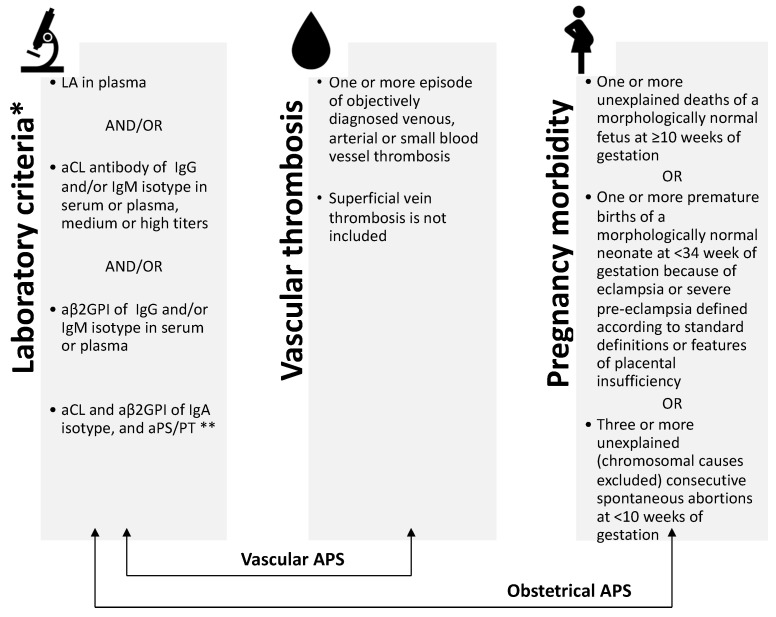
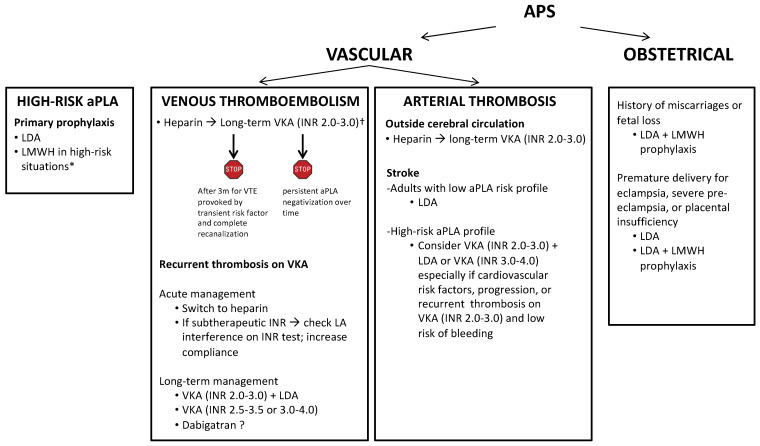
Antiphospholipid syndrome (APS) is a systemic autoimmune disease characterized by the persistent positivity of antiphospholipid antibodies (aPLA) together with thrombosis or obstetrical complications. Despite their recognized predominant role, aPLA are not sufficient to induce the development of thrombosis and a second hit has been proposed to be necessary. The mainstay of treatment of APS is anticoagulant therapy. However, its optimal intensity in different presentations of the disease remains undefined. Moreover, decision on which patients with aPLA would benefit from an antithrombotic prophylaxis and its optimal intensity are challenging because of the lack of stratification tools for the risk of thrombosis. Finally, decision on the optimal type of anticoagulant drug is also complex because the central pathway responsible for the development of thrombosis is so far unknown and should be carried out on an individual basis after a careful evaluation of the clinical and laboratory features of the patient. This review addresses the epidemiology, physiopathology, diagnosis and management of thrombosis and obstetrical complications in APS, with a special focus on the role of direct oral anticoagulants.
抗磷脂综合征(APS)是一种全身性自身免疫性疾病,其特征为抗磷脂抗体(aPLA)持续呈阳性,并伴有血栓形成或产科并发症。尽管aPLA的主要作用已得到认可,但它们不足以诱发血栓形成,因此有人提出还需要第二次打击。APS治疗的主要方法是抗凝治疗。然而,在该疾病的不同表现形式中,其最佳强度仍不明确。此外,由于缺乏血栓形成风险分层工具,决定哪些aPLA阳性患者将从抗血栓预防中获益及其最佳强度具有挑战性。最后,由于目前尚不清楚导致血栓形成的核心途径,因此决定最佳抗凝药物类型也很复杂,应该在仔细评估患者的临床和实验室特征后,根据个体情况进行。本综述阐述了APS中血栓形成和产科并发症的流行病学、生理病理学、诊断及管理,特别关注直接口服抗凝剂的作用。