Ding Peng, Liu Lichao, Bin Yawen, Huang Yu, Chen Lingjuan, Wen Lu, Zhang Ruiguang, Tong Fan, Dong Xiaorong
Cancer Center, Union Hospital, Tongji Medical College, Huazhong University of Science and Technology, Wuhan 430022, China.
J Clin Med. 2022 Dec 5;11(23):7223. doi: 10.3390/jcm11237223.
Although immune checkpoint inhibitors (ICI) are a promising therapeutic strategy for lung adenocarcinoma (LUAD), individual subgroups that might benefit from them are yet to be identified. As T cell-mediated tumor killing (TTK) is an underlying mechanism of ICI, we identified subtypes based on genes associated with TTK sensitivity and assessed their predictive significance for LUAD immunotherapies.
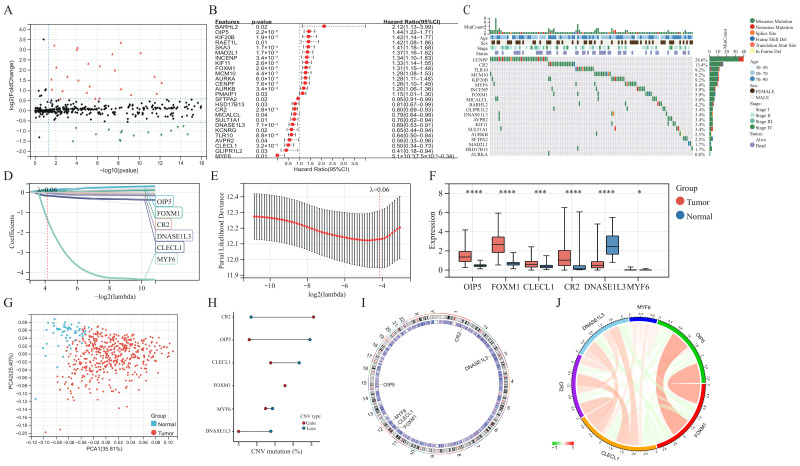
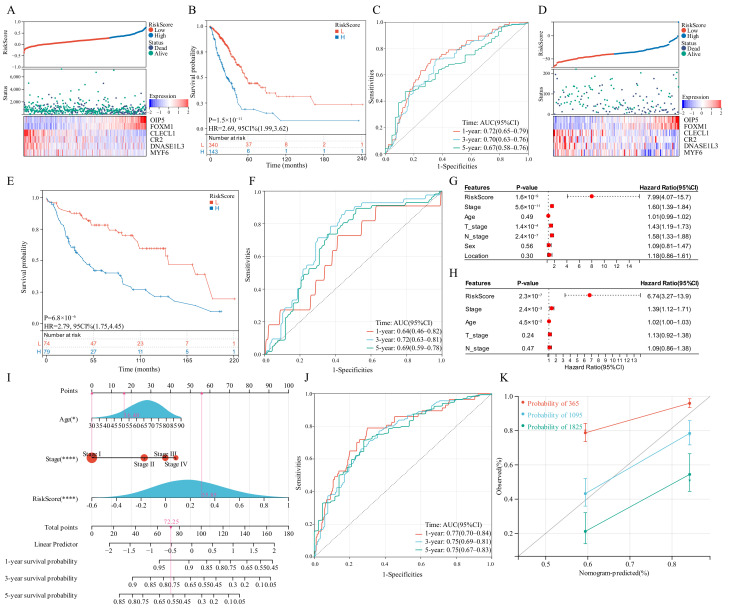
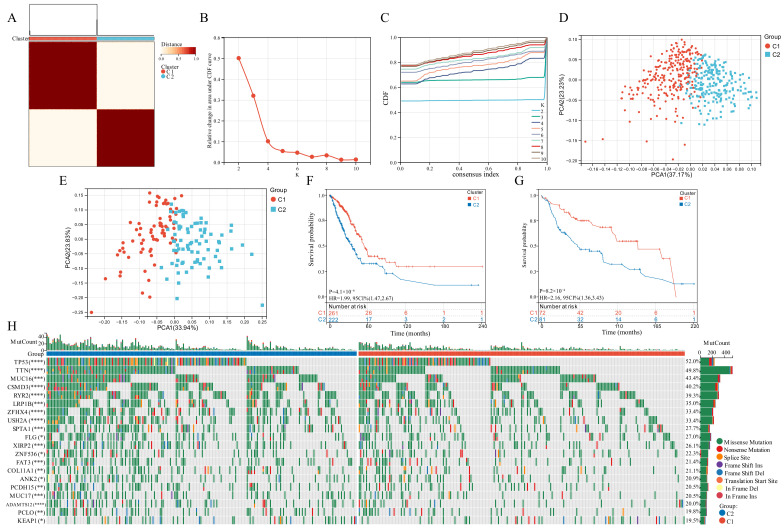
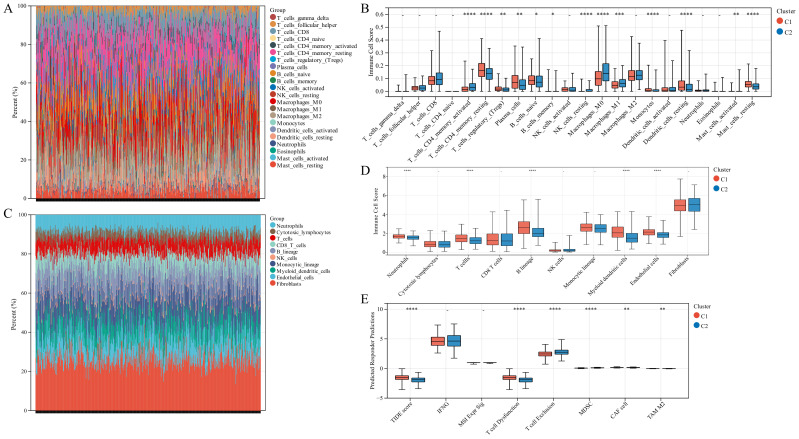
Using high-throughput screening techniques, genes regulating the sensitivity of T cell-mediated tumor killing (GSTTK) with differential expression and associations with prognosis were discovered in LUAD. Furthermore, patients with LUAD were divided into subgroups using unsupervised clustering based on GSTTK. Significant differences were observed in the tumor immune microenvironment (TIME), genetic mutation and immunotherapy response across subgroups. Finally, the prognostic significance of a scoring algorithm based on GSTTK was assessed.
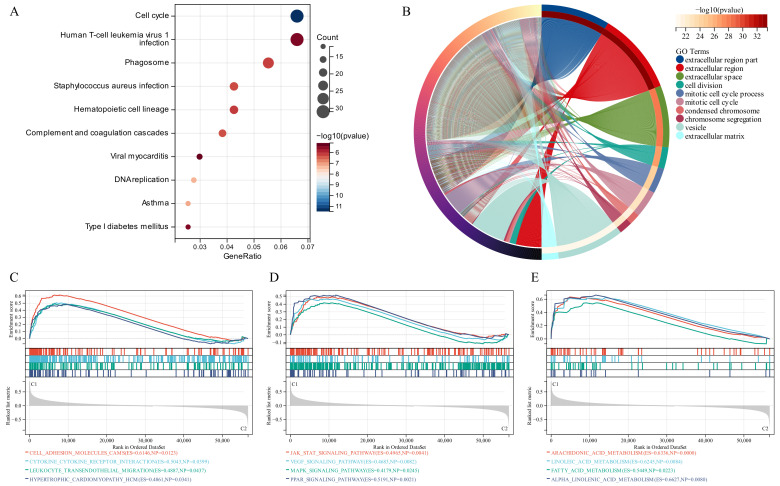
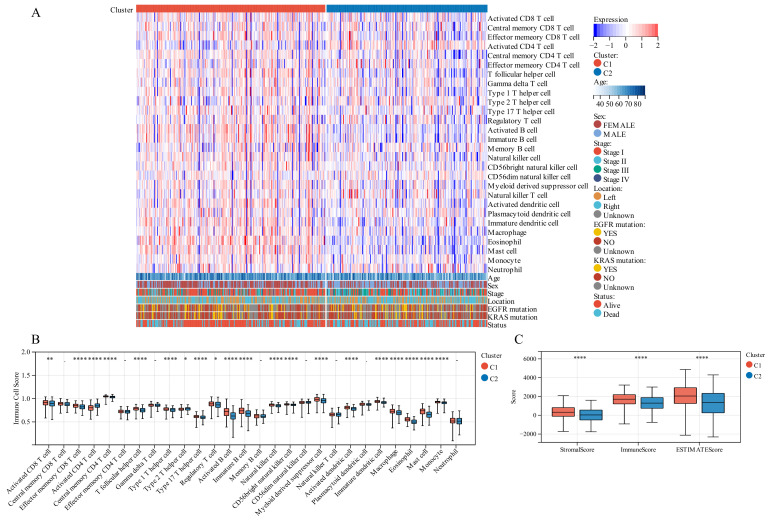
A total of 6 out of 641 GSTTK exhibited differential expression in LUAD and were associated with prognosis. Patients were grouped into two categories based on the expression of the six GSTTK, which represented different TTK immune microenvironments in LUAD. Immune cell infiltration, survival difference, somatic mutation, functional enrichment and immunotherapy responses also varied between the two categories. Additionally, a scoring algorithm accurately distinguished overall survival rates across populations.
TTK had a crucial influence on the development of the varying TIME. Evaluation of the varied TTK modes of different tumors enhanced our understanding of TIME characteristics, wherein the changes in T cell activity in LUAD are reflected. Thus, this study guides the development of more effective therapeutic methods.
尽管免疫检查点抑制剂(ICI)是治疗肺腺癌(LUAD)的一种有前景的治疗策略,但尚未确定可能从其治疗中获益的个体亚组。由于T细胞介导的肿瘤杀伤(TTK)是ICI的潜在机制,我们基于与TTK敏感性相关的基因鉴定了亚型,并评估了它们对LUAD免疫治疗的预测意义。
利用高通量筛选技术,在LUAD中发现了调节T细胞介导的肿瘤杀伤敏感性(GSTTK)且表达差异及与预后相关的基因。此外,基于GSTTK对LUAD患者进行无监督聚类分组。各亚组在肿瘤免疫微环境(TIME)、基因突变和免疫治疗反应方面存在显著差异。最后,评估了基于GSTTK的评分算法的预后意义。
641个GSTTK中共有6个在LUAD中表现出差异表达并与预后相关。根据这6个GSTTK的表达情况将患者分为两类,它们代表了LUAD中不同的TTK免疫微环境。两类之间的免疫细胞浸润、生存差异、体细胞突变、功能富集和免疫治疗反应也有所不同。此外,一种评分算法能够准确区分不同人群的总生存率。
TTK对不同TIME的发展具有关键影响。对不同肿瘤的不同TTK模式进行评估,加深了我们对TIME特征的理解,其中反映了LUAD中T细胞活性的变化。因此,本研究指导了更有效治疗方法的开发。