Department of Immunology and Rheumatology, Qingdao Municipal Hospital Affiliated to Qingdao University, Qingdao, Shandong, China.
School of Clinical Medicine, Weifang Medical University, Weifang, Shandong, China.
Front Cell Infect Microbiol. 2022 Nov 25;12:1040211. doi: 10.3389/fcimb.2022.1040211. eCollection 2022.
Mental health disorders in systemic lupus erythematosus (SLE) are gradually getting recognized; however, less is known regarding the actual structure and compositional alterations in gut microbiome and metabolism and the mechanisms of how they affect depression development in SLE patients.
Twenty-one SLE patients with depression (SLE-d), 17 SLE patients without depression (SLE-nd), and 32 healthy controls (HC) were included in this study. Fecal samples were collected for 16S rRNA gene sequencing and ultra-high-performance liquid chromatography-quadrupole time-of-flight mass spectrometry (UHPLC-QTOF-MS) based metabolomics.
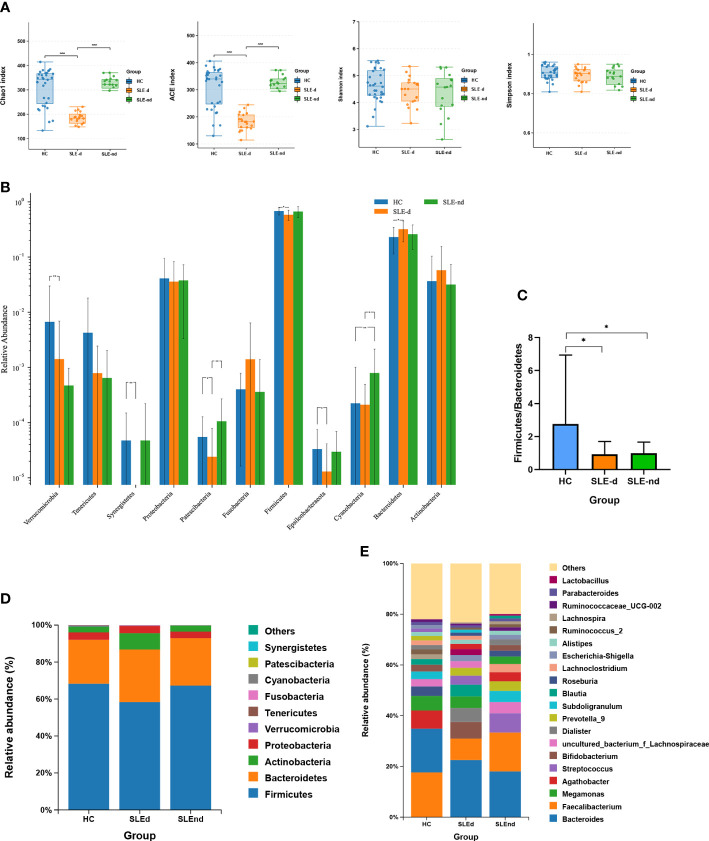
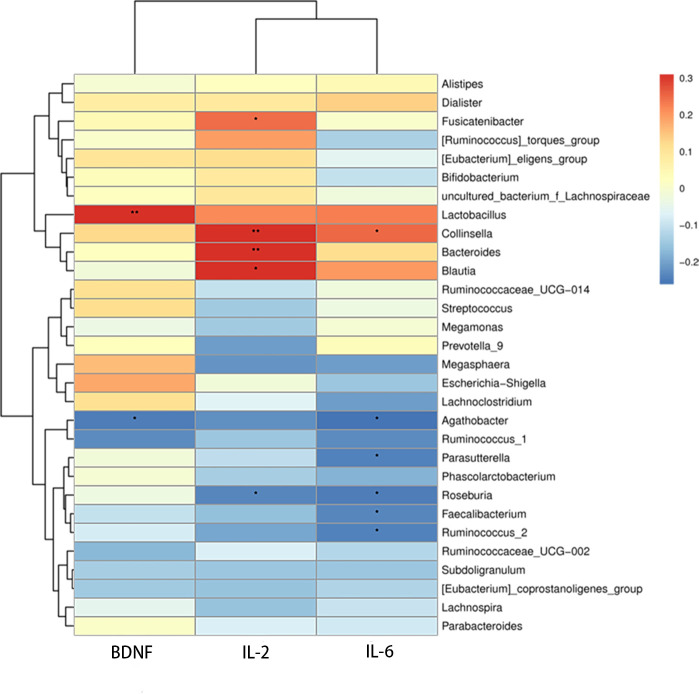
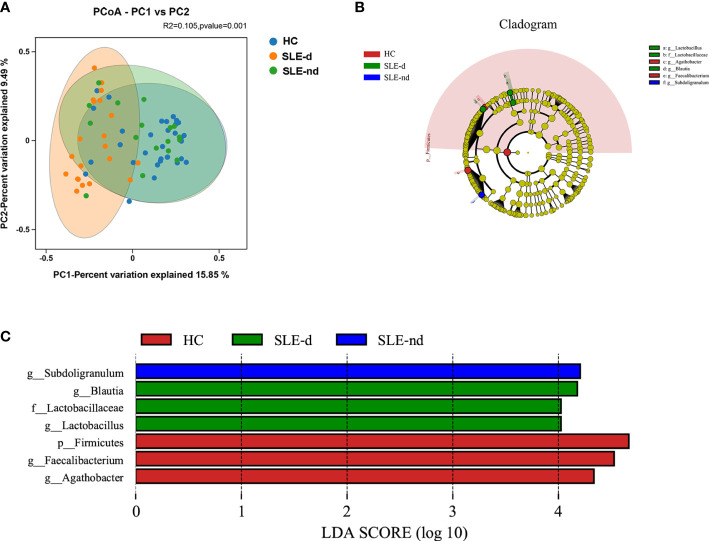
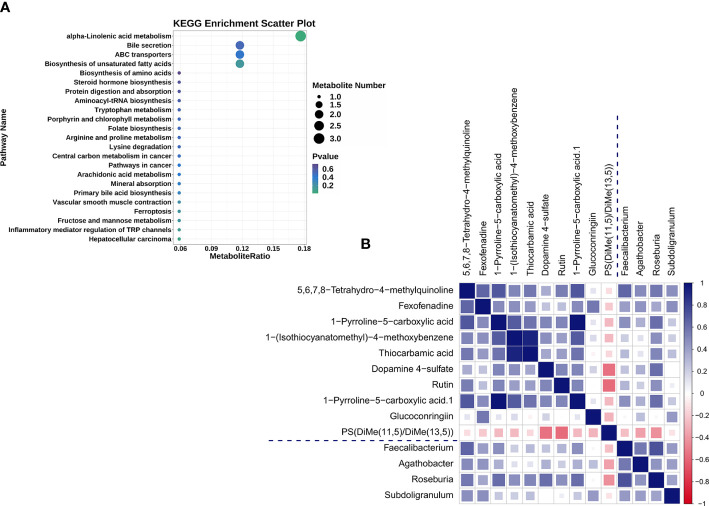
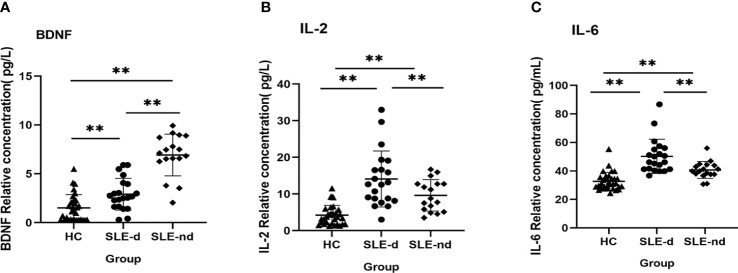
The structure of gut microbiome in the SLE-d group changed compared with that in the other two groups. The microbiome composition of SLE-d group showed decreased species richness indices, characterized by low ACE and Chao1 indices, a decrease in the ratio of phylum Firmicutes to Bacteroidetes, genus and . A downregulation of the metabolite fexofenadine involved in bile secretion was positively correlated with the genus , and . Compared with the SLE-nd group, the SLE-d group had elevated serum levels of IL-2 and IL-6 and decreased BDNF. Interestingly, abundance of the genus and was negatively correlated with IL-6, abundance of the genus was negatively correlated with IL-2, and abundance of the genus was positively correlated with IL-2.
This study identified specific fecal microbes and their metabolites that may participate in the development of SLE-d. Our findings provide a new perspective for improving depression in SLE patients by regulating the gut-brain axis.
系统性红斑狼疮(SLE)患者的精神健康障碍逐渐得到认识;然而,对于肠道微生物组和代谢物的实际结构和组成改变,以及它们如何影响 SLE 患者抑郁发展的机制,了解较少。
本研究纳入了 21 例伴有抑郁的 SLE 患者(SLE-d)、17 例无抑郁的 SLE 患者(SLE-nd)和 32 名健康对照者(HC)。收集粪便样本进行 16S rRNA 基因测序和基于超高效液相色谱-四极杆飞行时间质谱(UHPLC-QTOF-MS)的代谢组学分析。
与其他两组相比,SLE-d 组的肠道微生物组结构发生了变化。SLE-d 组的微生物组组成表现出丰富度指数降低,特征为 ACE 和 Chao1 指数降低、厚壁菌门与拟杆菌门比值降低、属 和 减少。涉及胆汁分泌的代谢物非索非那定下调与属 、 和 呈正相关。与 SLE-nd 组相比,SLE-d 组的血清 IL-2 和 IL-6 水平升高,BDNF 水平降低。有趣的是,属 和 的丰度与 IL-6 呈负相关,属 的丰度与 IL-2 呈负相关,属 的丰度与 IL-2 呈正相关。
本研究确定了可能参与 SLE-d 发展的特定粪便微生物及其代谢物。我们的研究结果为通过调节肠-脑轴改善 SLE 患者的抑郁提供了新视角。