Barony Sanchez Romina Helena, Bergeron-Drolet Laurie-Ann, Sasseville Maxime, Gagnon Marie-Pierre
VITAM Research Center on Sustainable Health, CIUSSS Capitale-Nationale, Laval University, Quebec City, QC, Canada.
Faculty of Medicine, Laval University, Quebec City, QC, Canada.
Front Med Technol. 2022 Nov 25;4:958571. doi: 10.3389/fmedt.2022.958571. eCollection 2022.
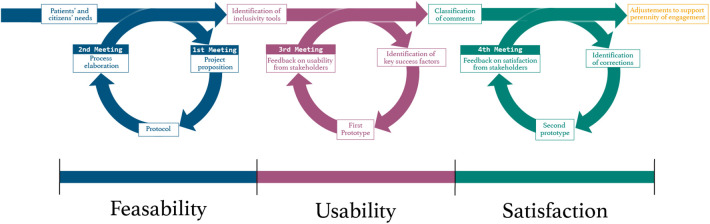
Digital technologies are increasingly empowering individuals to take charge of their health and improve their well-being. However, there are disparities in access related to demographic, economic, and sociocultural factors that result in exclusion from the use of digital technologies for different groups of the population. The development of digital technology in health is a powerful lever for improving care and services, but also brings risks for certain users in vulnerable situations. Increased digital health inequalities are associated with limited digital literacy, lack of interest, and low levels of self-efficacy in using technology. In the context of the COVID-19 pandemic and post-pandemic healthcare systems, the leap to digital is essential. To foster responsible innovation and optimal use of digital health by all, including vulnerable groups, we propose that patient and citizen engagement must be an essential component of the research strategy. Patient partners will define expectations and establish research priorities using their experiential knowledge, while benefiting from rich exposure to the research process to increase their self-efficacy and digital literacy. We will support this proposition with an operationalised example aiming to implement a Virtual Community of Patients and Citizens Partners (COMVIP), a digital tool co-created with patients and public experts, as active team members in research. Founded on the principles of equity, diversity and inclusion, this base of citizen expertise will assemble individuals from different backgrounds and literacy levels living in vulnerable situations to acquire knowledge, and share their experiences, while contributing actively in the co-development of innovative strategies and health technology assessment.
数字技术正日益使个人能够掌控自己的健康并改善自身福祉。然而,在获取数字技术方面存在与人口统计学、经济和社会文化因素相关的差异,这导致不同人群被排除在数字技术的使用之外。健康领域数字技术的发展是改善护理和服务的有力杠杆,但也给某些处于弱势状况的用户带来风险。数字健康不平等加剧与数字素养有限、缺乏兴趣以及使用技术的自我效能水平较低有关。在新冠疫情及疫情后医疗系统的背景下,向数字化的飞跃至关重要。为了促进包括弱势群体在内的所有人对数字健康进行负责任的创新和优化使用,我们建议患者和公民参与必须成为研究战略的重要组成部分。患者伙伴将利用他们的经验知识确定期望并确立研究重点,同时充分参与研究过程以提高他们的自我效能和数字素养。我们将通过一个实施示例来支持这一主张,该示例旨在建立一个患者和公民伙伴虚拟社区(COMVIP),这是一种与患者和公共专家共同创建的数字工具,作为研究中的积极团队成员。基于公平、多样性和包容性原则,这个公民专业知识基础将汇聚来自不同背景和处于弱势状况的不同识字水平的个人,以获取知识、分享经验,同时积极参与创新战略和健康技术评估的共同开发。