GenHotel-Laboratoire Européen de Recherche pour la Polyarthrite Rhumatoïde, Univ. Evry, Univ. Paris-Saclay, Evry, France.
Lifeware Group, Inria Saclay Île-de-France, Palaiseau, France.
PLoS Comput Biol. 2022 Dec 12;18(12):e1010408. doi: 10.1371/journal.pcbi.1010408. eCollection 2022 Dec.
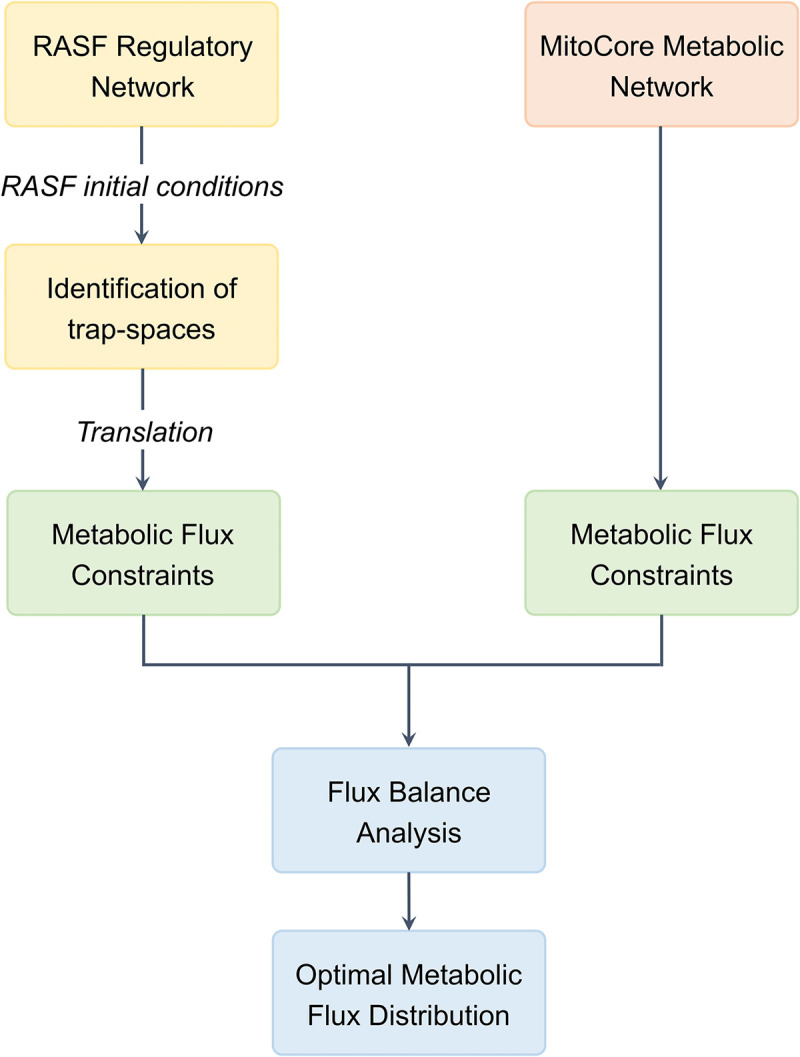
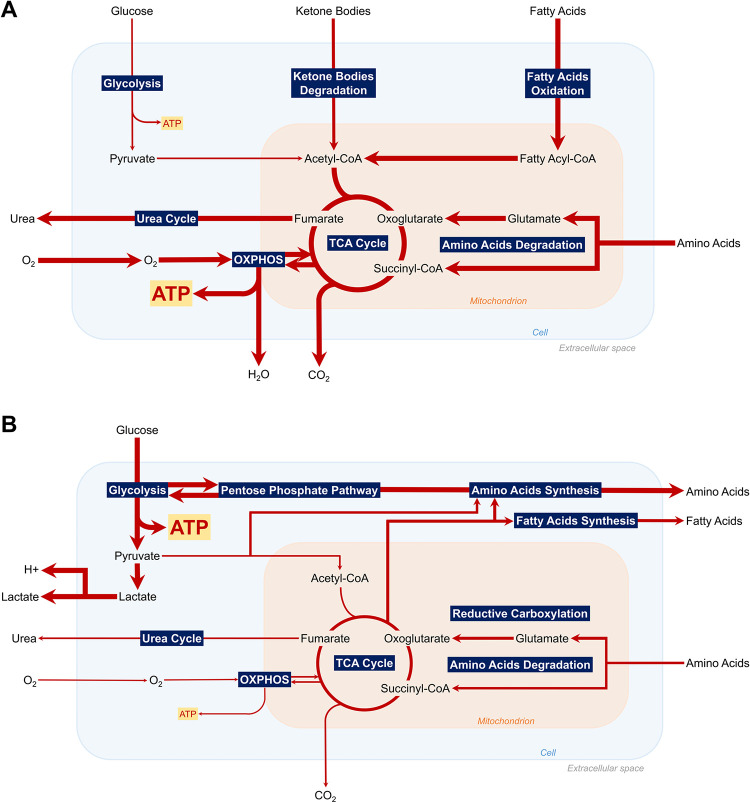
Rheumatoid Arthritis (RA) is an autoimmune disease characterized by a highly invasive pannus formation consisting mainly of Synovial Fibroblasts (RASFs). This pannus leads to cartilage, bone, and soft tissue destruction in the affected joint. RASFs' activation is associated with metabolic alterations resulting from dysregulation of extracellular signals' transduction and gene regulation. Deciphering the intricate mechanisms at the origin of this metabolic reprogramming may provide significant insight into RASFs' involvement in RA's pathogenesis and offer new therapeutic strategies. Qualitative and quantitative dynamic modeling can address some of these features, but hybrid models represent a real asset in their ability to span multiple layers of biological machinery. This work presents the first hybrid RASF model: the combination of a cell-specific qualitative regulatory network with a global metabolic network. The automated framework for hybrid modeling exploits the regulatory network's trap-spaces as additional constraints on the metabolic network. Subsequent flux balance analysis allows assessment of RASFs' regulatory outcomes' impact on their metabolic flux distribution. The hybrid RASF model reproduces the experimentally observed metabolic reprogramming induced by signaling and gene regulation in RASFs. Simulations also enable further hypotheses on the potential reverse Warburg effect in RA. RASFs may undergo metabolic reprogramming to turn into "metabolic factories", producing high levels of energy-rich fuels and nutrients for neighboring demanding cells through the crucial role of HIF1.
类风湿关节炎(RA)是一种自身免疫性疾病,其特征是存在由主要由滑膜成纤维细胞(RASFs)组成的高度侵袭性血管翳形成。这种血管翳会导致受影响关节的软骨、骨和软组织破坏。RASFs 的激活与细胞外信号转导和基因调控失调导致的代谢改变有关。阐明这种代谢重编程的复杂机制可能为理解 RASFs 在 RA 发病机制中的作用提供重要线索,并为新的治疗策略提供依据。定性和定量动态建模可以解决其中的一些特征,但混合模型在跨越多个层次的生物学机制方面具有真正的优势。本工作提出了第一个混合 RASF 模型:细胞特异性调节网络与全局代谢网络的结合。混合建模的自动化框架利用调节网络的陷阱空间作为代谢网络的附加约束。随后的通量平衡分析可以评估 RASFs 的调节结果对其代谢通量分布的影响。混合 RASF 模型再现了信号转导和基因调控诱导的 RASFs 中观察到的代谢重编程。模拟还可以进一步假设 RA 中可能存在反向瓦伯格效应。RASFs 可能经历代谢重编程,通过 HIF1 的关键作用转变为“代谢工厂”,为邻近的高需求细胞产生高水平的高能燃料和营养物质。