Nair Ashwini Sunil, Priya Radhakrishnan Shanthi, Rajagopal Prashanthini, Pradeepa Chandramouli, Senthil Ramalingam, Dhanalakshmi Samiappan, Lai Khin Wee, Wu Xiang, Zuo Xiaowei
School of Architecture and Interior Design, SRM Institute of Science and Technology, Chennai, India.
Department of Mechanical Engineering, SRM Institute of Science and Technology, Chennai, India.
Front Psychiatry. 2022 Nov 30;13:1042641. doi: 10.3389/fpsyt.2022.1042641. eCollection 2022.
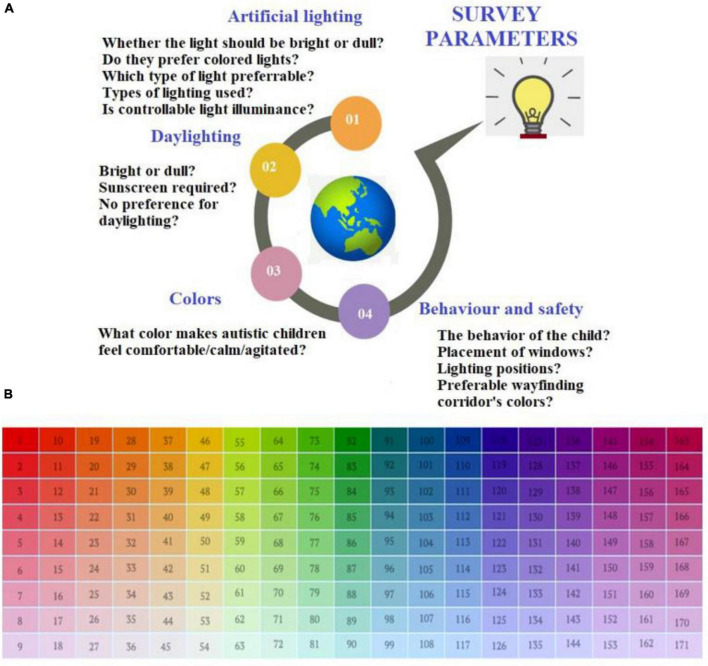
The importance of strategies and services by caregivers and family members substantially impact the psychological and emotional wellbeing of autistic children. The rapid research developments in clinical and non-clinical methods benefit the features of autistic children. Among various internal and external factors, the influence of the built environment also impacts the characteristics of autistic children. This study investigates primarily the psychological effect of light and colors on the mood and behavior of autistic children to identify the most favorable and preferred indoor lights and color shades.
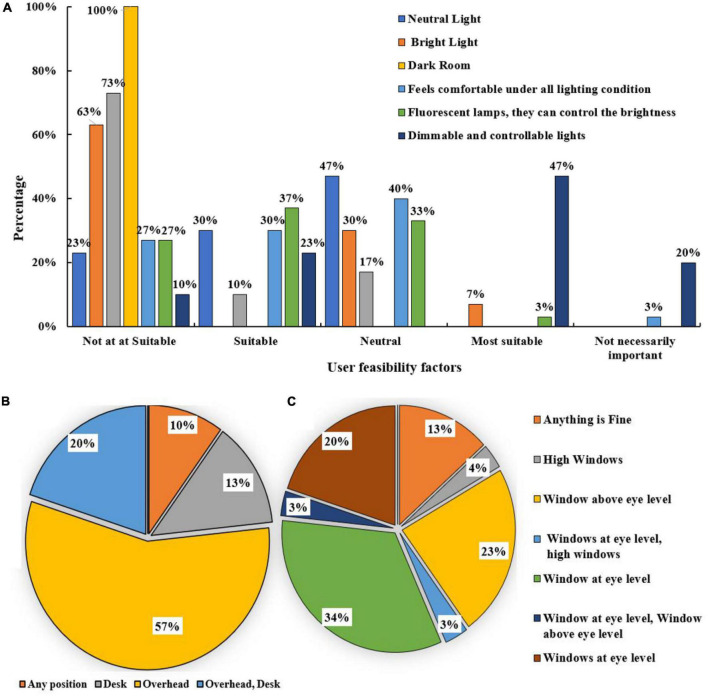
A questionnaire survey was conducted at an autism center among autistic children and their parents. This study included autistic children aged between 6 and 16 (45 males, 42 females, mean age 8.7 years, standard deviation 2.3). Eighty-seven participants were involved in the survey to determine the sensory perceptions, intolerance, preferences, and sensitivities of children with an autism spectrum disorder toward colors and lighting. The margin of error at the statistical analysis's 95% confidence level is ± 0.481.
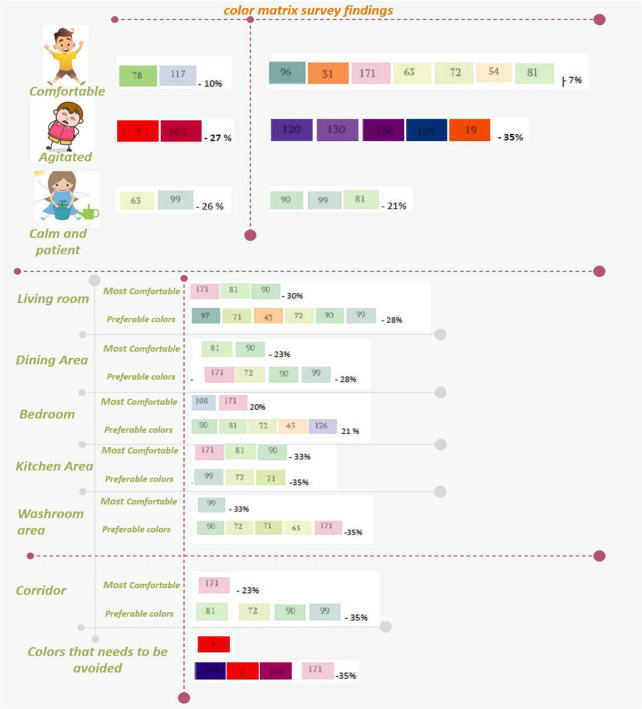
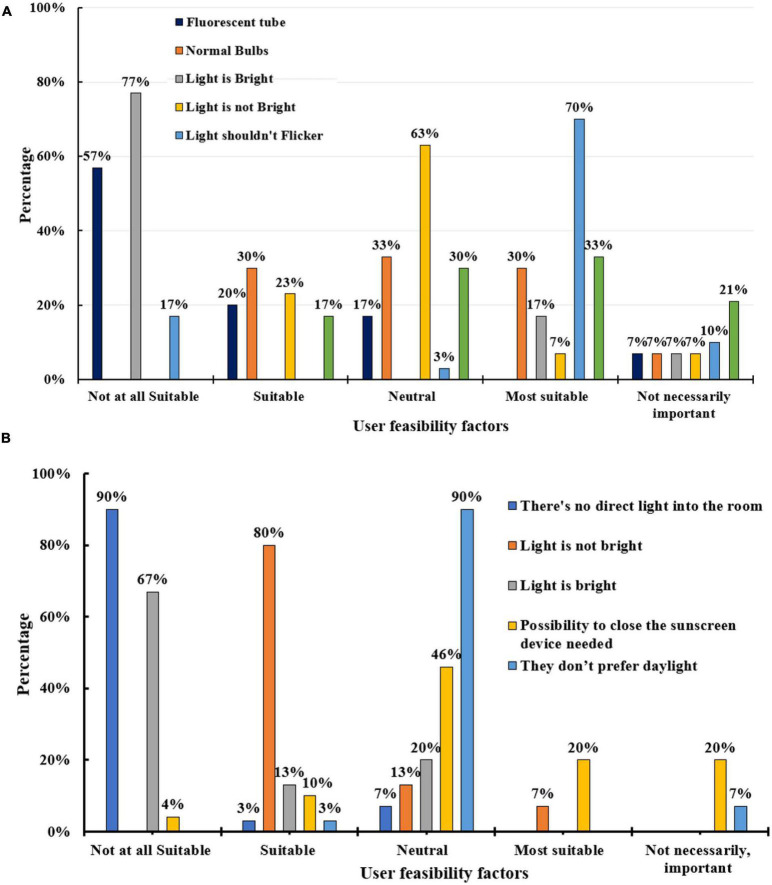
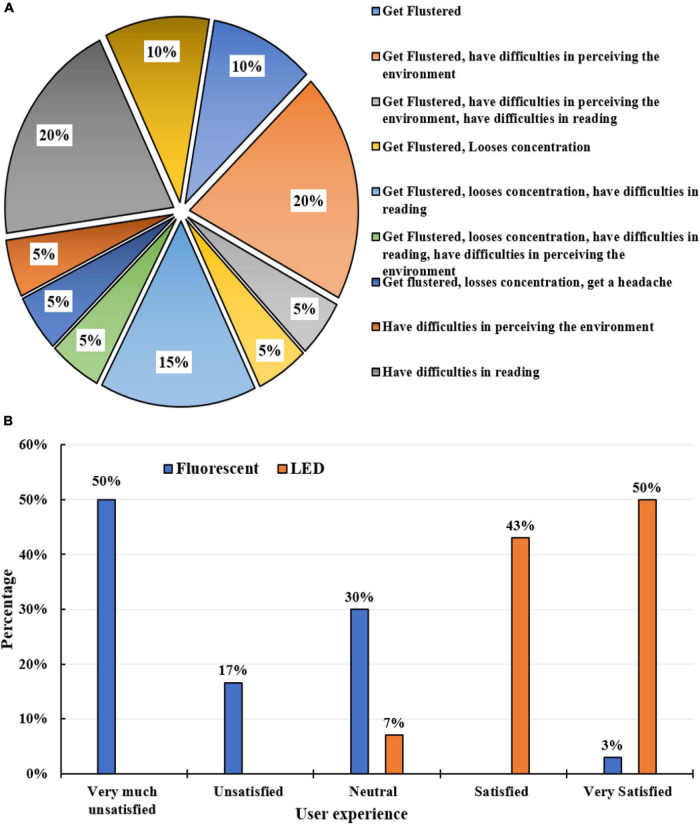
As per this case report, the children have various color preferences and respond differently to different shades. Different hues have varying effects on autistic children, with many neutral tones and mellow shades proven to be autistic-friendly with their calming and soothing effect, while bright, bold, and intense colors are refreshing and stimulating. The stimulus of bright-lighting causes behavioral changes in autistic children prone to light sensitivity.
The insights gained from this interaction with parents and caretakers of autistic children could be helpful for designers to incorporate specific autistic-friendly design elements that make productive interior spaces. A complete understanding of the effect of factors like color and lighting on the learning ability and engagement of autistic children in an indoor environment is essential for designers and clinicians. The main findings of this study could be helpful for a designer and clinicians to address designing an autism-friendly built environment with a color palette and lighting scheme conducive to their wellbeing and to maximize their cognitive functioning.
照顾者和家庭成员所采取的策略及提供的服务至关重要,会对自闭症儿童的心理和情绪健康产生重大影响。临床和非临床方法的快速研究进展有利于了解自闭症儿童的特征。在各种内部和外部因素中,建筑环境的影响也会对自闭症儿童的特征产生作用。本研究主要调查光线和颜色对自闭症儿童情绪和行为的心理影响,以确定最适宜和最受欢迎的室内灯光及色调。
在一家自闭症中心对自闭症儿童及其家长进行了问卷调查。本研究纳入了6至16岁的自闭症儿童(45名男性,42名女性,平均年龄8.7岁,标准差2.3)。87名参与者参与了调查,以确定自闭症谱系障碍儿童对颜色和灯光的感官认知、不耐受性、偏好及敏感性。在95%置信水平的统计分析中,误差幅度为±0.481。
根据本病例报告,儿童有不同的颜色偏好,对不同色调的反应也不同。不同色调对自闭症儿童有不同影响,许多中性色调和柔和色调因其舒缓平静的效果被证明对自闭症儿童有益,而明亮、醒目和浓烈的颜色则提神且刺激。强光的刺激会使容易对光敏感的自闭症儿童出现行为变化。
与自闭症儿童的家长和照顾者交流所获得的见解,可能有助于设计师融入特定的自闭症友好设计元素,打造出高效的室内空间。对于设计师和临床医生来说,全面了解颜色和灯光等因素对自闭症儿童在室内环境中的学习能力和参与度的影响至关重要。本研究的主要发现可能有助于设计师和临床医生设计出有利于自闭症患者健康、有助于其认知功能最大化的友好型建筑环境,包括调色板和照明方案。