Bai Junyi, Xiong Tingting, Wang Xiao, Cheng Yanfen, Luo Ruifeng, Yang Xiangdong, Fu Chaomei
State Key Laboratory of Southwestern Chinese Medicine Resources, Pharmacy School, Chengdu University of Traditional Chinese Medicine, Chengdu, China.
Chengdu Anorectal Hospital, Chengdu, China.
Front Pharmacol. 2022 Dec 2;13:1014117. doi: 10.3389/fphar.2022.1014117. eCollection 2022.
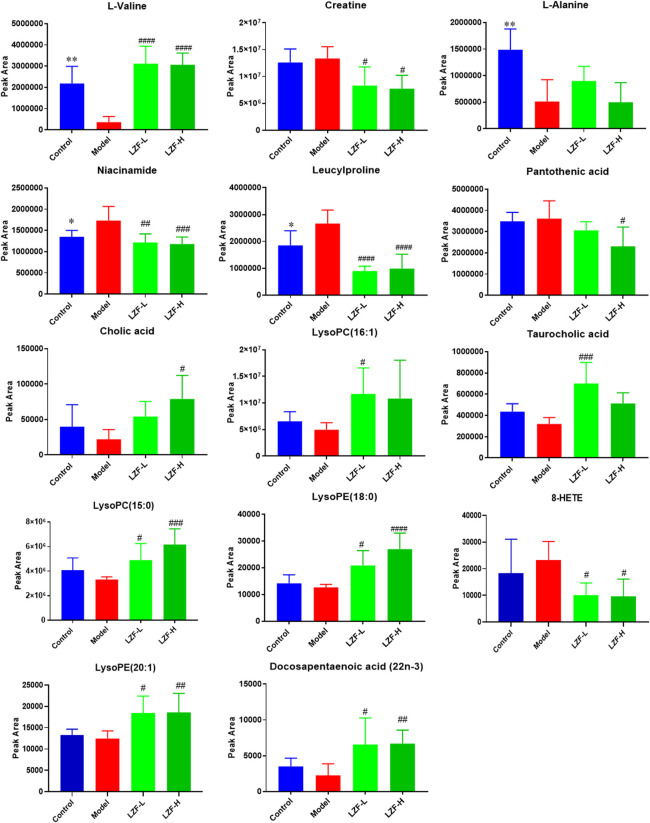
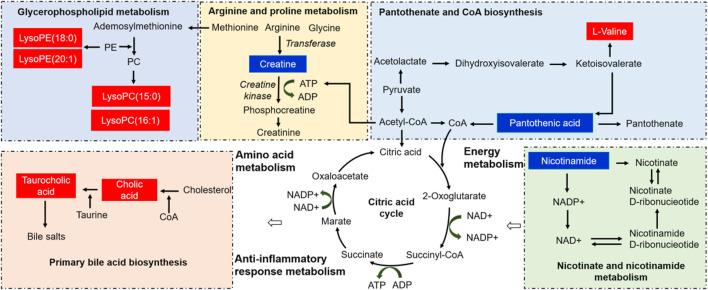
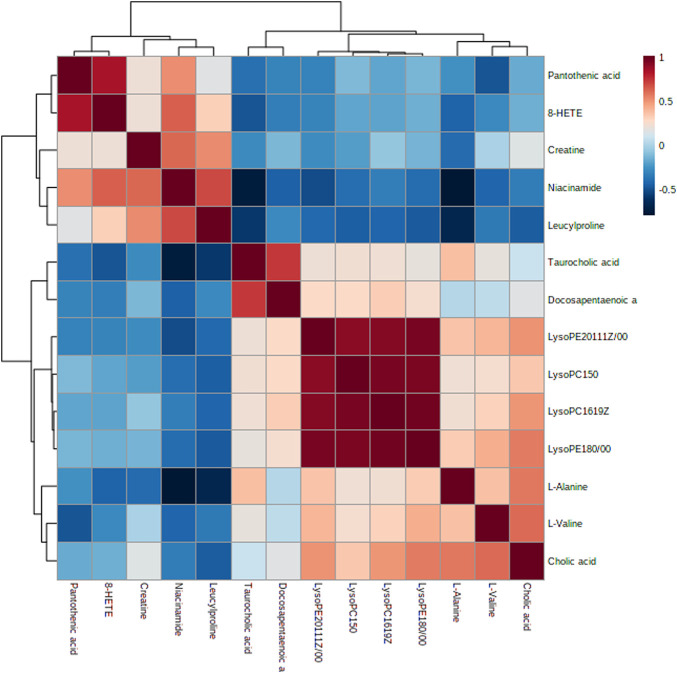
Lian-Zhi-Fan (LZF) decoction is a hospital-prescribed traditional Chinese medicine botanical drug prepared by the fermentation of decocted Coptidis Rhizome (Huanglian), Gardeniae Fructus (Zhizi), and alum (Baifan). It has been used clinically in China for the treatment of anal fistula, perianal abscess, ulcerative colitis (UC), and other anorectal diseases for hundreds of years. However, due to the complexity of traditional Chinese medicine, the potential mechanisms of LZF in the treatment of UC have remained unknown. This study primarily investigated the remarkable pharmacological effects of LZF on TNBS-induced UC rats. To explore the complex targets and regulatory mechanisms of metabolic networks under LZF intervention, a metabolomics approach mediated by HPLC/Q-TOF-MS analysis was used to screen the different metabolites and their metabolic pathways in the serum in order to characterize the possible anti-UC mechanisms of LZF. After rectal administration of LZF for seven consecutive days, significant amelioration effects on body weight loss, DAI score, and colon inflammation were found in UC rats. Based on this, further metabolomics identified 14 potential biomarkers in the treatment of UC with LZF, of which five possessed diagnostic significance: L-alanine, taurocholic acid, niacinamide, cholic acid, and L-valine. These metabolites are mainly involved in 12 metabolic pathways, including nicotate and nicotinamide metabolism, glycospholipid metabolism, arginine and proline metabolism, primary bile acid biosynthesis, and pantothenate and CoA biosynthesis. These metabolic pathways suggest that LZF ameliorates UC by regulating amino acid metabolism, fat metabolism, and energy production. This study provides a useful approach for exploring the potential mechanisms of herbal prescription in UC treatment mediated by metabolomics.
连栀矾(LZF)汤是一种医院制剂的中药植物药,由黄连、栀子和明矾水煎液发酵制备而成。在中国,它已被临床应用数百年,用于治疗肛瘘、肛周脓肿、溃疡性结肠炎(UC)等肛肠疾病。然而,由于中药的复杂性,LZF治疗UC的潜在机制尚不清楚。本研究主要探讨LZF对三硝基苯磺酸(TNBS)诱导的UC大鼠的显著药理作用。为了探索LZF干预下代谢网络的复杂靶点和调控机制,采用高效液相色谱/四极杆飞行时间质谱(HPLC/Q-TOF-MS)分析介导的代谢组学方法,筛选血清中不同的代谢产物及其代谢途径,以表征LZF可能的抗UC机制。连续7天对UC大鼠直肠给予LZF后,发现其对体重减轻、疾病活动指数(DAI)评分和结肠炎症有显著改善作用。基于此,进一步的代谢组学研究确定了LZF治疗UC的14个潜在生物标志物,其中5个具有诊断意义:L-丙氨酸、牛磺胆酸、烟酰胺、胆酸和L-缬氨酸。这些代谢产物主要参与12条代谢途径,包括烟酸和烟酰胺代谢、糖脂代谢、精氨酸和脯氨酸代谢、初级胆汁酸生物合成以及泛酸和辅酶A生物合成。这些代谢途径表明,LZF通过调节氨基酸代谢、脂肪代谢和能量产生来改善UC。本研究为探索代谢组学介导的草药方剂治疗UC的潜在机制提供了一种有用的方法。