Arnaiz Ana, Guirado-Moreno José Carlos, Guembe-García Marta, Barros Rocio, Tamayo-Ramos Juan Antonio, Fernández-Pampín Natalia, García José M, Vallejos Saúl
Departamento de Química, Facultad de Ciencias, Universidad de Burgos, Plaza de Misael Bañuelos s/n, 09001 Burgos, Spain.
Universidad Politécnica de Madrid, Calle Ramiro de Maeztu, 7, 28040 Madrid, Spain.
Sens Actuators B Chem. 2023 Mar 15;379:133165. doi: 10.1016/j.snb.2022.133165. Epub 2022 Dec 15.
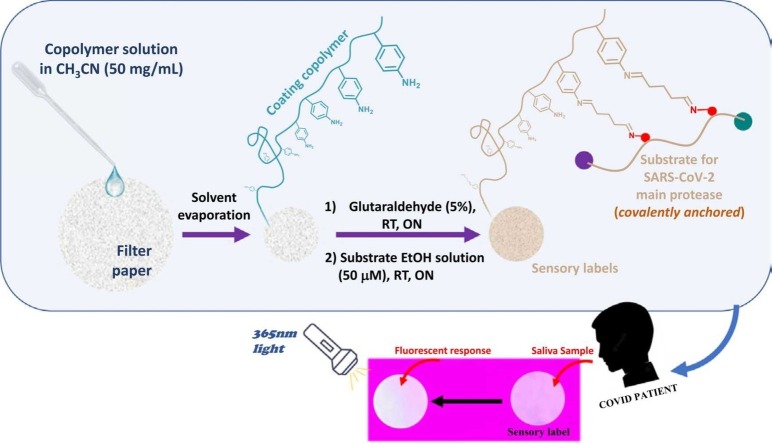
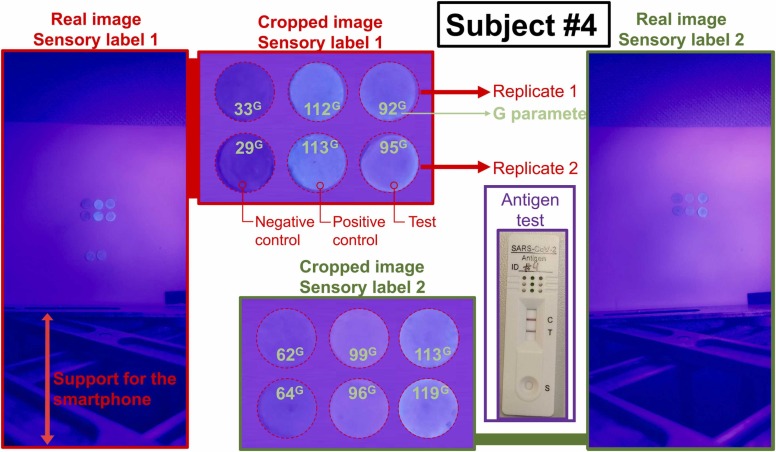
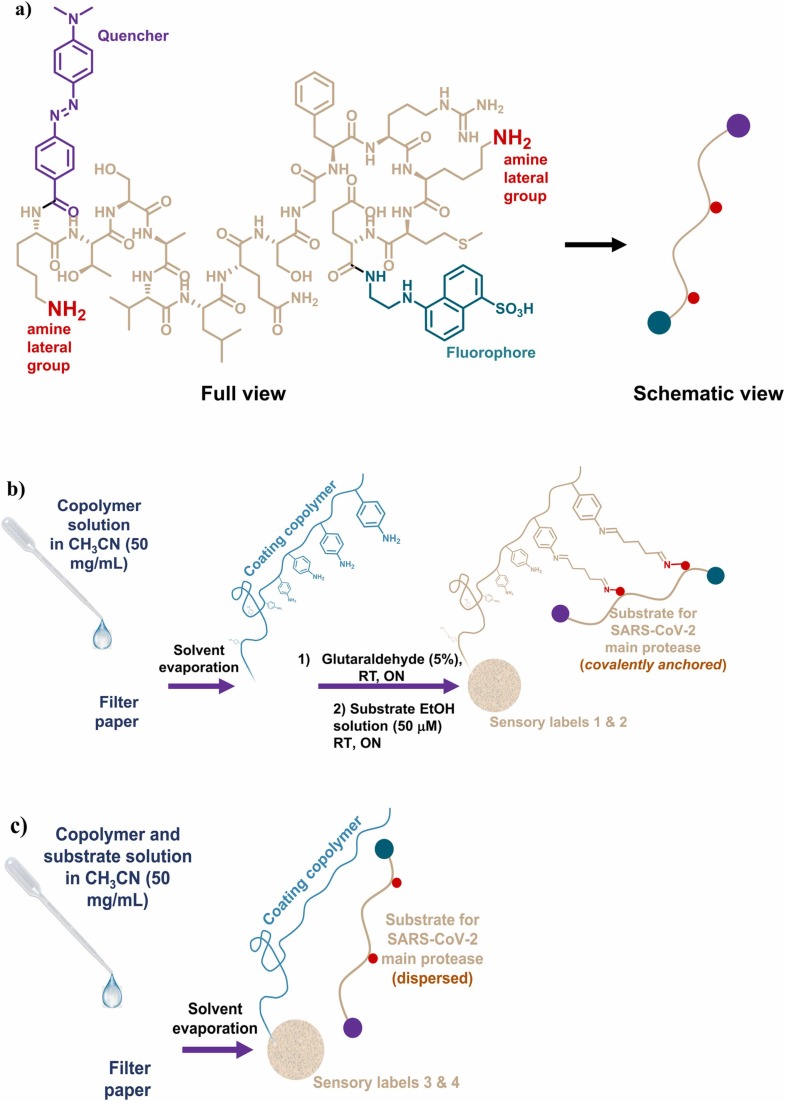
The initial stages of the pandemic caused by SARS-CoV-2 showed that early detection of the virus in a simple way is the best tool until the development of vaccines. Many different tests are invasive or need the patient to cough up or even drag a sample of mucus from the throat area. Besides, the manufacturing time has proven insufficient in pandemic conditions since they were out of stock in many countries. Here we show a new method of manufacturing virus sensors and a proof of concept with SARS-CoV-2. We found that a fluorogenic peptide substrate of the main protease of the virus (Mpro) can be covalently immobilized in a polymer, with which a cellulose-based material can be coated. These sensory labels fluoresce with a single saliva sample of a positive COVID-19 patient. The results matched with that of the antigen tests in 22 of 26 studied cases (85% success rate).
由严重急性呼吸综合征冠状病毒2(SARS-CoV-2)引发的大流行初期表明,在疫苗研发出来之前,以简单方式早期检测该病毒是最佳手段。许多不同的检测方法具有侵入性,或者需要患者咳出甚至从咽喉部位取出一份黏液样本。此外,在大流行情况下,已证明这些检测方法的生产时间不足,因为在许多国家它们都缺货。在此,我们展示了一种制造病毒传感器的新方法以及针对SARS-CoV-2的概念验证。我们发现,该病毒主要蛋白酶(Mpro)的一种荧光肽底物可以共价固定在一种聚合物中,基于这种聚合物可以对一种纤维素基材料进行涂层处理。这些传感标记物在一名新冠病毒检测呈阳性患者的单一唾液样本中会发出荧光。在26个研究案例中的22个案例中,结果与抗原检测结果相符(成功率为85%)。