Department of Chemical Engineering, Columbia University, New York, NY, 10027, USA.
Nat Commun. 2022 Dec 22;13(1):7882. doi: 10.1038/s41467-022-35529-2.
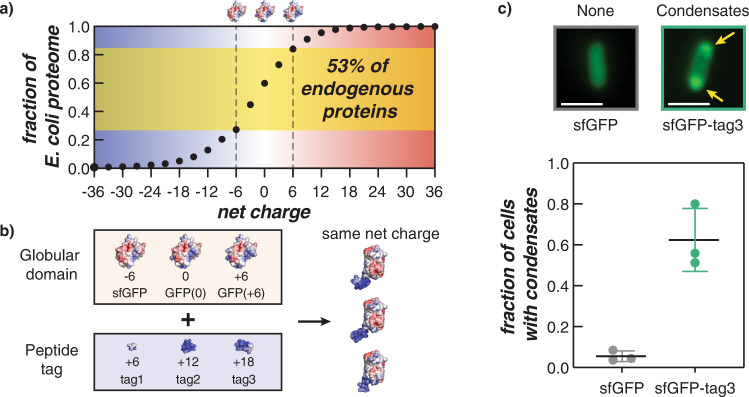
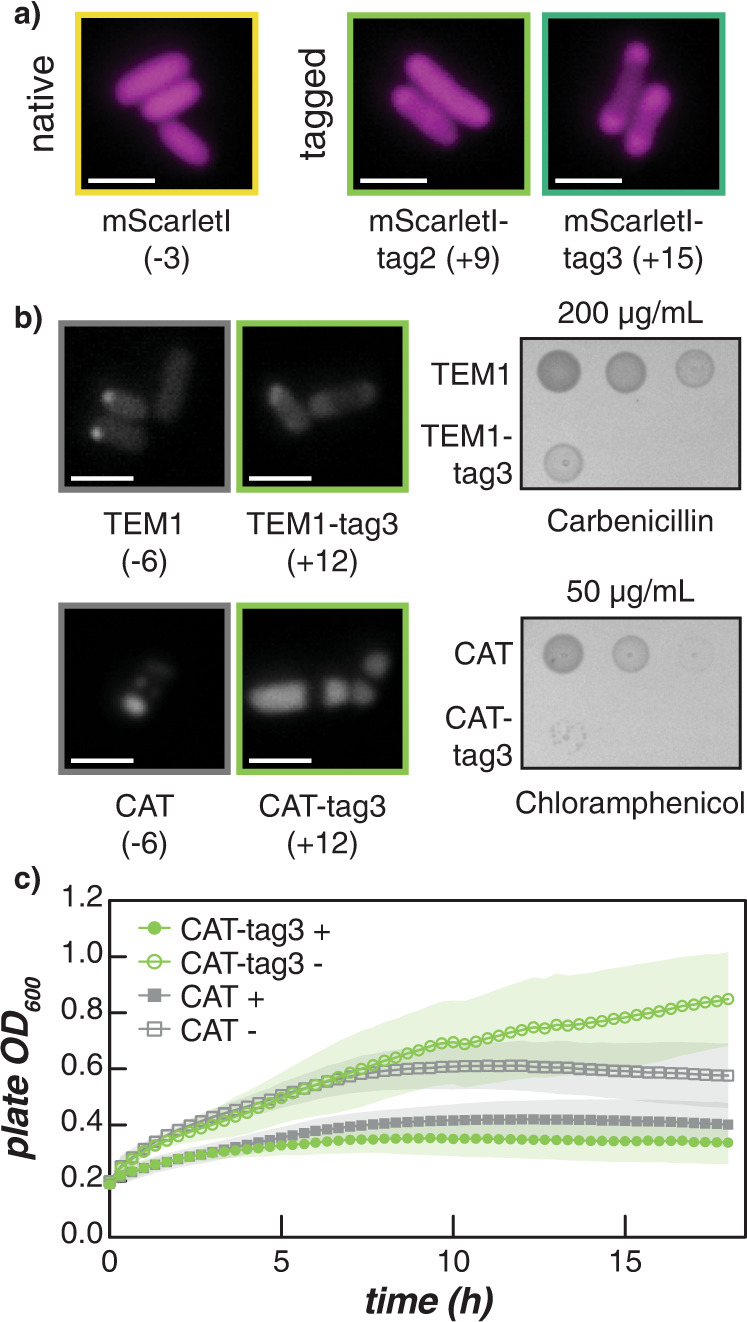
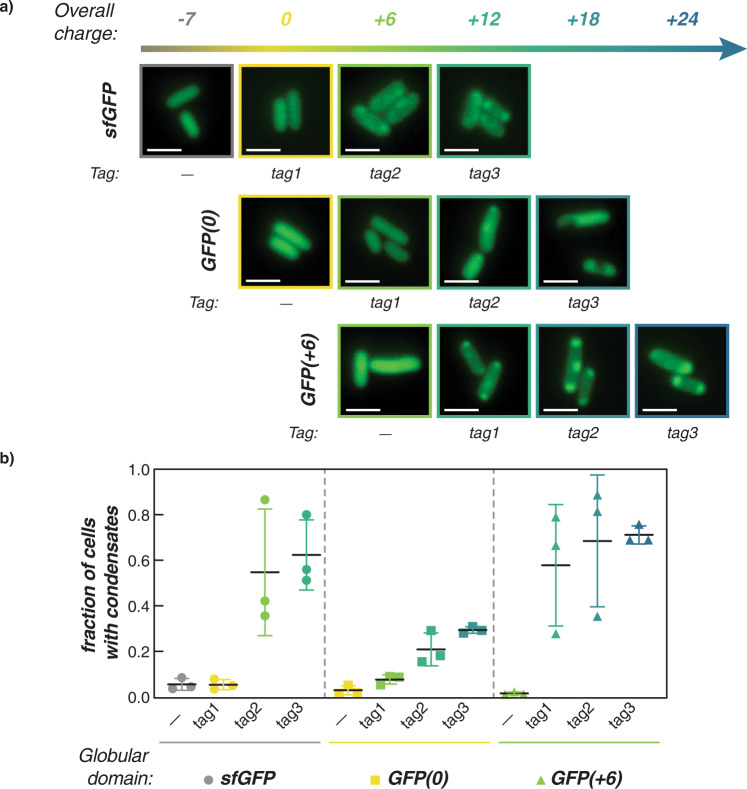
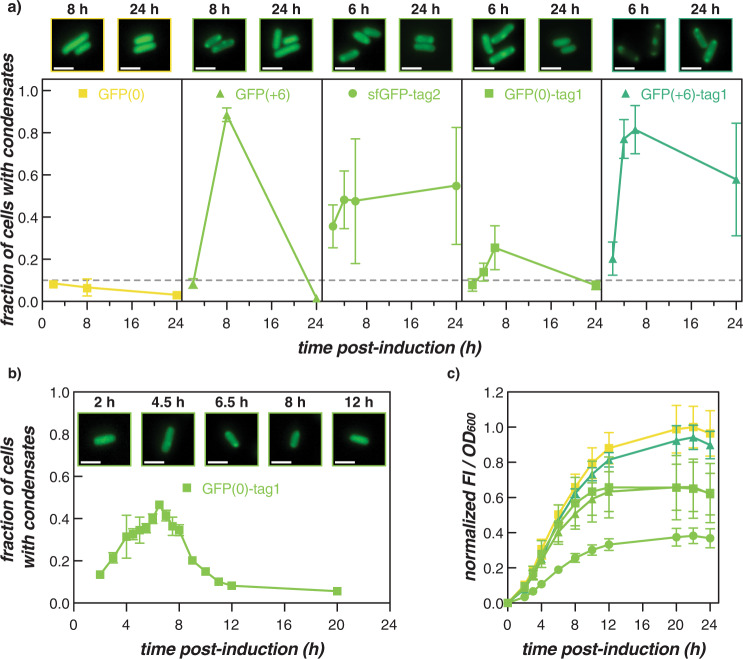
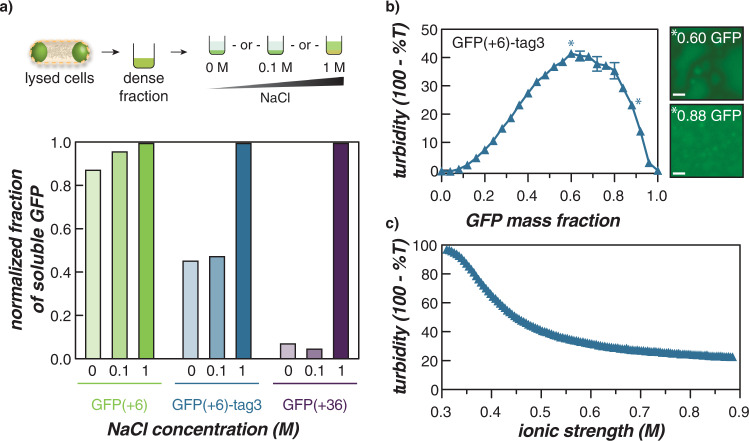
Phase separation provides intracellular organization and underlies a variety of cellular processes. These biomolecular condensates exhibit distinct physical and material properties. Current strategies for engineering condensate formation include using intrinsically disordered domains and altering protein surface charge by chemical supercharging or site-specific mutagenesis. We propose adding to this toolbox designer peptide tags that provide several potential advantages for engineering protein phase separation in bacteria. Herein, we demonstrate the use of short cationic peptide tags for sequestration of proteins of interest into bacterial condensates and provide a foundational study for their development as tools for condensate engineering. Using a panel of GFP variants, we demonstrate how cationic tag and globular domain charge contribute to intracellular phase separation in E. coli and observe that the tag can affect condensate disassembly at a given net charge near the phase separation boundary. We showcase the broad applicability of these tags by appending them onto enzymes and demonstrating that the sequestered enzymes remain catalytically active.
相分离提供了细胞内的组织,并为多种细胞过程提供了基础。这些生物分子凝聚物表现出独特的物理和材料特性。目前用于工程化凝聚物形成的策略包括使用固有无序结构域和通过化学超电荷或定点突变改变蛋白质表面电荷。我们建议在这个工具包中添加设计肽标签,这为在细菌中工程化蛋白质相分离提供了几个潜在的优势。在此,我们展示了短阳离子肽标签用于将感兴趣的蛋白质隔离到细菌凝聚物中,并为它们作为凝聚物工程工具的发展提供了基础研究。使用一组 GFP 变体,我们展示了阳离子标签和球状结构域电荷如何促进大肠杆菌中的细胞内相分离,并观察到标签可以影响在接近相分离边界的给定净电荷下的凝聚物解体。我们通过将这些标签附加到酶上并证明被隔离的酶仍然具有催化活性,展示了这些标签的广泛适用性。