Yeong Vivian, Werth Emily G, Brown Lewis M, Obermeyer Allie C
Department of Chemical Engineering, Columbia University, New York, New York 10027, United States.
Quantitative Proteomics and Metabolomics Center, Department of Biological Sciences, Columbia University, New York, New York 10027, United States.
ACS Cent Sci. 2020 Dec 23;6(12):2301-2310. doi: 10.1021/acscentsci.0c01146. Epub 2020 Nov 12.
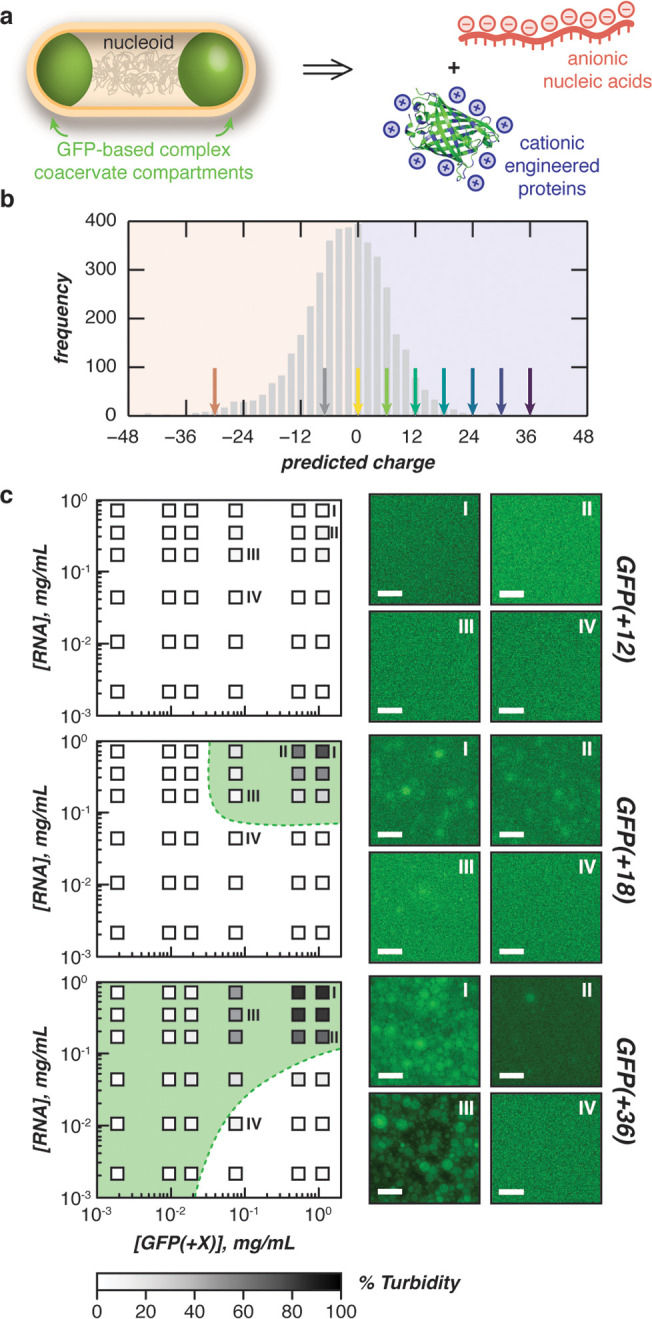
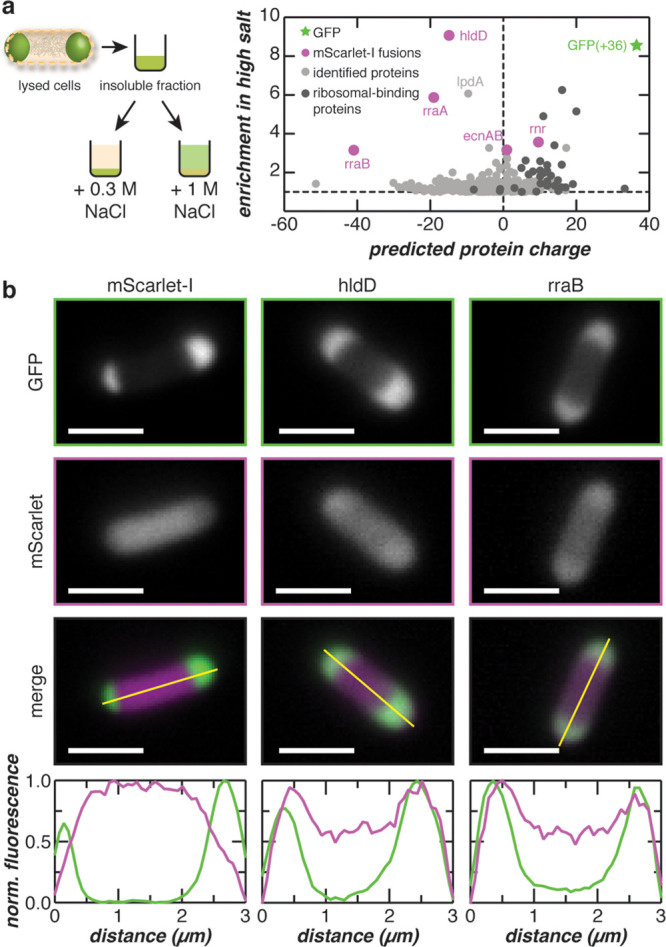
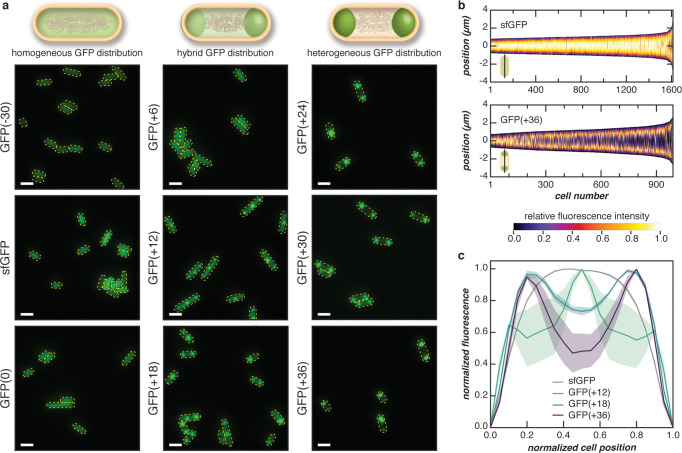
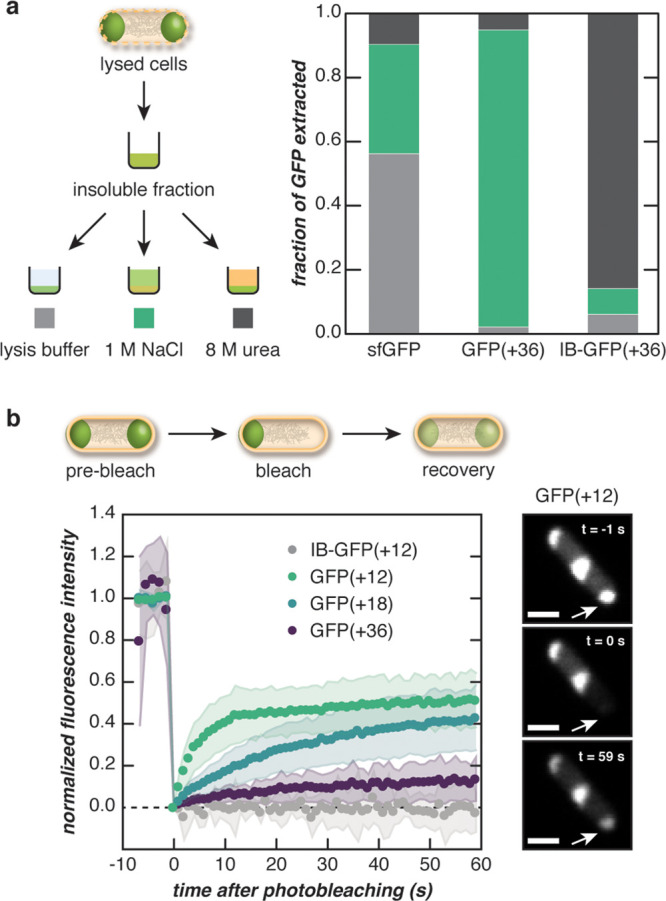
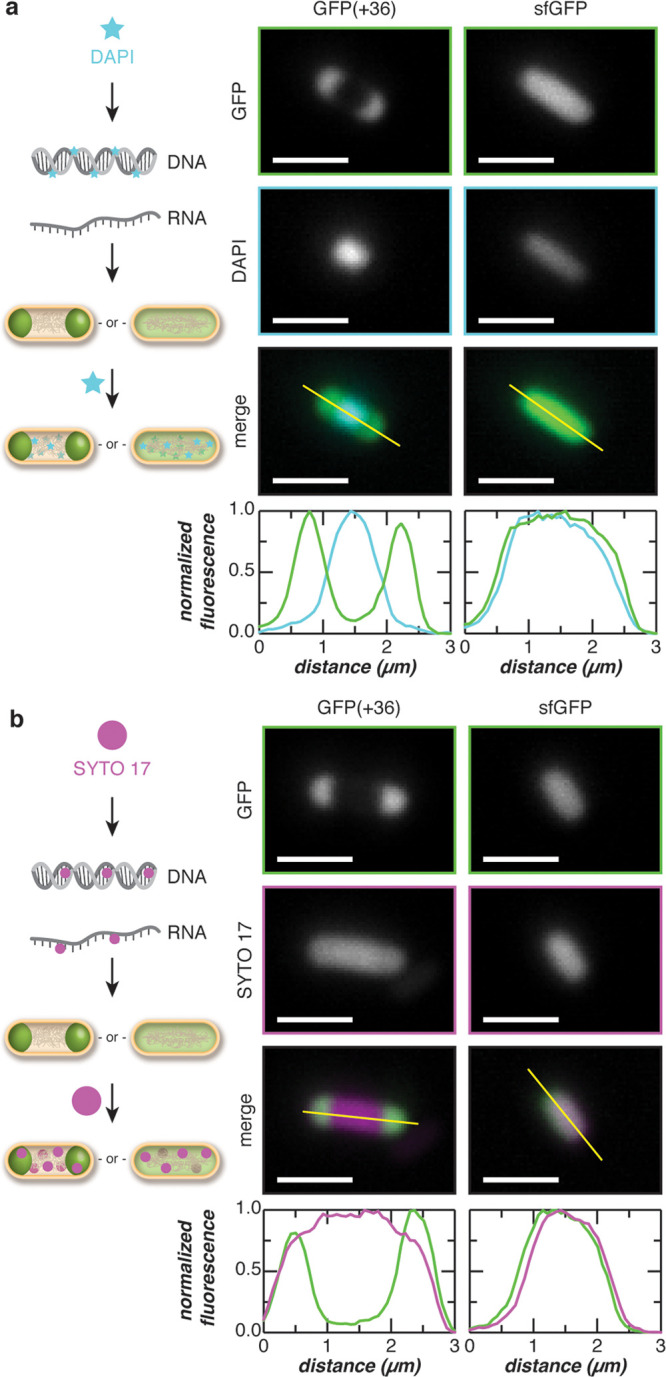
While eukaryotic cells have a myriad of membrane-bound organelles enabling the isolation of different chemical environments, prokaryotic cells lack these defined reaction vessels. Biomolecular condensates-organelles that lack a membrane-provide a strategy for cellular organization without a physical barrier while allowing for the dynamic, responsive organization of the cell. It is well established that intrinsically disordered protein domains drive condensate formation via liquid-liquid phase separation; however, the role of globular protein domains on intracellular phase separation remains poorly understood. We hypothesized that the overall charge of globular proteins would dictate the formation and concentration of condensates and systematically probed this hypothesis with supercharged proteins and nucleic acids in . Within this study, we demonstrated that condensates form via electrostatic interactions between engineered proteins and RNA and that these condensates are dynamic and only enrich specific nucleic acid and protein components. Herein, we propose a simple model for the phase separation based on protein charge that can be used to predict intracellular condensate formation. With these guidelines, we have paved the way to designer functional synthetic membraneless organelles with tunable control over globular protein function.
真核细胞拥有无数膜结合细胞器,能够隔离不同的化学环境,而原核细胞则缺乏这些明确的反应容器。生物分子凝聚物——缺乏膜的细胞器——提供了一种细胞组织策略,无需物理屏障,同时允许细胞进行动态、响应性的组织。众所周知,内在无序的蛋白质结构域通过液-液相分离驱动凝聚物形成;然而,球状蛋白质结构域在细胞内相分离中的作用仍知之甚少。我们假设球状蛋白质的总电荷将决定凝聚物的形成和浓度,并在……中用超带电蛋白质和核酸系统地探究了这一假设。在这项研究中,我们证明凝聚物通过工程蛋白与RNA之间的静电相互作用形成,并且这些凝聚物是动态的,只会富集特定的核酸和蛋白质成分。在此,我们提出了一个基于蛋白质电荷的相分离简单模型,可用于预测细胞内凝聚物的形成。有了这些指导原则,我们为设计功能性合成无膜细胞器铺平了道路,能够对球状蛋白质功能进行可调控制。