Yin Junjun, Chi Guangqing
Social Science Research Institute and Population Research Institute, The Pennsylvania State University, University Park, PA 16802 USA.
Department of Agricultural Economics, Sociology and Education, The Pennsylvania State University, University Park, PA 16802 USA.
Urban Inform. 2022;1(1):20. doi: 10.1007/s44212-022-00020-2. Epub 2022 Dec 19.
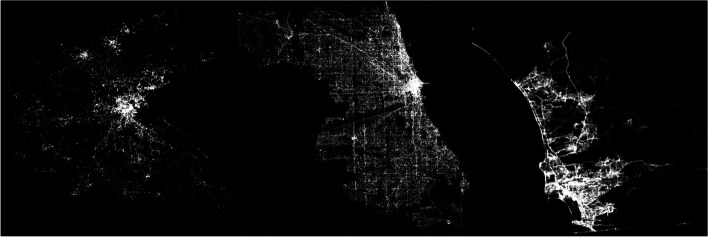
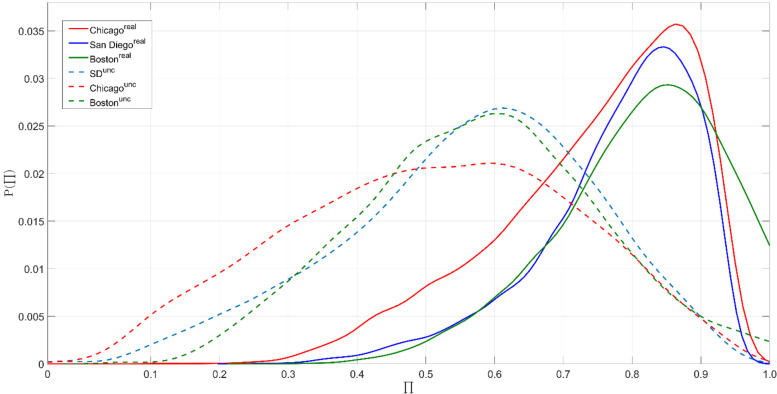
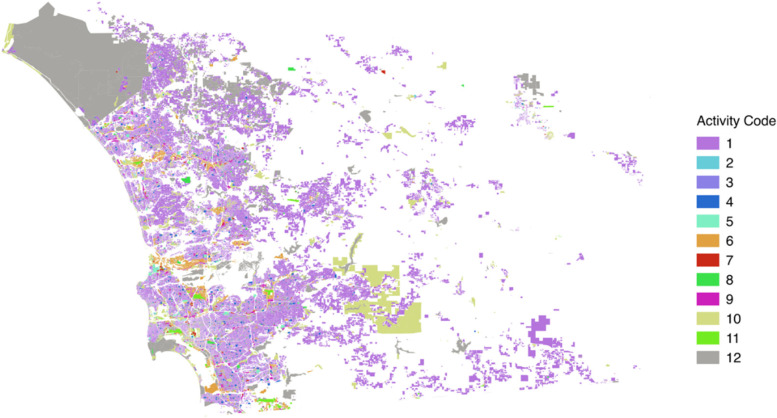
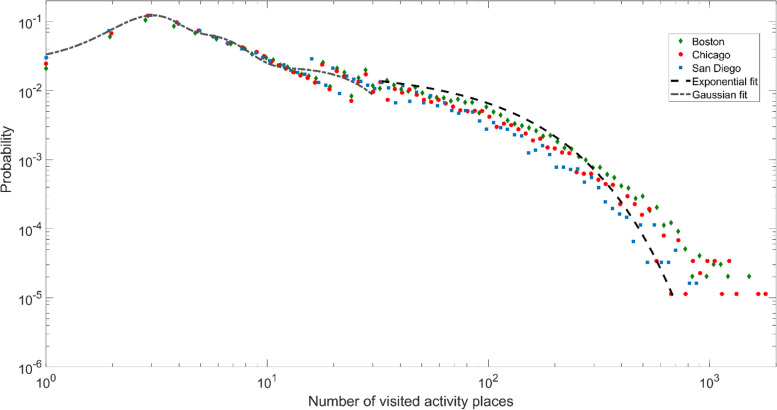
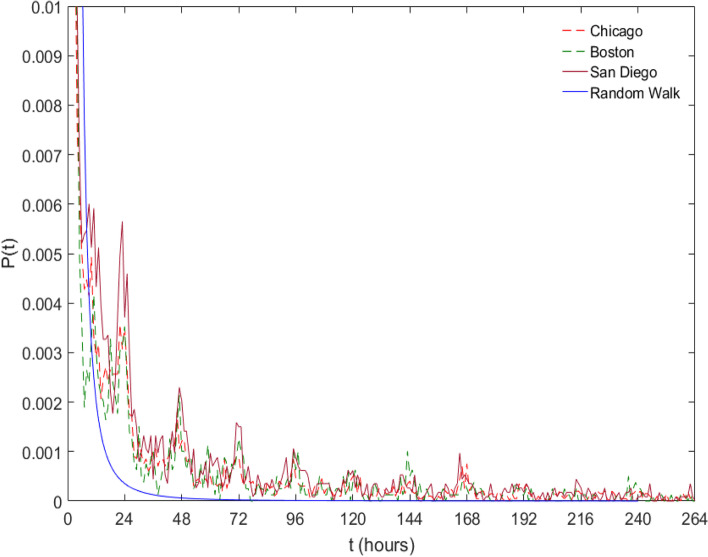
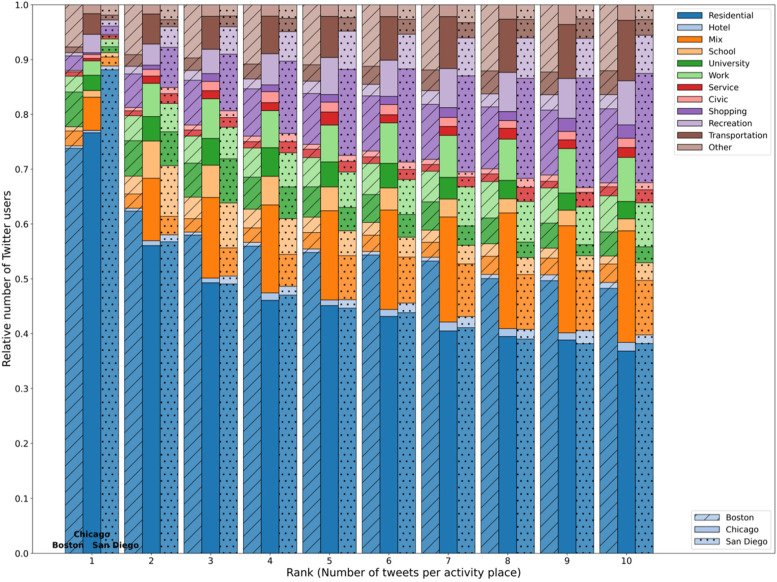
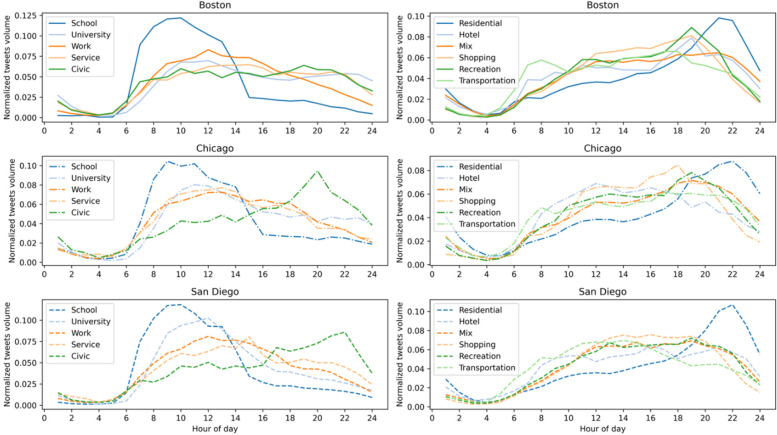
Seeking spatiotemporal patterns about how citizens interact with the urban space is critical for understanding how cities function. Such interactions were studied in various forms focusing on patterns of people's presence, action, and transition in the urban environment, which are defined as human-urban interactions in this paper. Using human activity datasets that utilize mobile positioning technology for tracking the locations and movements of individuals, researchers developed stochastic models to uncover preferential return behaviors and recurrent transitional activity structures in human-urban interactions. Ad-hoc heuristics and spatial clustering methods were applied to derive meaningful activity places in those studies. However, the lack of semantic meaning in the recorded locations makes it difficult to examine the details about how people interact with different activity places. In this study, we utilized geographic context-aware Twitter data to investigate the spatiotemporal patterns of people's interactions with their activity places in different urban settings. To test consistency of our findings, we used geo-located tweets to derive the activity places in Twitter users' location histories over three major U.S. metropolitan areas: Greater Boston Area, Chicago, and San Diego, where the geographic context of each location was inferred from its closest land use parcel. The results showed striking spatial and temporal similarities in Twitter users' interactions with their activity places among the three cities. By using entropy-based predictability measures, this study not only confirmed the preferential return behaviors as people tend to revisit a few highly frequented places but also revealed detailed characteristics of those activity places.
探寻市民与城市空间互动的时空模式对于理解城市的运转方式至关重要。此类互动已通过各种形式展开研究,重点关注人们在城市环境中的存在、行动和转移模式,本文将其定义为人类 - 城市互动。研究人员利用人类活动数据集,该数据集运用移动定位技术来跟踪个人的位置和移动情况,进而开发了随机模型,以揭示人类 - 城市互动中的优先返回行为和反复出现的过渡活动结构。在这些研究中,还应用了特殊启发式方法和空间聚类方法来推导有意义的活动场所。然而,记录位置中缺乏语义信息使得难以考察人们如何与不同活动场所互动的细节。在本研究中,我们利用具有地理上下文感知功能的推特数据,来调查人们在不同城市环境中与其活动场所互动的时空模式。为了检验我们研究结果的一致性,我们使用地理定位推文,从美国三个主要大都市区(大波士顿地区、芝加哥和圣地亚哥)推特用户的位置历史记录中推导活动场所,每个位置的地理上下文是根据其最接近的土地利用地块推断出来的。结果显示,这三个城市的推特用户与其活动场所的互动在空间和时间上存在显著相似性。通过基于熵的可预测性度量,本研究不仅证实了人们倾向于重访少数高频场所的优先返回行为,还揭示了这些活动场所的详细特征。