• 文献检索
  • 文档翻译
  • 深度研究
  • 学术资讯
  • Suppr Zotero 插件Zotero 插件
  • 邀请有礼
  • 套餐&价格
  • 历史记录
应用&插件
Suppr Zotero 插件Zotero 插件浏览器插件Mac 客户端Windows 客户端微信小程序
定价
高级版会员购买积分包购买API积分包
服务
文献检索文档翻译深度研究API 文档MCP 服务
关于我们
关于 Suppr公司介绍联系我们用户协议隐私条款
关注我们

Suppr 超能文献

核心技术专利:CN118964589B侵权必究
粤ICP备2023148730 号-1Suppr @ 2026

文献检索

告别复杂PubMed语法,用中文像聊天一样搜索,搜遍4000万医学文献。AI智能推荐,让科研检索更轻松。

立即免费搜索

文件翻译

保留排版,准确专业,支持PDF/Word/PPT等文件格式,支持 12+语言互译。

免费翻译文档

深度研究

AI帮你快速写综述,25分钟生成高质量综述,智能提取关键信息,辅助科研写作。

立即免费体验

推特揭示了 COVID-19 大流行期间的人类流动性动态。

Twitter reveals human mobility dynamics during the COVID-19 pandemic.

机构信息

Geoinformation and Big Data Research Lab, Department of Geography, University of South Carolina, Columbia, SC, United States of America.

Department of Geosciences, University of Arkansas, Fayetteville, AR, United States of America.

出版信息

PLoS One. 2020 Nov 10;15(11):e0241957. doi: 10.1371/journal.pone.0241957. eCollection 2020.

DOI:10.1371/journal.pone.0241957
PMID:33170889
原文链接:https://pmc.ncbi.nlm.nih.gov/articles/PMC7654838/
Abstract

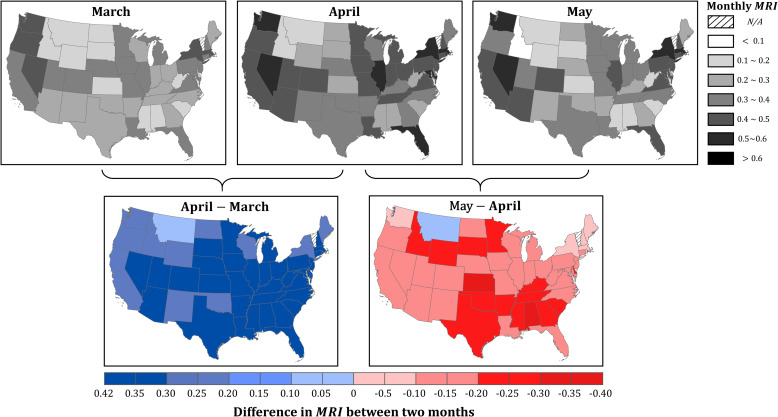
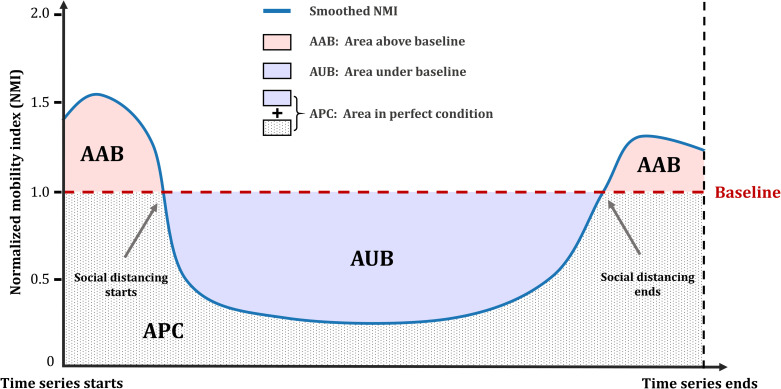
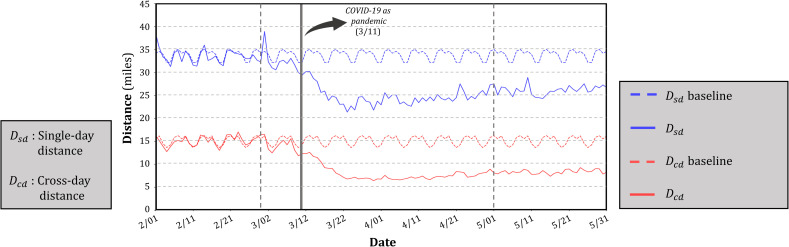
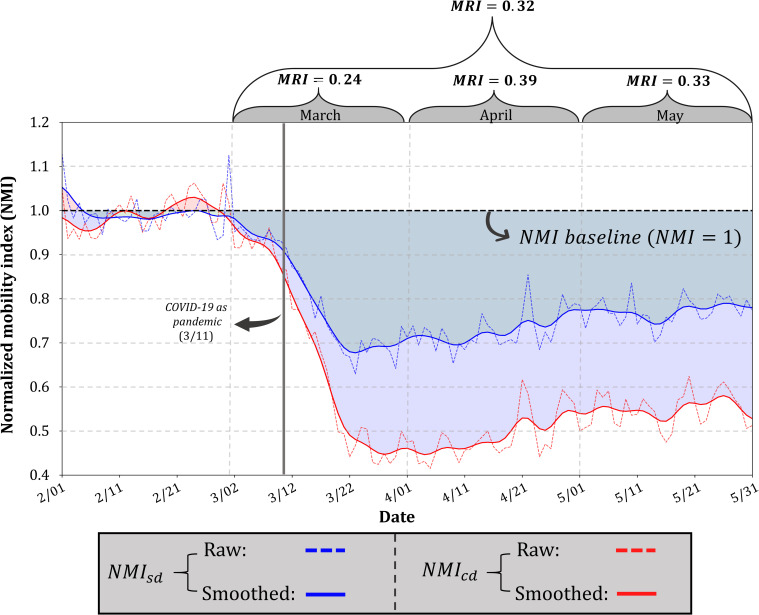
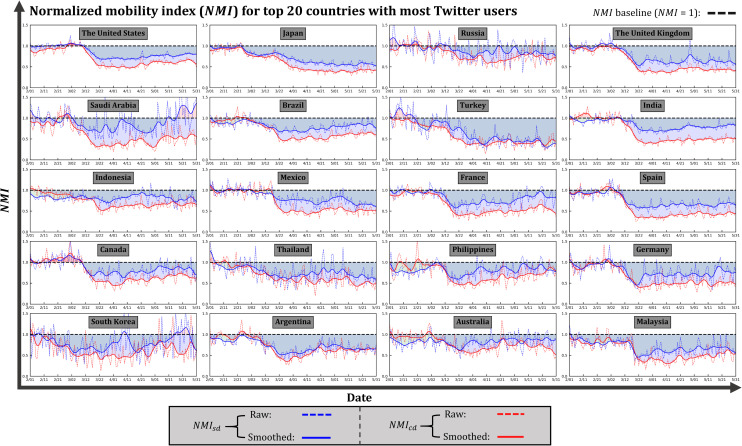
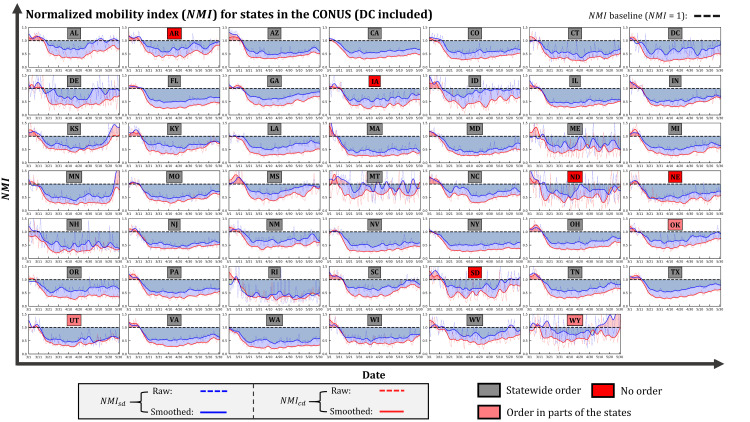
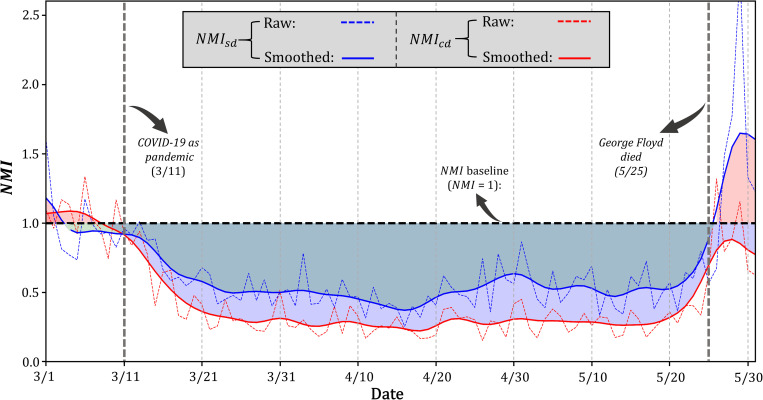
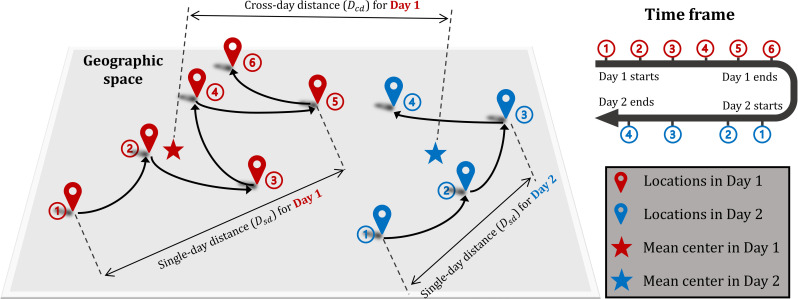
The current COVID-19 pandemic raises concerns worldwide, leading to serious health, economic, and social challenges. The rapid spread of the virus at a global scale highlights the need for a more harmonized, less privacy-concerning, easily accessible approach to monitoring the human mobility that has proven to be associated with viral transmission. In this study, we analyzed over 580 million tweets worldwide to see how global collaborative efforts in reducing human mobility are reflected from the user-generated information at the global, country, and U.S. state scale. Considering the multifaceted nature of mobility, we propose two types of distance: the single-day distance and the cross-day distance. To quantify the responsiveness in certain geographic regions, we further propose a mobility-based responsive index (MRI) that captures the overall degree of mobility changes within a time window. The results suggest that mobility patterns obtained from Twitter data are amenable to quantitatively reflect the mobility dynamics. Globally, the proposed two distances had greatly deviated from their baselines after March 11, 2020, when WHO declared COVID-19 as a pandemic. The considerably less periodicity after the declaration suggests that the protection measures have obviously affected people's travel routines. The country scale comparisons reveal the discrepancies in responsiveness, evidenced by the contrasting mobility patterns in different epidemic phases. We find that the triggers of mobility changes correspond well with the national announcements of mitigation measures, proving that Twitter-based mobility implies the effectiveness of those measures. In the U.S., the influence of the COVID-19 pandemic on mobility is distinct. However, the impacts vary substantially among states.

摘要

当前的 COVID-19 大流行引起了全球关注,给健康、经济和社会带来了严重挑战。病毒在全球范围内的迅速传播,凸显了需要采取更加协调、隐私问题较少、易于获取的方法来监测与病毒传播相关的人类流动性。在本研究中,我们分析了全球超过 5.8 亿条推文,以了解从用户生成的信息中如何反映全球合作努力减少人类流动性,这些信息来自全球、国家和美国各州的层面。考虑到流动性的多面性,我们提出了两种距离:单日距离和跨日距离。为了量化某些地理区域的响应能力,我们进一步提出了基于流动性的响应指数(MRI),该指数可以捕捉在时间窗口内的整体流动性变化程度。结果表明,从 Twitter 数据中获取的流动性模式可以定量反映流动性动态。从全球范围来看,自 2020 年 3 月 11 日世界卫生组织宣布 COVID-19 为大流行以来,这两种距离与基线相比都有很大的偏离。宣布之后,周期明显减少,这表明保护措施明显影响了人们的旅行习惯。国家层面的比较揭示了响应能力的差异,这在不同的疫情阶段的流动性模式中得到了证明。我们发现,流动性变化的触发因素与缓解措施的国家公告相符,这证明了基于 Twitter 的流动性反映了这些措施的有效性。在美国,COVID-19 大流行对流动性的影响是明显的。然而,各州之间的影响差异很大。
https://cdn.ncbi.nlm.nih.gov/pmc/blobs/df19/7654838/79bd95eb2e33/pone.0241957.g008.jpg
https://cdn.ncbi.nlm.nih.gov/pmc/blobs/df19/7654838/da5cae72488f/pone.0241957.g001.jpg
https://cdn.ncbi.nlm.nih.gov/pmc/blobs/df19/7654838/3bdaee3b0976/pone.0241957.g002.jpg
https://cdn.ncbi.nlm.nih.gov/pmc/blobs/df19/7654838/ab2c37aa56fe/pone.0241957.g003.jpg
https://cdn.ncbi.nlm.nih.gov/pmc/blobs/df19/7654838/80c33ceb235d/pone.0241957.g004.jpg
https://cdn.ncbi.nlm.nih.gov/pmc/blobs/df19/7654838/3c84ab52885a/pone.0241957.g005.jpg
https://cdn.ncbi.nlm.nih.gov/pmc/blobs/df19/7654838/8ec0b2255d73/pone.0241957.g006.jpg
https://cdn.ncbi.nlm.nih.gov/pmc/blobs/df19/7654838/741196601557/pone.0241957.g007.jpg
https://cdn.ncbi.nlm.nih.gov/pmc/blobs/df19/7654838/79bd95eb2e33/pone.0241957.g008.jpg
https://cdn.ncbi.nlm.nih.gov/pmc/blobs/df19/7654838/da5cae72488f/pone.0241957.g001.jpg
https://cdn.ncbi.nlm.nih.gov/pmc/blobs/df19/7654838/3bdaee3b0976/pone.0241957.g002.jpg
https://cdn.ncbi.nlm.nih.gov/pmc/blobs/df19/7654838/ab2c37aa56fe/pone.0241957.g003.jpg
https://cdn.ncbi.nlm.nih.gov/pmc/blobs/df19/7654838/80c33ceb235d/pone.0241957.g004.jpg
https://cdn.ncbi.nlm.nih.gov/pmc/blobs/df19/7654838/3c84ab52885a/pone.0241957.g005.jpg
https://cdn.ncbi.nlm.nih.gov/pmc/blobs/df19/7654838/8ec0b2255d73/pone.0241957.g006.jpg
https://cdn.ncbi.nlm.nih.gov/pmc/blobs/df19/7654838/741196601557/pone.0241957.g007.jpg
https://cdn.ncbi.nlm.nih.gov/pmc/blobs/df19/7654838/79bd95eb2e33/pone.0241957.g008.jpg

相似文献

1
Twitter reveals human mobility dynamics during the COVID-19 pandemic.推特揭示了 COVID-19 大流行期间的人类流动性动态。
PLoS One. 2020 Nov 10;15(11):e0241957. doi: 10.1371/journal.pone.0241957. eCollection 2020.
2
Conversations and Medical News Frames on Twitter: Infodemiological Study on COVID-19 in South Korea.推特上的对话与医学新闻框架:韩国新冠肺炎信息流行病学研究
J Med Internet Res. 2020 May 5;22(5):e18897. doi: 10.2196/18897.
3
Geolocated Twitter social media data to describe the geographic spread of SARS-CoV-2.利用地理定位的 Twitter 社交媒体数据来描述 SARS-CoV-2 的地理传播。
J Travel Med. 2020 Aug 20;27(5). doi: 10.1093/jtm/taaa120.
4
Temporal and Location Variations, and Link Categories for the Dissemination of COVID-19-Related Information on Twitter During the SARS-CoV-2 Outbreak in Europe: Infoveillance Study.欧洲SARS-CoV-2疫情期间推特上新冠疫情相关信息传播的时间和地点变化以及链接类别:信息监测研究
J Med Internet Res. 2020 Aug 28;22(8):e19629. doi: 10.2196/19629.
5
COVID-19 and the 5G Conspiracy Theory: Social Network Analysis of Twitter Data.新冠疫情与5G阴谋论:基于推特数据的社交网络分析
J Med Internet Res. 2020 May 6;22(5):e19458. doi: 10.2196/19458.
6
Top Concerns of Tweeters During the COVID-19 Pandemic: Infoveillance Study.新冠疫情期间推特用户的主要担忧:信息监测研究
J Med Internet Res. 2020 Apr 21;22(4):e19016. doi: 10.2196/19016.
7
Creating COVID-19 Stigma by Referencing the Novel Coronavirus as the "Chinese virus" on Twitter: Quantitative Analysis of Social Media Data.在推特上将新型冠状病毒称为“中国病毒”从而制造新冠病毒污名化:社交媒体数据的定量分析
J Med Internet Res. 2020 May 6;22(5):e19301. doi: 10.2196/19301.
8
Use of Twitter social media activity as a proxy for human mobility to predict the spatiotemporal spread of COVID-19 at global scale.利用推特社交媒体活动作为人类流动性的代理指标,以预测新冠病毒在全球范围内的时空传播。
Geospat Health. 2020 Jun 15;15(1). doi: 10.4081/gh.2020.882.
9
Human mobility trends during the early stage of the COVID-19 pandemic in the United States.美国 COVID-19 大流行早期的人口流动趋势。
PLoS One. 2020 Nov 9;15(11):e0241468. doi: 10.1371/journal.pone.0241468. eCollection 2020.
10
Topics, Trends, and Sentiments of Tweets About the COVID-19 Pandemic: Temporal Infoveillance Study.关于新冠疫情的推文主题、趋势和情绪:时间信息监测研究
J Med Internet Res. 2020 Oct 23;22(10):e22624. doi: 10.2196/22624.

引用本文的文献

1
Impact of immobility and mobility activities on the spread of COVID-19: Evidence from European countries.行动不便与活动对新冠病毒传播的影响:来自欧洲国家的证据。
Reg Sci Policy Prac. 2022 Jul 19. doi: 10.1111/rsp3.12565.
2
Characterizing Experiences With Hikikomori Syndrome on Twitter Among Japanese-Language Users: Qualitative Infodemiology Content Analysis.日本推特用户中茧居症候群体验的特征分析:定性信息传播流行病学内容分析
JMIR Infodemiology. 2025 Feb 24;5:e65610. doi: 10.2196/65610.
3
A systematic review of using population-level human mobility data to understand SARS-CoV-2 transmission.

本文引用的文献

1
COVID-19 outbreak response, a dataset to assess mobility changes in Italy following national lockdown.COVID-19 疫情应对,评估意大利全国封锁后流动性变化的数据集。
Sci Data. 2020 Jul 8;7(1):230. doi: 10.1038/s41597-020-00575-2.
2
Spread and dynamics of the COVID-19 epidemic in Italy: Effects of emergency containment measures.意大利 COVID-19 疫情的传播和动态:紧急遏制措施的影响。
Proc Natl Acad Sci U S A. 2020 May 12;117(19):10484-10491. doi: 10.1073/pnas.2004978117. Epub 2020 Apr 23.
3
Information Technology-Based Tracing Strategy in Response to COVID-19 in South Korea-Privacy Controversies.
一项关于利用人群层面人类流动数据来理解新冠病毒传播的系统综述。
Nat Commun. 2024 Dec 3;15(1):10504. doi: 10.1038/s41467-024-54895-7.
4
Urban birds' tolerance towards humans was largely unaffected by COVID-19 shutdown-induced variation in human presence.城市鸟类对人类的耐受性在很大程度上不受新冠疫情封锁导致的人类活动变化的影响。
Commun Biol. 2024 Jul 17;7(1):874. doi: 10.1038/s42003-024-06387-z.
5
Twitter Analysis of Health Care Workers' Sentiment and Discourse Regarding Post-COVID-19 Condition in Children and Young People: Mixed Methods Study.社交媒体分析医护人员对儿童和青少年新冠后状况的情绪和言论:混合方法研究
J Med Internet Res. 2024 Apr 17;26:e50139. doi: 10.2196/50139.
6
COVID-19 impacts on non-work travel patterns: A place-based investigation using smartphone mobility data.新冠疫情对非工作出行模式的影响:基于智能手机移动性数据的地域调查。
Environ Plan B Urban Anal City Sci. 2023 Mar;50(3):642-659. doi: 10.1177/23998083221124930. Epub 2022 Sep 4.
7
Twitter social mobility data reveal demographic variations in social distancing practices during the COVID-19 pandemic.推特社交流动性数据揭示了 COVID-19 大流行期间社会隔离措施的人口统计学差异。
Sci Rep. 2024 Jan 12;14(1):1165. doi: 10.1038/s41598-024-51555-0.
8
Using geospatial social media data for infectious disease studies: a systematic review.利用地理空间社交媒体数据进行传染病研究:一项系统综述。
Int J Digit Earth. 2023;16(1):130-157. doi: 10.1080/17538947.2022.2161652. Epub 2023 Jan 3.
9
Public Health Policy, Political Ideology, and Public Emotion Related to COVID-19 in the U.S.美国与 COVID-19 相关的公共卫生政策、政治意识形态和公众情绪
Int J Environ Res Public Health. 2023 Oct 29;20(21):6993. doi: 10.3390/ijerph20216993.
10
Impacts on Human Movement in Australian Cities Related to the COVID-19 Pandemic.与新冠疫情相关的澳大利亚城市中人类活动受到的影响。
Trop Med Infect Dis. 2023 Jul 14;8(7):363. doi: 10.3390/tropicalmed8070363.
韩国应对新冠疫情的基于信息技术的追踪策略——隐私争议
JAMA. 2020 Jun 2;323(21):2129-2130. doi: 10.1001/jama.2020.6602.
4
Beware of the second wave of COVID-19.谨防新冠疫情第二波来袭。
Lancet. 2020 Apr 25;395(10233):1321-1322. doi: 10.1016/S0140-6736(20)30845-X. Epub 2020 Apr 8.
5
Effective containment explains subexponential growth in recent confirmed COVID-19 cases in China.有效的遏制解释了近期中国确诊 COVID-19 病例呈次指数级增长的原因。
Science. 2020 May 15;368(6492):742-746. doi: 10.1126/science.abb4557. Epub 2020 Apr 8.
6
A nationwide survey of psychological distress among Chinese people in the COVID-19 epidemic: implications and policy recommendations.新冠疫情期间中国人心理困扰的全国性调查:启示与政策建议
Gen Psychiatr. 2020 Mar 6;33(2):e100213. doi: 10.1136/gpsych-2020-100213. eCollection 2020.
7
The effect of human mobility and control measures on the COVID-19 epidemic in China.人口流动和防控措施对中国 COVID-19 疫情的影响。
Science. 2020 May 1;368(6490):493-497. doi: 10.1126/science.abb4218. Epub 2020 Mar 25.
8
Aggregated mobility data could help fight COVID-19.聚合移动性数据有助于抗击新冠疫情。
Science. 2020 Apr 10;368(6487):145-146. doi: 10.1126/science.abb8021. Epub 2020 Mar 23.
9
The global community needs to swiftly ramp up the response to contain COVID-19.全球社会需要迅速加强应对措施以遏制新冠病毒。
Lancet. 2020 Apr 4;395(10230):1109-1110. doi: 10.1016/S0140-6736(20)30679-6. Epub 2020 Mar 19.
10
Transmission potential and severity of COVID-19 in South Korea.韩国 COVID-19 的传播潜力和严重程度。
Int J Infect Dis. 2020 Apr;93:339-344. doi: 10.1016/j.ijid.2020.03.031. Epub 2020 Mar 18.