Pang Fei, Niu Junqi, Solanki Manoj Kumar, Nosheen Shaista, Liu Zhaoliang, Wang Zhen
College of Agriculture, Yulin Normal University, Yulin, China.
Plant Cytogenetics and Molecular Biology Group, Faculty of Natural Sciences, Institute of Biology, Biotechnology and Environmental Protection, University of Silesia in Katowice, Katowice, Poland.
Front Plant Sci. 2022 Dec 12;13:1016831. doi: 10.3389/fpls.2022.1016831. eCollection 2022.
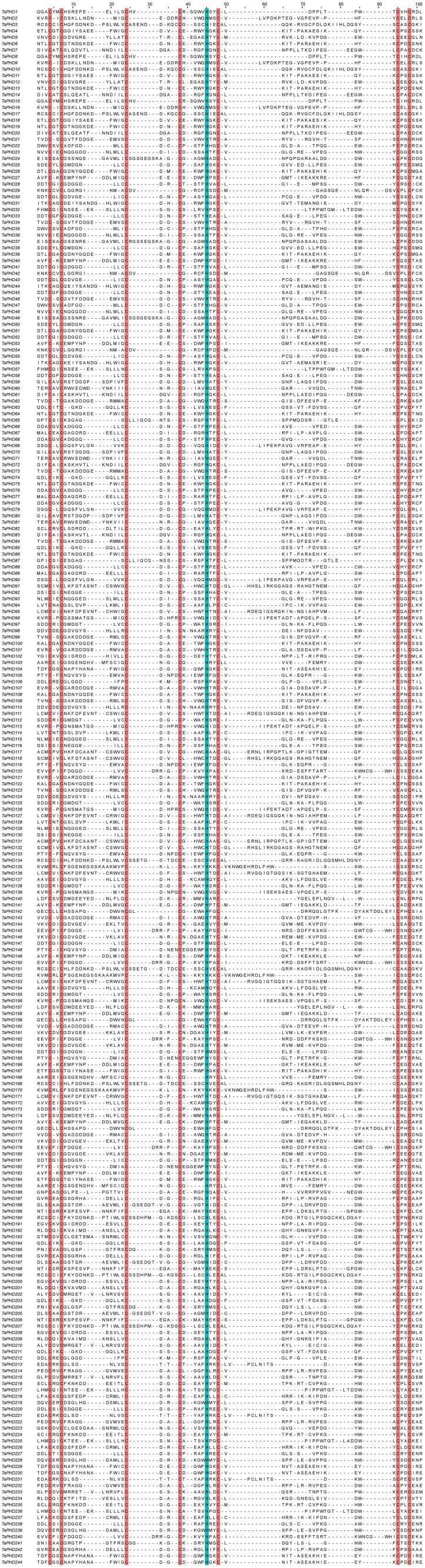
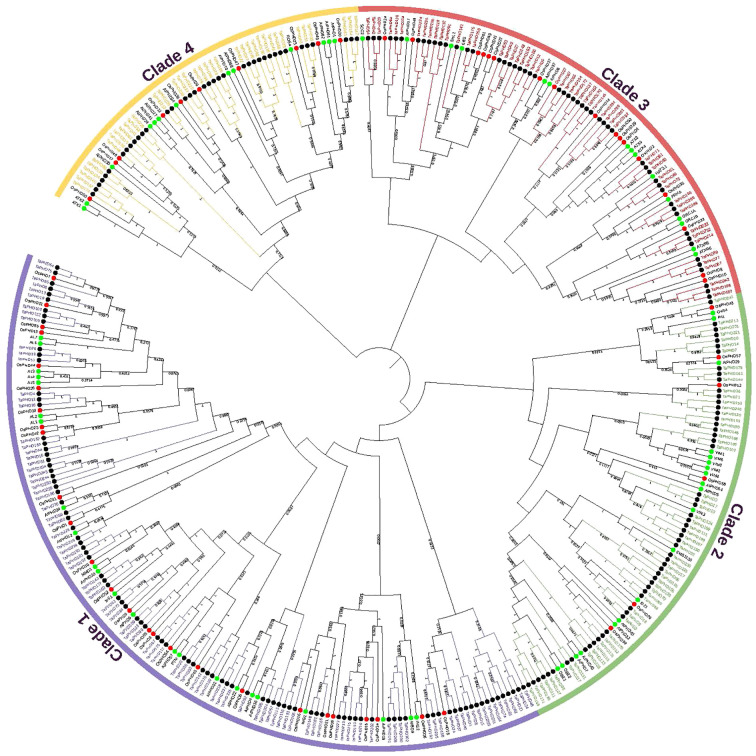
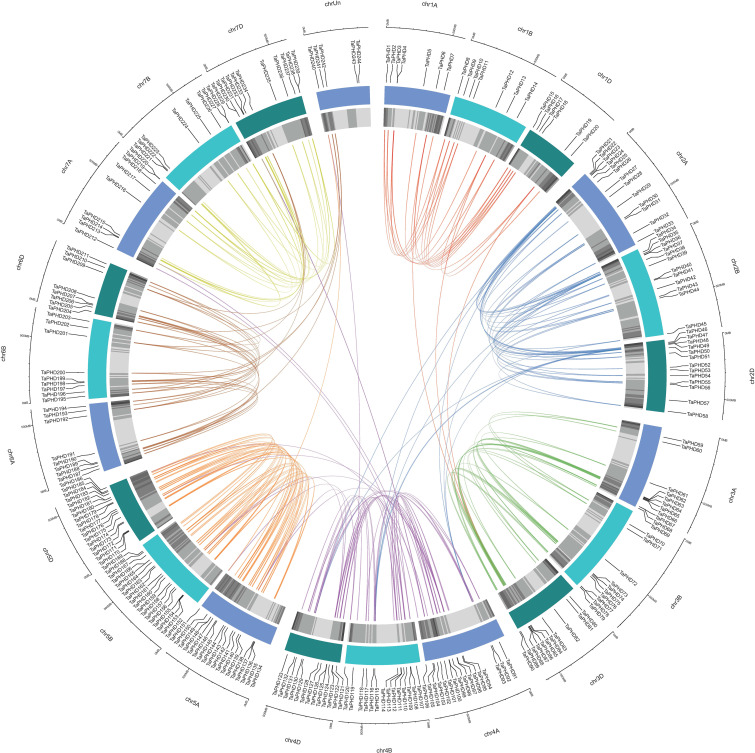
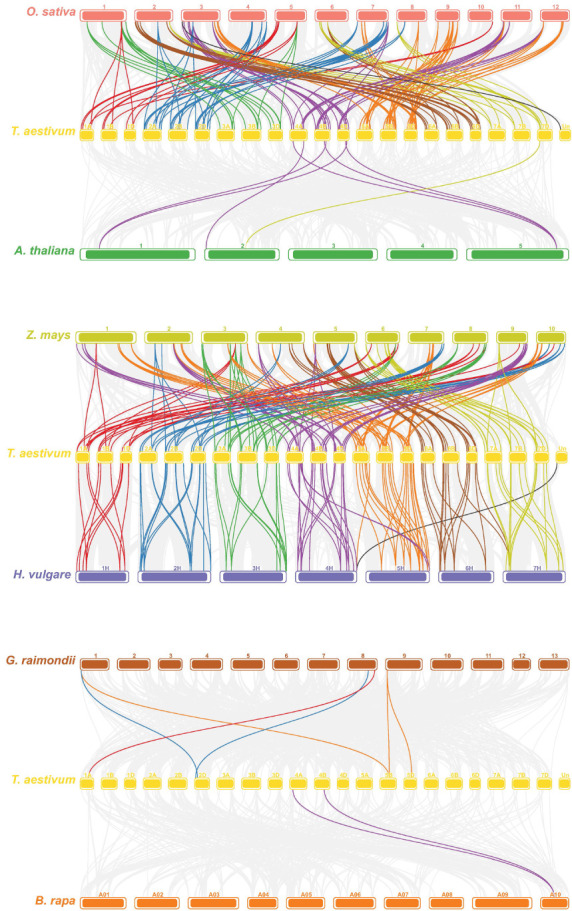
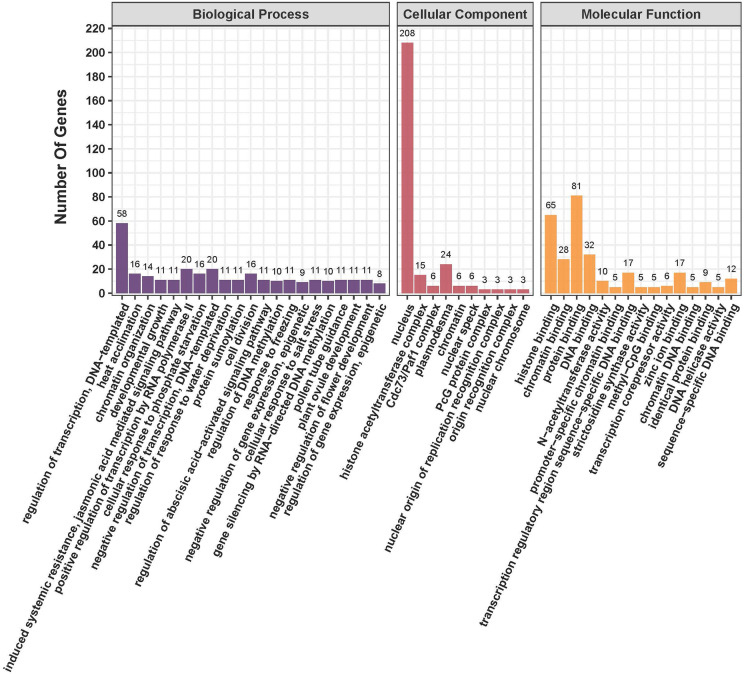
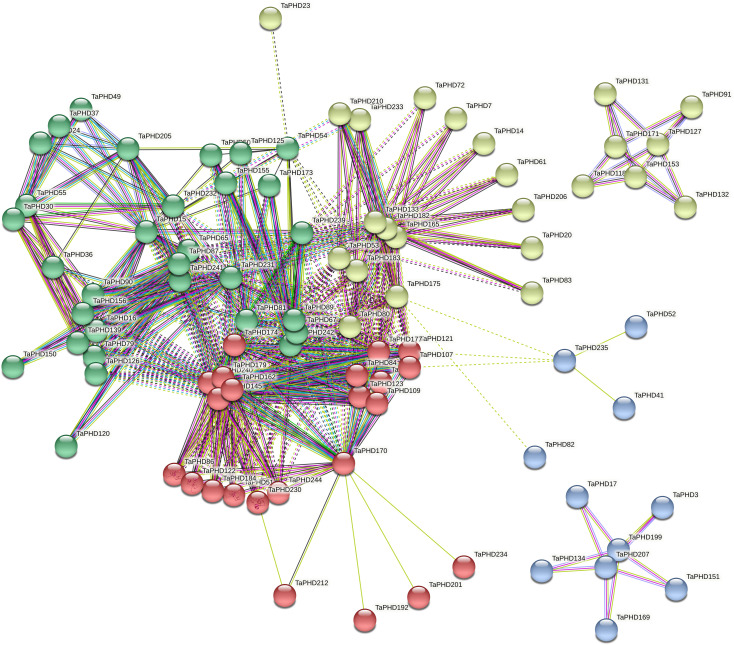
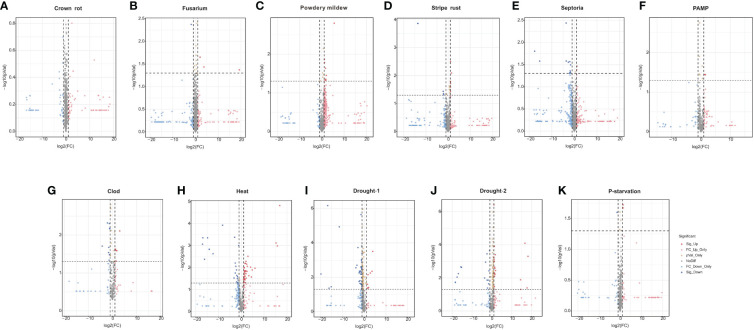
Plant homeodomain (PHD) transcription factors (TFs) are a class of proteins with conserved Cys4-His-Cys3 domains that play important roles in plant growth and development and in response to abiotic stresses. Although characterization of has been performed in plants, little is known about their function in wheat ( L.), especially under stress conditions. In the present study, 244 TaPHDs were identified in wheat using comparative genomics. We renamed them based on their chromosomal distribution, and almost all PHD proteins were predicted to be located in the nucleus. According to the unrooted neighbor-joining phylogenetic tree, gene structure, and motif analyses, genes were divided into four clades. A total of 149 genes were assigned to arise from duplication events. Furthermore, 230 gene pairs came from wheat itself, and 119, 186, 168, 7, 2, and 6 gene pairs came from six other species (, , , , and , respectively). A total of 548 interacting protein branches were identified to be involved in the protein interaction network. Tissue-specific expression pattern analysis showed that were highly expressed in the stigma and ovary during flowering, suggesting that the gene plays an active role in the reproductive growth of wheat. In addition, the qRT-PCR results further confirmed that these genes are involved in the abiotic stress response of wheat. In conclusion, our study provides a theoretical basis for deciphering the molecular functions of , particularly in response to abiotic stress.
植物同源异型域(PHD)转录因子是一类具有保守的Cys4-His-Cys3结构域的蛋白质,在植物生长发育及应对非生物胁迫中发挥重要作用。尽管已对植物中的PHD转录因子进行了表征,但对其在小麦(Triticum aestivum L.)中的功能了解甚少,尤其是在胁迫条件下。在本研究中,利用比较基因组学在小麦中鉴定出244个TaPHD基因。我们根据它们的染色体分布对其进行重新命名,并且几乎所有的PHD蛋白都被预测定位于细胞核中。根据无根邻接法系统发育树、基因结构和基序分析,TaPHD基因被分为四个进化枝。共有149个TaPHD基因被认为源于复制事件。此外,230个基因对来自小麦自身,119、186、168、7、2和6个基因对分别来自其他六个物种(分别为大麦、水稻、玉米、高粱、短柄草和二穗短柄草)。总共鉴定出548个相互作用蛋白分支参与蛋白质相互作用网络。组织特异性表达模式分析表明,TaPHD基因在开花期的柱头和子房中高度表达,这表明TaPHD基因在小麦的生殖生长中发挥着积极作用。此外,qRT-PCR结果进一步证实这些TaPHD基因参与小麦的非生物胁迫响应。总之,我们的研究为解析TaPHD基因的分子功能,特别是其对非生物胁迫的响应,提供了理论依据。