Rui Tao, Zhang Xiaobing, Guo Jufeng, Xiang Aizhai, Tang Ning, Liu Jian, Mao Zonglei
Department of Surgery, Affiliated Hangzhou First People's Hospital, Zhejiang University School of Medicine, Hangzhou 310003, China.
The Center for Integrated Oncology and Precision Medicine, Affiliated Hangzhou First People's Hospital, Zhejiang University School of Medicine, Hangzhou 310003, China.
Cancers (Basel). 2022 Dec 29;15(1):205. doi: 10.3390/cancers15010205.
Serum exosomes are emerging as key liquid biopsy biomarkers for the early diagnosis of cancer. However, the proportion and distribution of small RNA (sRNA) species from serum exosomes of hepatocellular carcinoma (HCC) patients remain unclear. Effective and reliable biomarkers for HCC diagnosis should be explored.
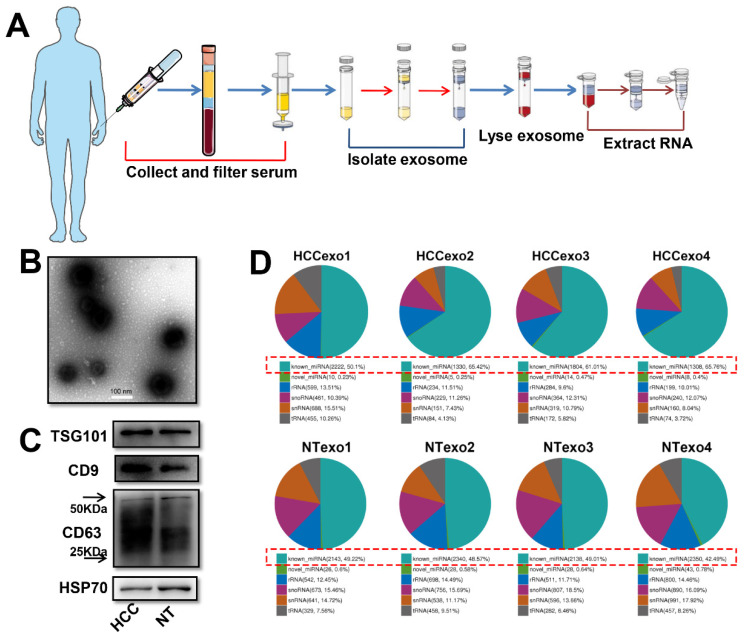
In this study, we aimed to use sRNA sequencing to profile the sRNAs of serum exosomes in HCC and non-tumor donors. The serum exosomes of 124 HCC patients and 46 non-tumor donors were enrolled for detecting the values of the potential biomarkers for the diagnosis of HCC.
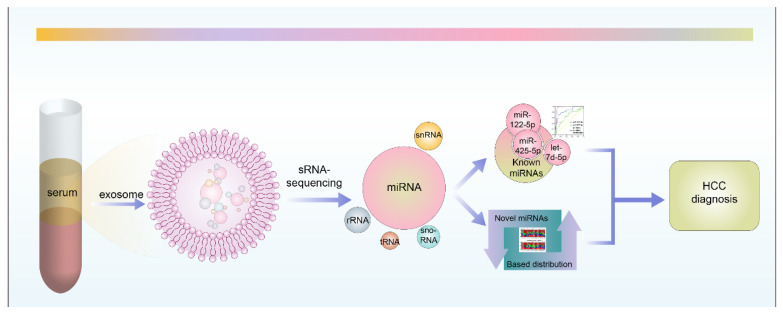
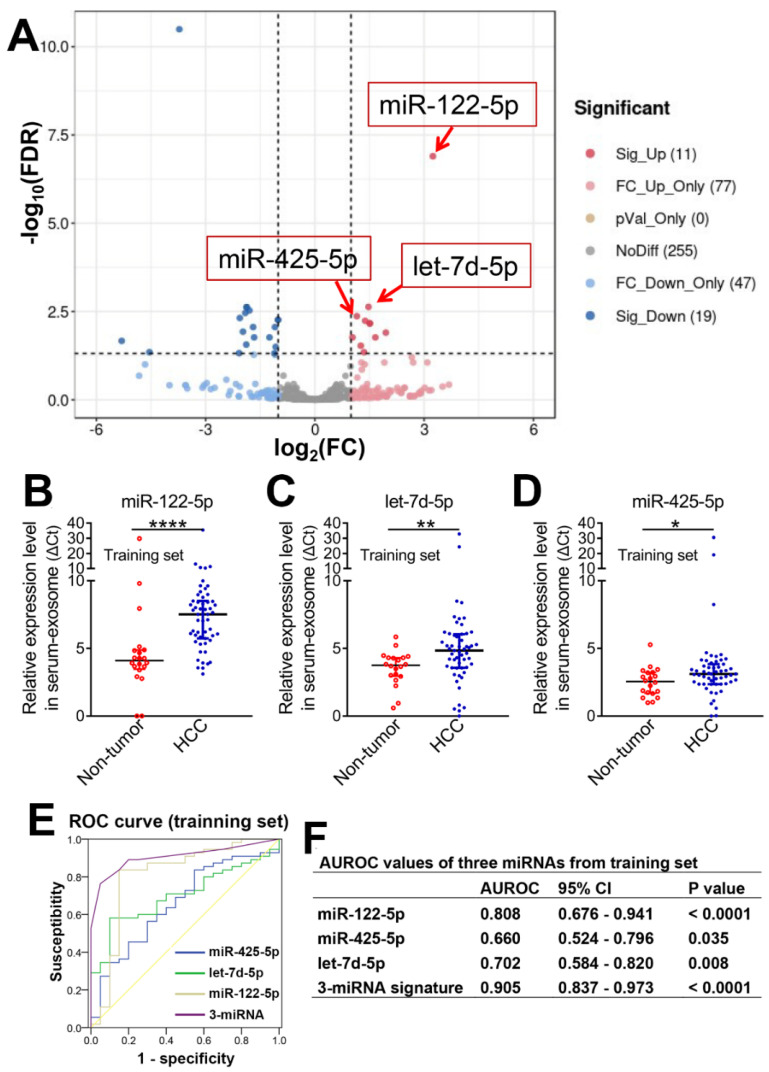
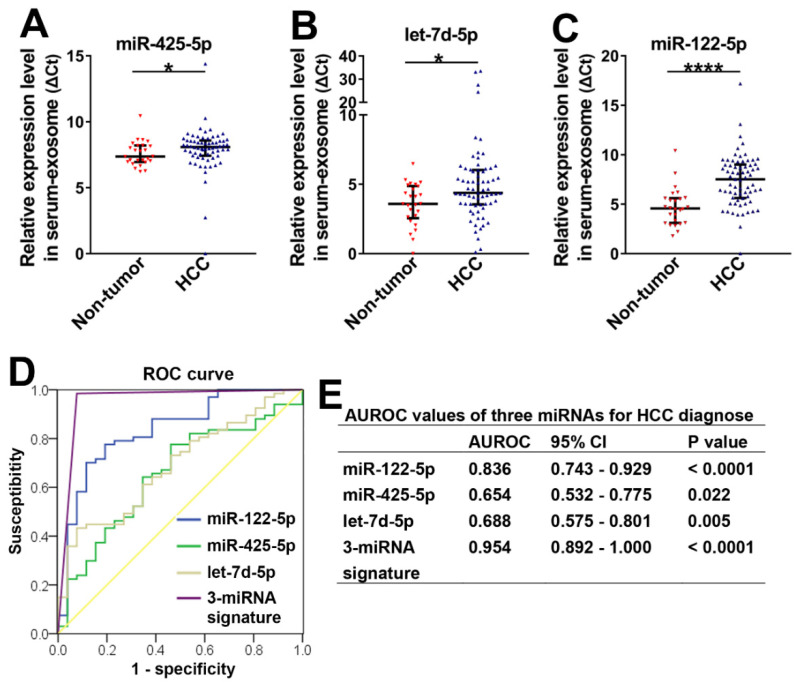
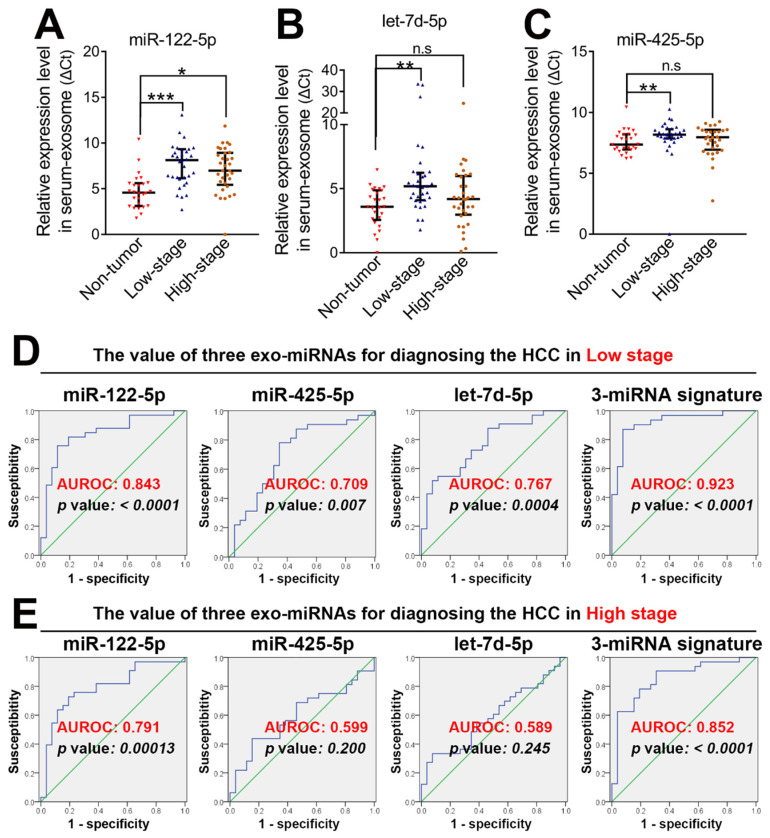
We found that miRNAs accounted for the maximal percentage of all types of sRNAs both in the serum exosomes of HCC patients and non-tumor donors. This indicated that the serum-exosome-derived microRNAs (miRNAs) were the most valuable as potential biomarkers in HCC diagnosis. Then, miRNAs were set as research candidates. In our Chinese cohorts, three serum-exosome-derived miRNAs (miR-122-5p, let-7d-5p, and miR-425-5p) could be promising biomarkers for distinguishing HCC patients from non-tumor donors. In addition, they were preferred for the early diagnosis of HCC. We also presented the base distribution of some novel serum-exosome-derived miRNAs and described the potential values as biomarkers.
The results suggested that the serum-exosome-derived miRNAs were the most crucial sRNA species and they highlighted the potential of serum-exosome-derived miRNAs as promising biomarkers for HCC diagnosis.
血清外泌体正逐渐成为癌症早期诊断的关键液体活检生物标志物。然而,肝细胞癌(HCC)患者血清外泌体中小RNA(sRNA)种类的比例和分布仍不清楚。应探索用于HCC诊断的有效且可靠的生物标志物。
在本研究中,我们旨在使用sRNA测序来分析HCC患者和非肿瘤供体血清外泌体中的sRNA。纳入124例HCC患者和46例非肿瘤供体的血清外泌体,以检测用于HCC诊断的潜在生物标志物的值。
我们发现,在HCC患者和非肿瘤供体的血清外泌体中,miRNA在所有类型的sRNA中所占比例最大。这表明血清外泌体来源的微小RNA(miRNA)作为HCC诊断的潜在生物标志物最有价值。然后,将miRNA设定为研究对象。在我们的中国队列中,三种血清外泌体来源的miRNA(miR-122-5p、let-7d-5p和miR-425-5p)可能是区分HCC患者和非肿瘤供体的有前景的生物标志物。此外,它们更适合用于HCC的早期诊断。我们还展示了一些新型血清外泌体来源miRNA的碱基分布,并描述了其作为生物标志物的潜在价值。
结果表明,血清外泌体来源的miRNA是最关键的sRNA种类,突出了血清外泌体来源的miRNA作为HCC诊断有前景的生物标志物的潜力。