Physics Centre of Minho and Porto Universities (CF-UM-UP), University of Minho, Campus de Gualtar, 4710-057 Braga, Portugal.
Centre of Chemistry (CQUM), University of Minho, Campus de Gualtar, 4710-057 Braga, Portugal.
Int J Mol Sci. 2022 Dec 22;24(1):186. doi: 10.3390/ijms24010186.
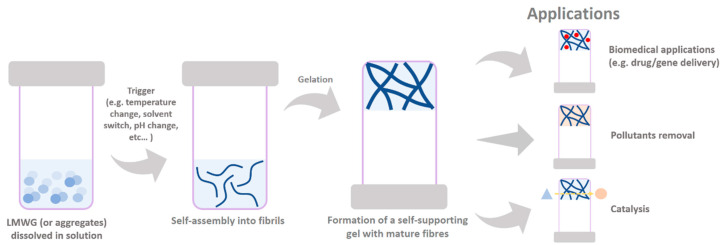
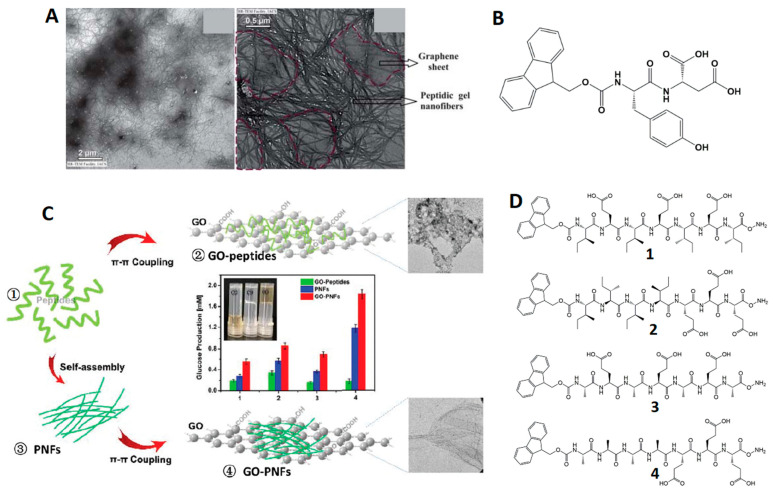
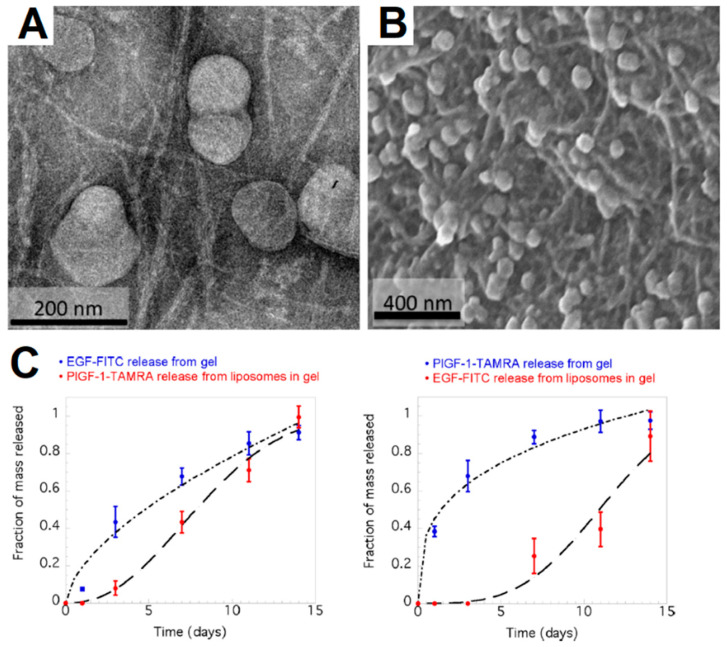
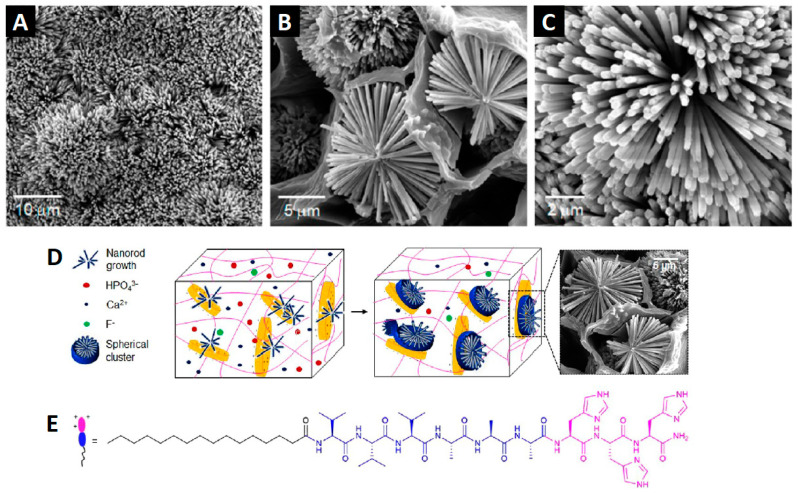
Self-assembled peptide-based gels provide several advantages for technological applications. Recently, the co-assembly of gelators has been a strategy to modulate and tune gel properties and even implement stimuli-responsiveness. However, it still comprises limitations regarding the required library of compounds and outcoming properties. Hence, efforts have been made to combine peptide-based gels and (in)organic composites (e.g., magnetic nanoparticles, metal nanoparticles, liposomes, graphene, silica, clay, titanium dioxide, cadmium sulfide) to endow stimuli-responsive materials and achieve suitable properties in several fields ranging from optoelectronics to biomedical. Herein, we discuss the recent developments with composite peptide-based gels including the fabrication, tunability of gels' properties, and challenges on (bio)technological applications.
自组装肽基凝胶为技术应用提供了多个优势。最近,凝胶剂的共组装已成为一种调节和优化凝胶性质甚至实现刺激响应的策略。然而,它仍然存在关于所需化合物库和出现性质的限制。因此,人们努力将基于肽的凝胶与(无机)复合材料(例如,磁性纳米粒子、金属纳米粒子、脂质体、石墨烯、二氧化硅、粘土、二氧化钛、硫化镉)结合起来,赋予刺激响应材料,并在从光电子学到生物医学等多个领域实现合适的性质。本文讨论了复合肽基凝胶的最新进展,包括凝胶的制备、性质的可调性以及(生物)技术应用方面的挑战。