Institute for the Application of Nuclear Energy INEP, Banatska 31b, Zemun, 11080 Belgrade, Serbia.
Institute of Physics, Pregrevica 118, Zemun, 11080 Belgrade, Serbia.
Molecules. 2022 Dec 29;28(1):276. doi: 10.3390/molecules28010276.
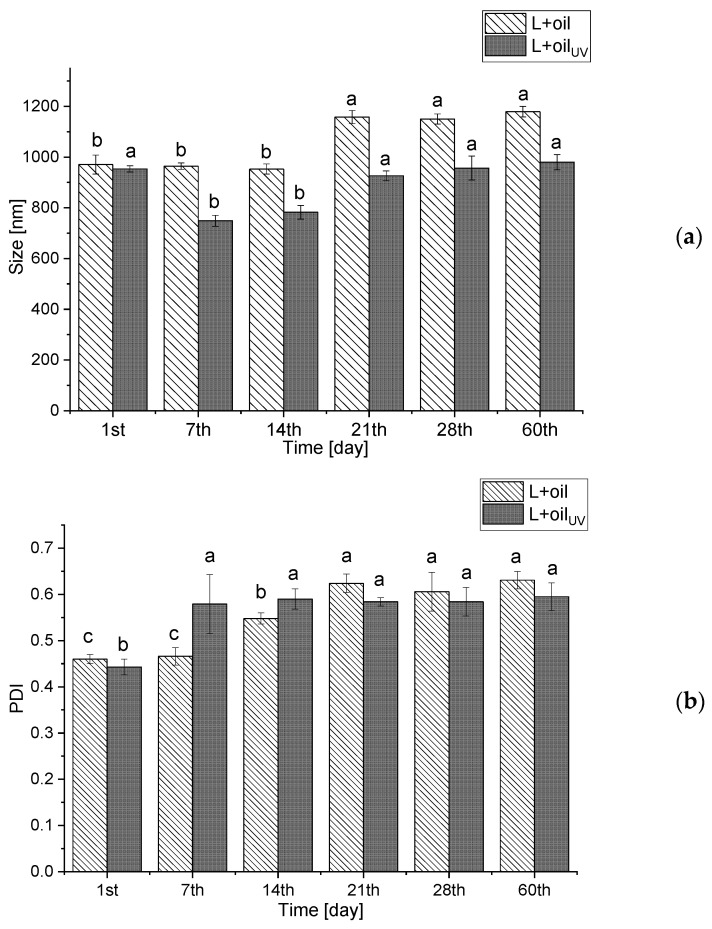
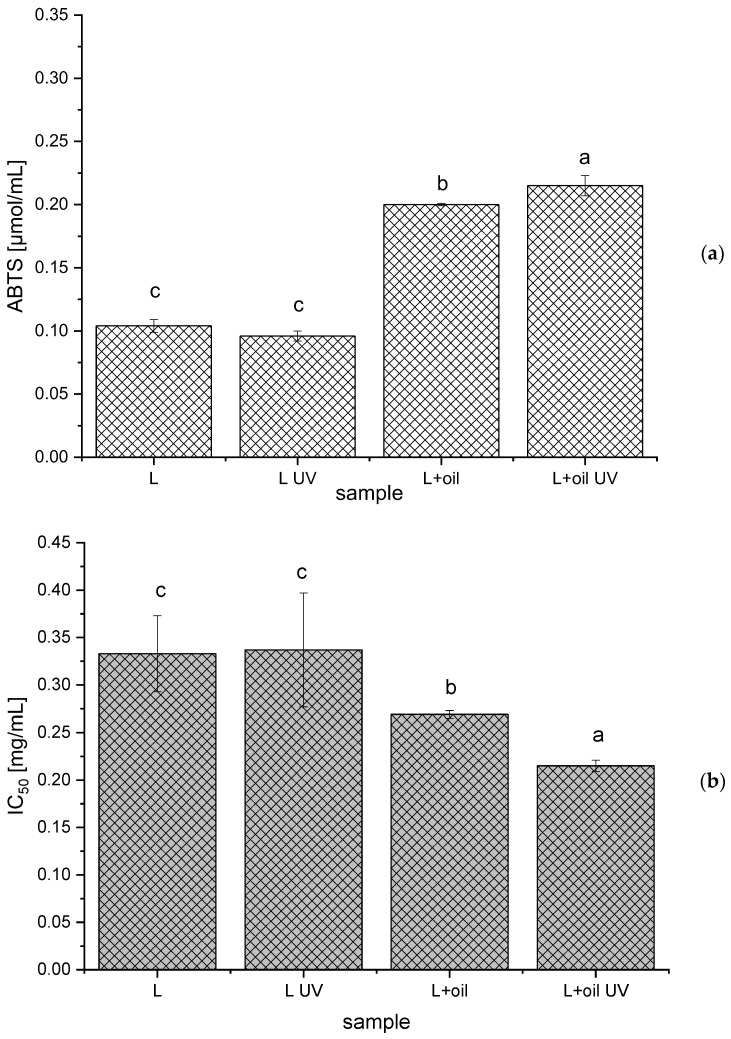
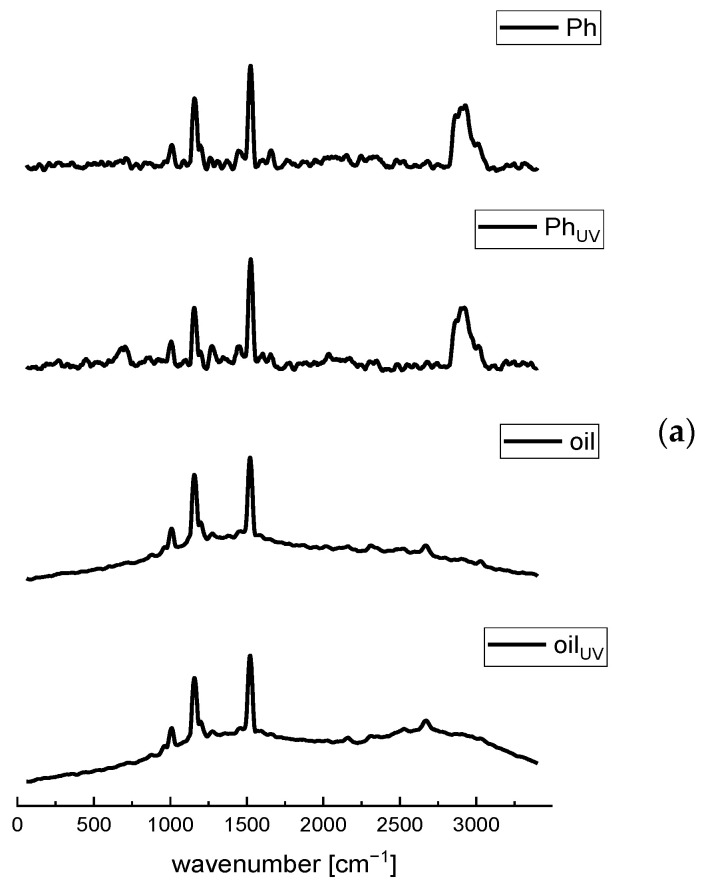
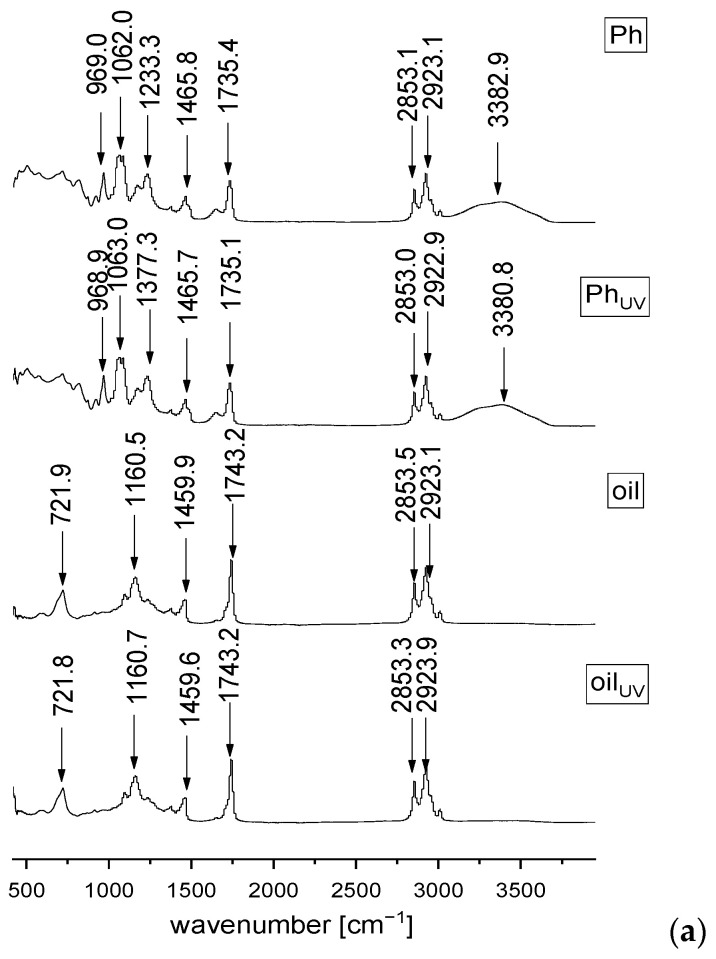
L. seeds are rich in bioactive components that can add value to the various formulations. The focus of the study was the development of liposomes for oil to protect its sensitive compounds and prolong their shelf-life. Oil-loaded liposomes were characterized via the determination of the particle size, polydispersity index (PDI), zeta potential, conductivity, mobility, density, surface tension, viscosity, and stability. Raman and FT-IR spectroscopy were employed to investigate the chemical composition of the non-treated and UV-treated samples, and the presence of different interactions. Antioxidant and antimicrobial activities were examined as well. The liposome size was 970.4 ± 37.4 nm, the PDI 0.438 ± 0.038, the zeta potential -32.9 ± 0.8 mV, the conductivity 0.068 ± 0.002 mS/cm, the mobility -2.58 ± 0.06 µmcm/Vs, the density 0.974 ± 0.004 g/cm, the surface tension 17.2 ± 1.4 mN/m, and the viscosity 13.5 ± 0.2 mPa•s. The Raman and FT-IR spectra showed the presence of lipids, fatty acids, polyphenols, and carotenoids. It was approved that the oil compounds were distributed inside the phospholipid bilayer and were combined with the membrane interface of the bilayer. The UV irradiation did not cause any chemical changes. However, neither the pure oil nor the oil-loaded liposomes showed any antimicrobial potential, while the antioxidant capacity of the oil-loaded liposomes was significantly low. The sizes of the liposomes did not change significantly during 60 days of storage. Due to the proven stability of the oil-loaded liposomes, as well as the liposome's ability to protect the sensitive oil compounds, their potential application in the pharmaceutical and cosmetic formulations could be investigated with a focus on the skin regeneration effects.
亚麻荠籽油富含生物活性成分,可以为各种制剂增加价值。本研究的重点是开发用于保护油中敏感化合物并延长其保质期的脂质体。通过测定粒径、多分散指数(PDI)、Zeta 电位、电导率、迁移率、密度、表面张力、粘度和稳定性来对载油脂质体进行表征。采用拉曼和傅里叶变换红外(FT-IR)光谱研究未经处理和经 UV 处理的样品的化学组成以及不同相互作用的存在。同时还检查了抗氧化和抗菌活性。脂质体的粒径为 970.4 ± 37.4nm,PDI 为 0.438 ± 0.038,Zeta 电位为-32.9 ± 0.8mV,电导率为 0.068 ± 0.002mS/cm,迁移率为-2.58 ± 0.06µmcm/Vs,密度为 0.974 ± 0.004g/cm3,表面张力为 17.2 ± 1.4mN/m,粘度为 13.5 ± 0.2mPa•s。拉曼和 FT-IR 光谱显示存在脂质、脂肪酸、多酚和类胡萝卜素。证实油化合物分布在磷脂双层内,并与双层的膜界面结合。UV 照射没有引起任何化学变化。然而,无论是纯油还是载油脂质体都没有表现出任何抗菌潜力,而载油脂质体的抗氧化能力显著较低。在 60 天的储存期内,脂质体的粒径没有明显变化。由于载油脂质体的稳定性以及脂质体保护敏感油化合物的能力得到了证实,因此可以研究其在药物和化妆品制剂中的潜在应用,重点关注皮肤再生效果。