School of Exercise and Health, Shanghai University of Sport, Shanghai 200438, China.
Department of Medical Imaging, Shanghai East Hospital (East Hospital Affiliated to Tongji University), Tongji University, Shanghai 200123, China.
Nutrients. 2022 Dec 21;15(1):19. doi: 10.3390/nu15010019.
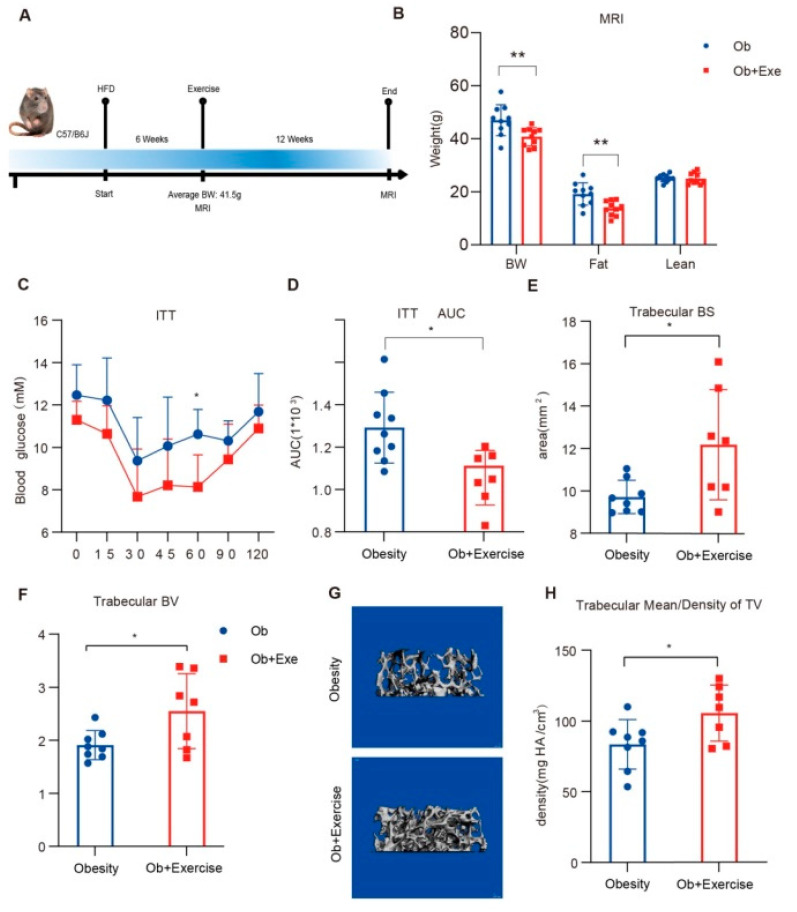
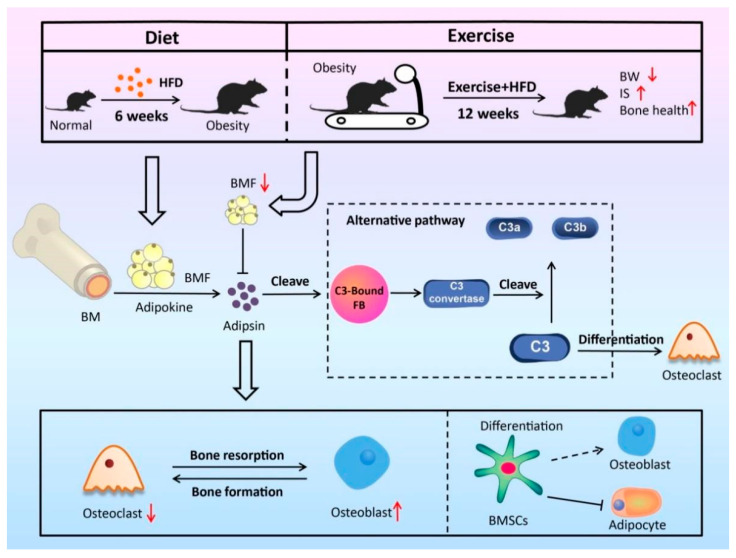
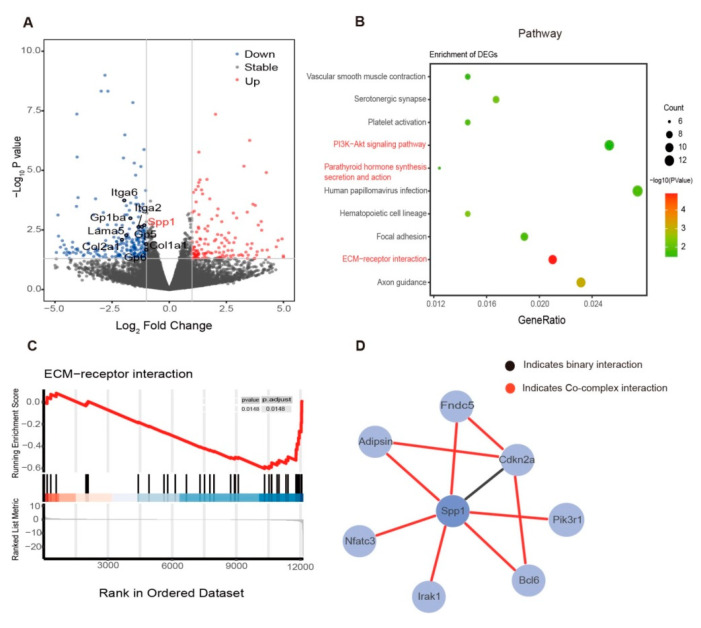
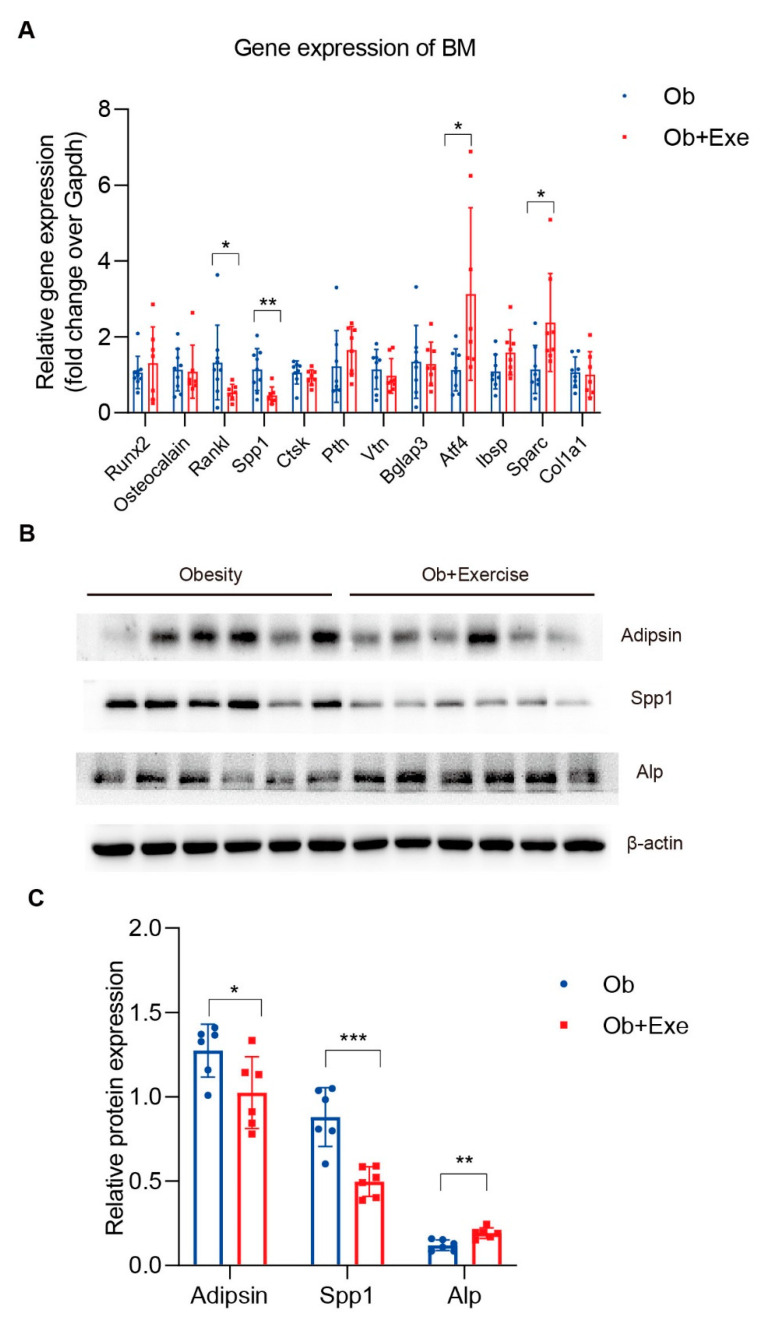
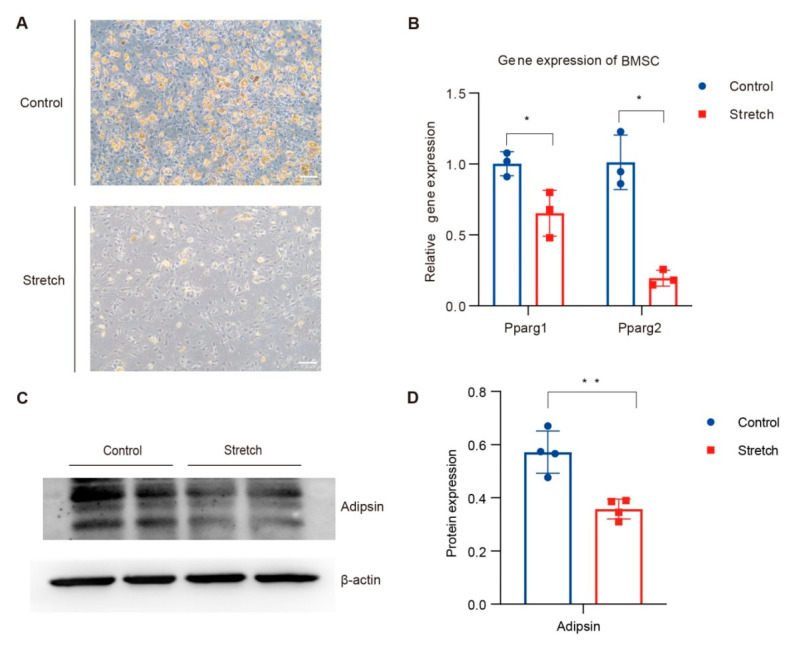
Obesity is a growing global epidemic linked to many diseases, including diabetes, cardiovascular diseases, and musculoskeletal disorders. Exercise can improve bone density and decrease excess bone marrow adipose tissue (BMAT) in obese individuals. However, the mechanism of exercise regulating bone marrow microenvironment remains unclear. This study examines how exercise induces bone marrow remodeling in diet-induced obesity. We employed unbiased RNA-Seq to investigate the effect of exercise on the bone marrow of diet-induced obese male mice. Bone mesenchymal stem cells (BMSCs) were isolated to explore the regulatory effects of exercise in vitro. Our data demonstrated that exercise could slow down the progression of obesity and improve trabecular bone density. RNA-seq data revealed that exercise inhibited secreted phosphoprotein 1 (Spp1), which was shown to mediate bone resorption through mechanosensing mechanisms. Interactome analysis of Spp1 using the HINT database showed that Spp1 interacted with the adipokine adipsin. Moreover, exercise decreased BMAT, which induced osteoclast differentiation and promoted bone loss. Our study reveals that exercise improves the bone marrow microenvironment by at least partially inhibiting the adipsin-Spp1 signaling pathway so as to inhibit the alternative complement system from activating osteoclasts in diet-induced obese mice.
肥胖是一种日益严重的全球性流行病,与许多疾病有关,包括糖尿病、心血管疾病和肌肉骨骼疾病。运动可以提高骨密度,减少肥胖个体中过多的骨髓脂肪组织 (BMAT)。然而,运动调节骨髓微环境的机制尚不清楚。本研究探讨了运动如何诱导饮食诱导肥胖小鼠的骨髓重塑。我们采用无偏 RNA-Seq 技术研究了运动对饮食诱导肥胖雄性小鼠骨髓的影响。分离骨髓间充质干细胞 (BMSC) 以体外探索运动的调节作用。我们的数据表明,运动可以减缓肥胖的进展并提高小梁骨密度。RNA-seq 数据显示,运动抑制了分泌磷蛋白 1 (Spp1),Spp1 通过机械感知机制介导骨吸收。使用 HINT 数据库对 Spp1 进行互作分析表明,Spp1 与脂肪因子 adiposin 相互作用。此外,运动减少了 BMAT,从而诱导破骨细胞分化并促进骨丢失。我们的研究表明,运动通过至少部分抑制 adiposin-Spp1 信号通路来改善骨髓微环境,从而阻止替代补体系统激活饮食诱导肥胖小鼠的破骨细胞。