Maastricht Centre for Systems Biology (MaCSBio), Maastricht University, Maastricht, The Netherlands.
Department of Medical Microbiology, Maastricht University Medical Center, Maastricht, The Netherlands.
Gut Microbes. 2023 Jan-Dec;15(1):2164152. doi: 10.1080/19490976.2022.2164152.
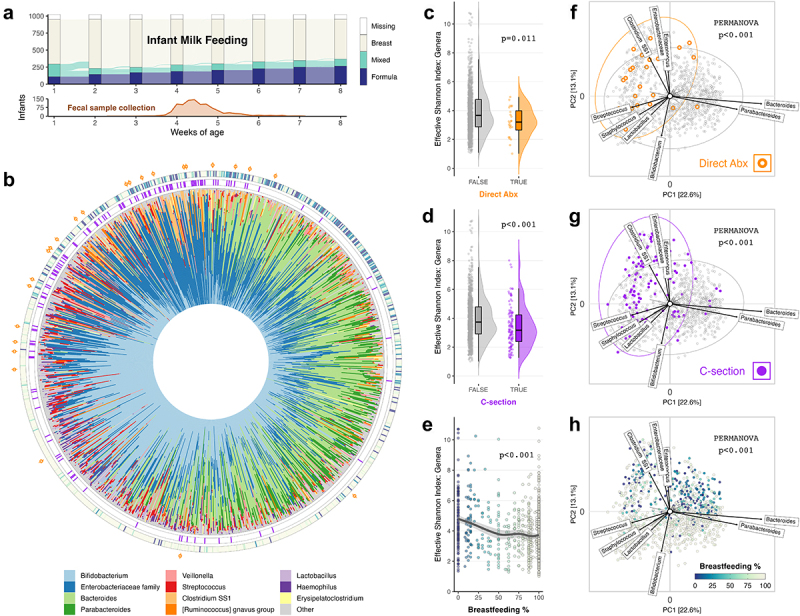
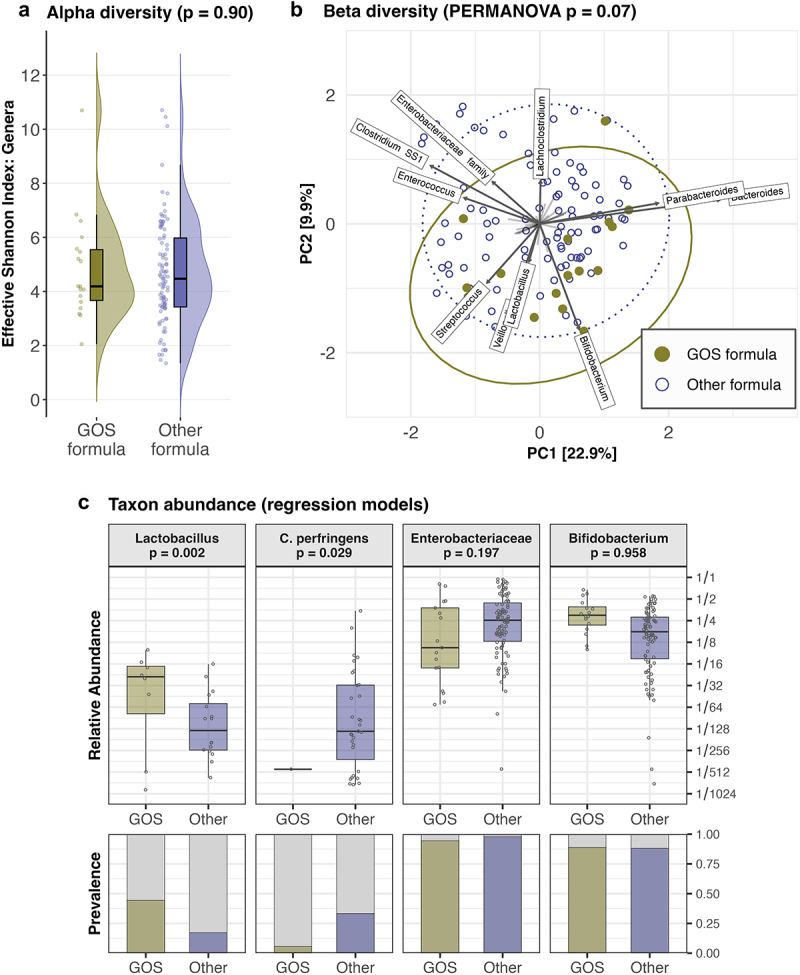
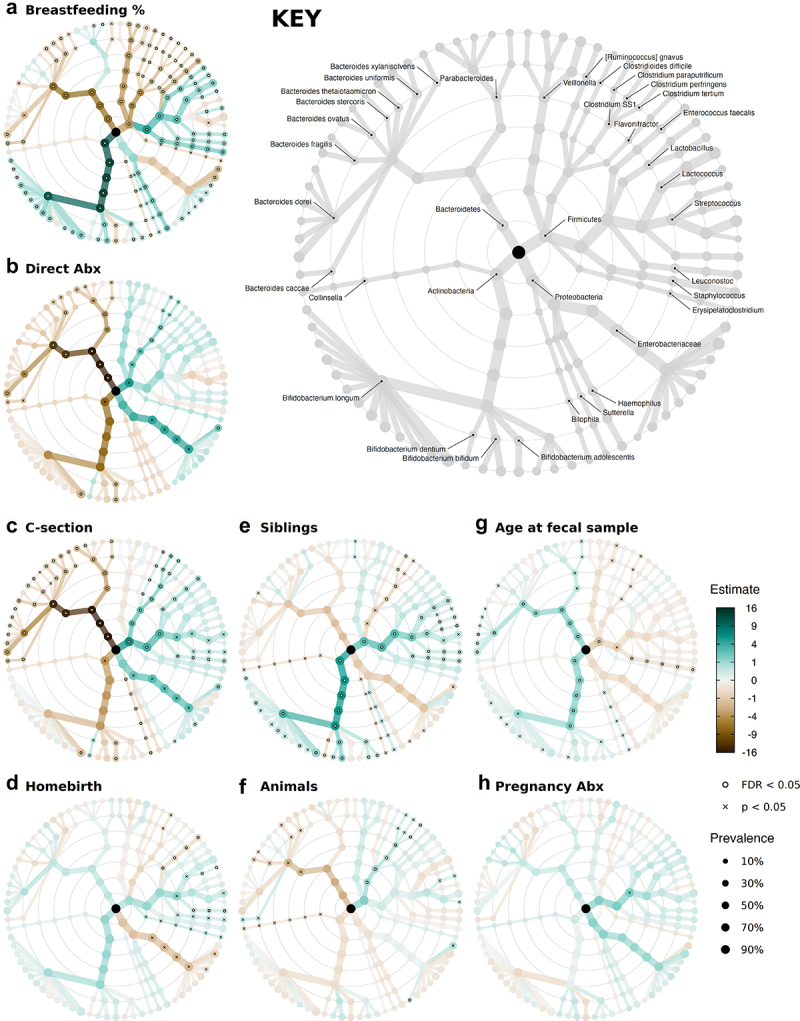
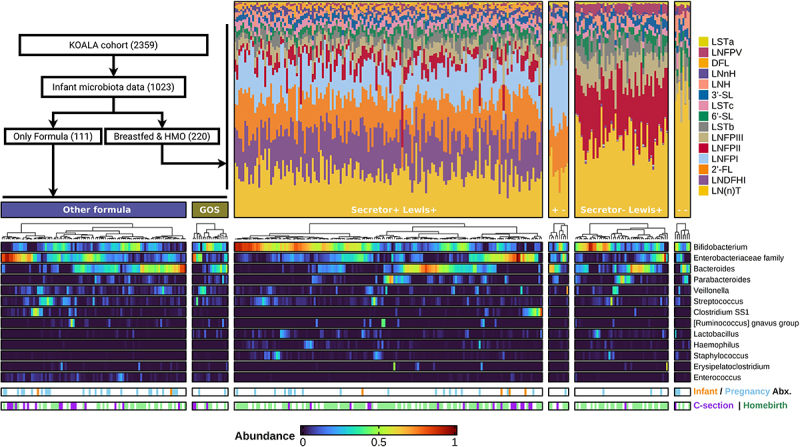
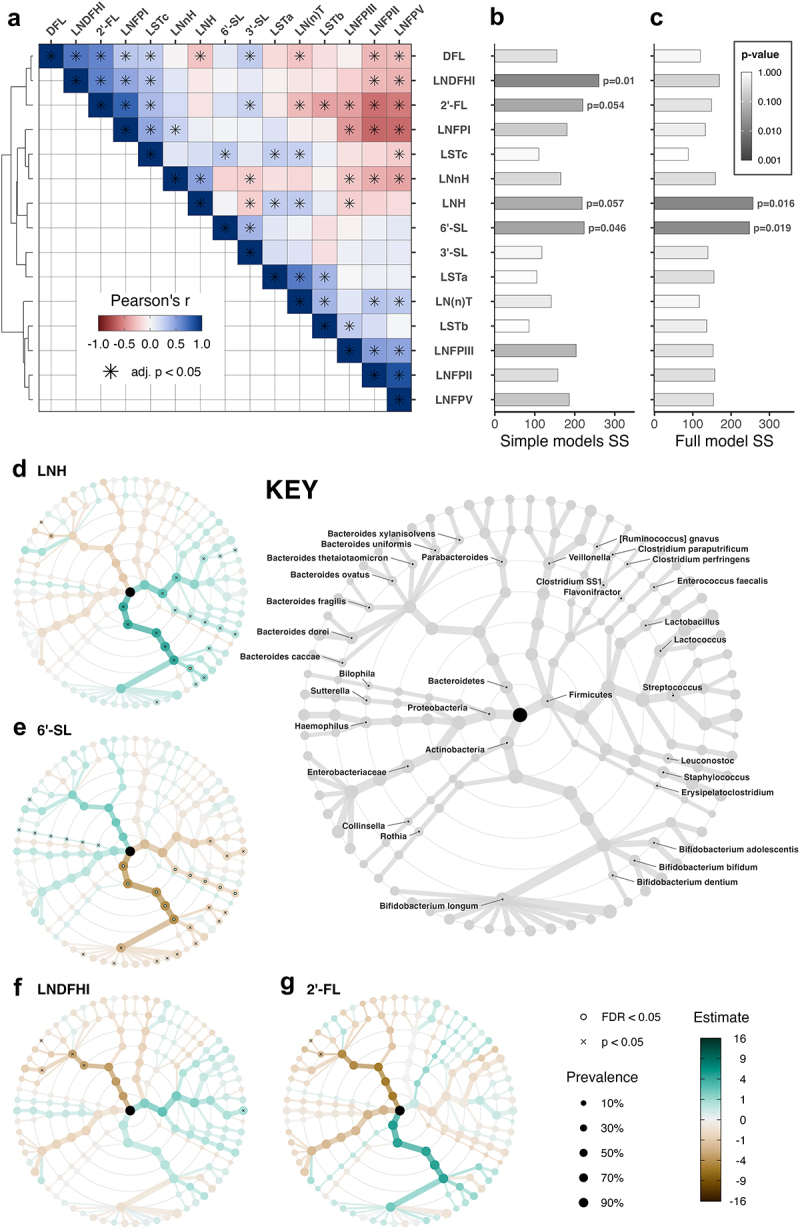
The infant gut microbiota affects childhood health. This pioneer microbiota may be vulnerable to antibiotic exposures, but could be supported by prebiotic oligosaccharides found in breast milk and some infant formulas. We sought to characterize the effects of several exposures on the neonatal gut microbiota, including human milk oligosaccharides (HMOs), galacto-oligosaccharides (GOS), and infant/maternal antimicrobial exposures. We profiled the stool microbiota of 1023 one-month-old infants from the KOALA Birth Cohort using 16S rRNA gene amplicon sequencing. We quantified 15 HMOs in breast milk from the mothers of 220 infants, using high-performance liquid chromatography-mass spectrometry. Both breastfeeding and antibiotic exposure decreased gut microbial diversity, but each was associated with contrasting shifts in microbiota composition. Other factors associated with microbiota composition included C-section, homebirth, siblings, and exposure to animals. Neither infant exposure to oral antifungals nor maternal exposure to antibiotics during pregnancy were associated with infant microbiota composition. Four distinct groups of breast milk HMO compositions were evident, corresponding to maternal Secretor status and Lewis group combinations defined by the presence/absence of certain fucosylated HMOs. However, we found the strongest evidence for microbiota associations between two non-fucosylated HMOs: 6'-sialyllactose (6'-SL) and lacto-N-hexaose (LNH), which were associated with lower and higher relative abundances of , respectively. Among 111 exclusively formula-fed infants, the GOS-supplemented formula was associated with a lower relative abundance of . In conclusion, the gut microbiota is sensitive to some prebiotic and antibiotic exposures during early infancy and understanding their effects could inform future strategies for safeguarding a health-promoting infant gut microbiota.
婴儿肠道微生物群会影响儿童健康。这种原始的微生物群可能容易受到抗生素暴露的影响,但可以通过母乳和一些婴儿配方奶粉中发现的益生元低聚糖来支持。我们试图描述几种暴露对新生儿肠道微生物群的影响,包括人乳寡糖(HMOs)、半乳糖寡糖(GOS)以及婴儿/母亲的抗菌暴露。我们使用 16S rRNA 基因扩增子测序对来自 KOALA 出生队列的 1023 名一个月大的婴儿的粪便微生物群进行了分析。我们使用高效液相色谱-质谱法定量了 220 名婴儿的母亲母乳中的 15 种 HMO。母乳喂养和抗生素暴露均降低了肠道微生物多样性,但每种暴露都与微生物群落组成的相反变化有关。其他与微生物群落组成相关的因素包括剖宫产、家庭分娩、兄弟姐妹以及与动物接触。婴儿接触口腔抗真菌药物或母亲在怀孕期间接触抗生素都与婴儿的微生物群落组成无关。有 4 种不同的母乳 HMO 组成类型明显,对应于母亲的 Secretor 状态和由特定岩藻糖基化 HMO 的存在/不存在定义的 Lewis 组组合。然而,我们发现了两种非岩藻糖基化 HMO 之间最强的微生物群关联:6'-唾液酸乳糖(6'-SL)和乳-N-四糖(LNH),它们分别与相对丰度较低和较高相关。在 111 名纯配方奶喂养的婴儿中,添加 GOS 的配方与相对丰度较低有关。总之,肠道微生物群对婴儿早期的一些益生元和抗生素暴露敏感,了解它们的影响可以为未来保护促进健康的婴儿肠道微生物群的策略提供信息。