Jiangsu Key Laboratory of Neuropsychiatric Diseases and Department of Pharmacology, College of Pharmaceutical Sciences, Soochow University, Suzhou, Jiangsu 215123, China.
Department of Neurobiology, Hai'an Hospital of Traditional Chinese Medicine, Hai'an 226600, China.
Theranostics. 2023 Jan 1;13(2):543-559. doi: 10.7150/thno.77088. eCollection 2023.
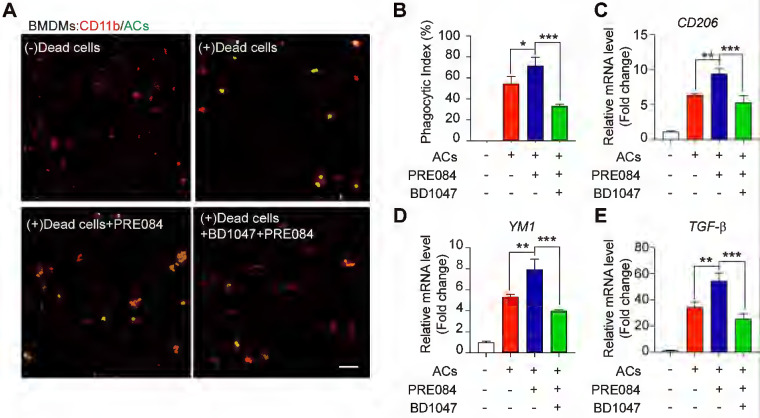
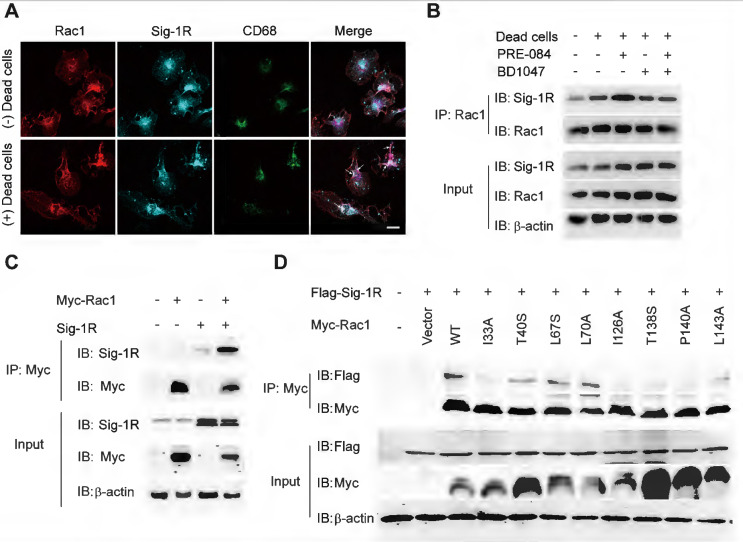
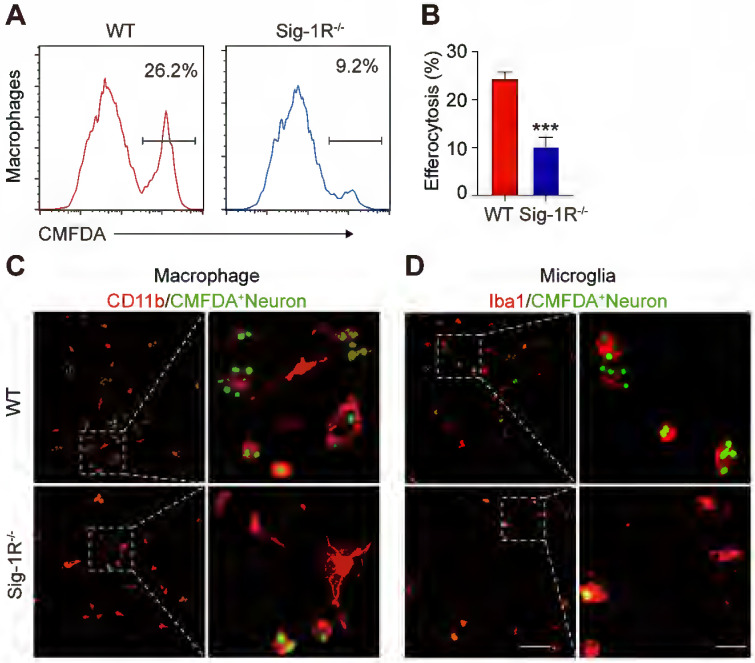
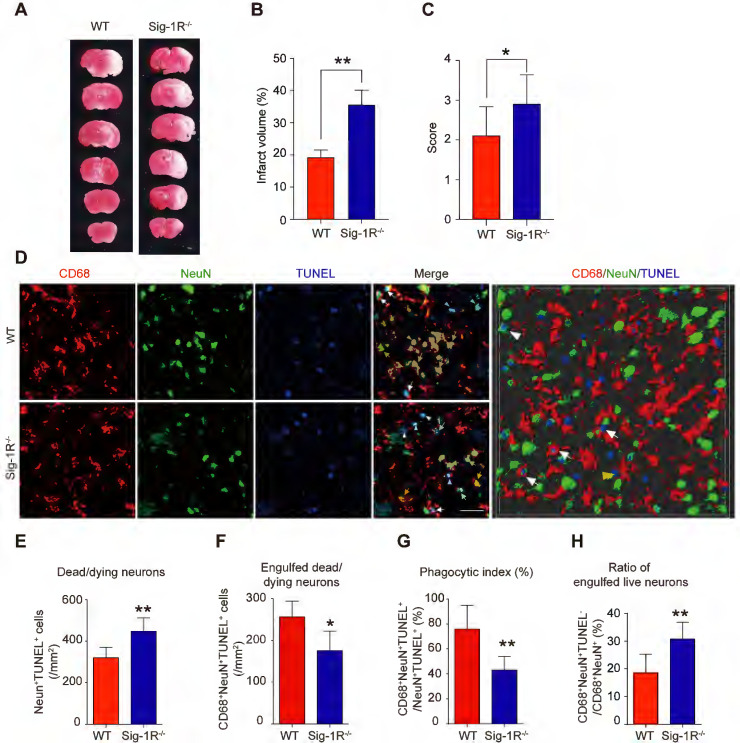
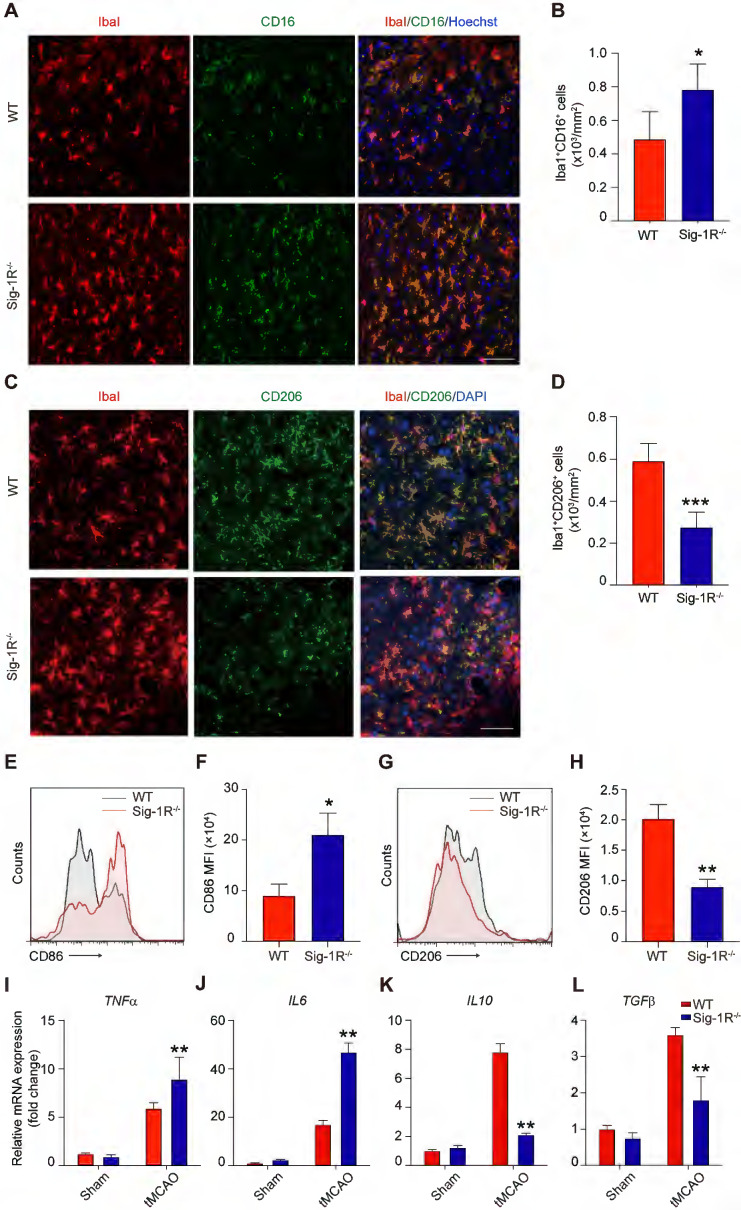
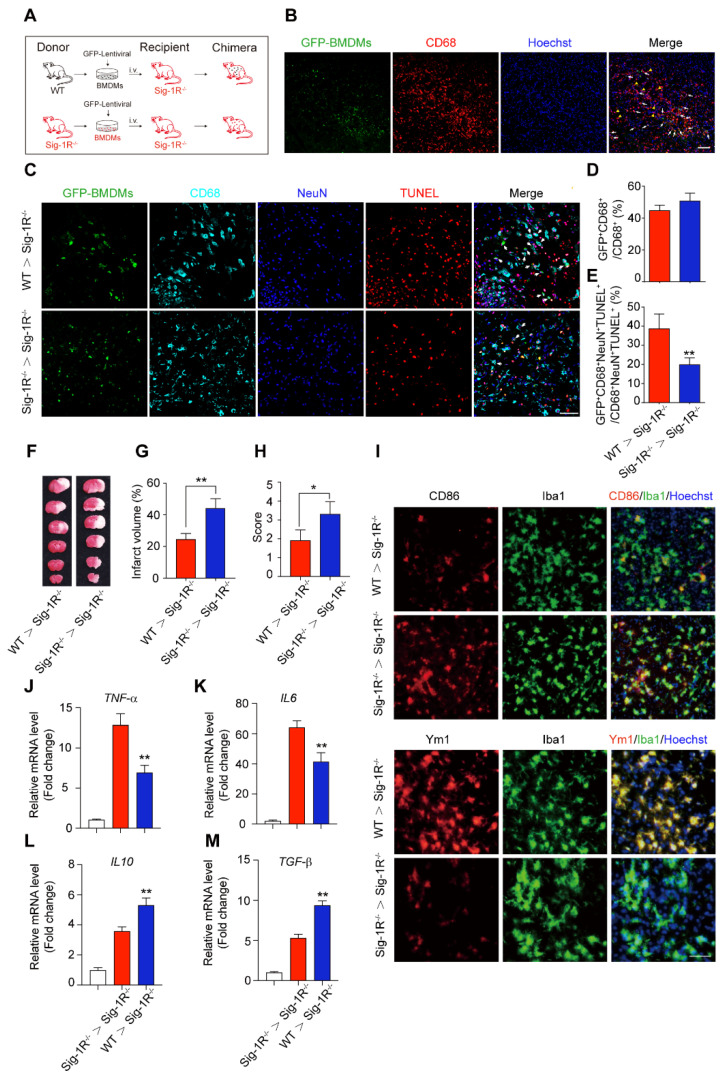
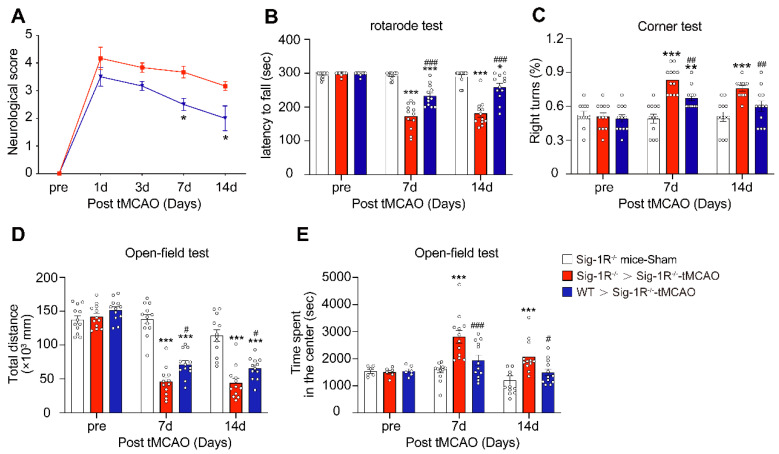
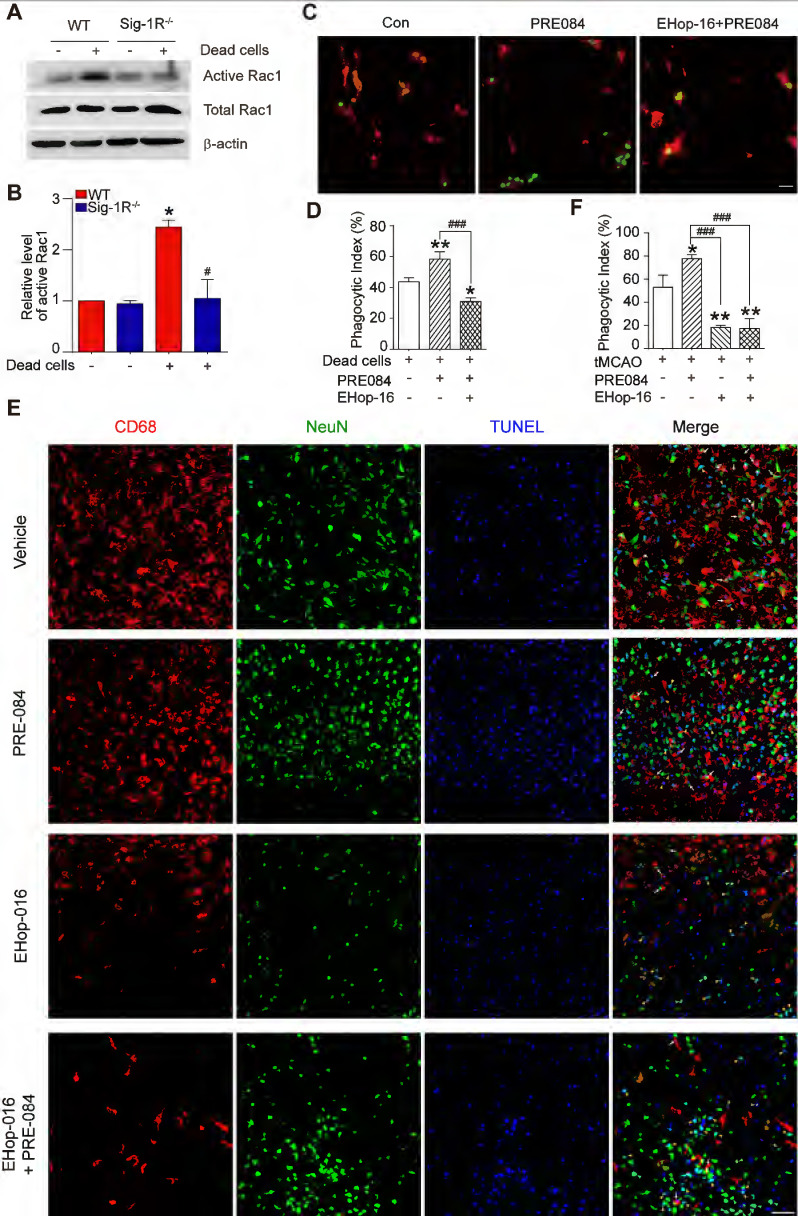
Efferocytosis of apoptotic neurons by macrophages is essential for the resolution of inflammation and for neuronal protection from secondary damage. It is known that alteration of the Sigma-1 receptor (Sig-1R) is involved in the pathological development of some neurological diseases, including ischemic stroke. The present study aimed to investigate whether and how Sig-1R regulates the phagocytic activity of macrophages/microglia and its significance in neuroprotection and neurological function in stroke. The roles of Sig-1R in the efferocytosis activity of microglia/macrophages using bone marrow-derived macrophages (BMDMs) or using Sig-1R knockout mice subjected to transient middle artery occlusion (tMCAO)-induced stroke were investigated. The molecular mechanism of Sig-1R in the regulation of efferocytosis was also explored. Adoptive transfer of Sig-1R intact macrophages to recipient Sig-1R knockout mice with tMCAO was developed to observe its effect on apoptotic neuron clearance and stroke outcomes. Depletion of Sig-1R greatly impaired the phagocytic activity of macrophages/microglia, accordingly with worsened brain damage and neurological defects in Sig-1R knockout mice subjected to tMCAO. Adoptive transfer of Sig-1R intact bone marrow-derived macrophages (BMDMs) to Sig-1R knockout mice restored the clearance activity of dead/dying neurons, reduced infarct area and neuroinflammation, and improved long-term functional recovery after cerebral ischemia. Mechanistically, Sig-1R-mediated efferocytosis was dependent on Rac1 activation in macrophages, and a few key sites of Rac1 in its binding pocket responsible for the interaction with Sig-1R were identified. Our data provide the first evidence of the pivotal role of Sig-1R in macrophage/microglia-mediated efferocytosis and elucidate a novel mechanism for the neuroprotection of Sig-1R in ischemic stroke.
巨噬细胞吞噬凋亡神经元对于炎症的消退和神经元免受二次损伤至关重要。已知 Sigma-1 受体(Sig-1R)的改变与一些神经疾病的病理发展有关,包括缺血性中风。本研究旨在探讨 Sig-1R 是否以及如何调节巨噬细胞/小胶质细胞的吞噬活性,及其在中风中神经保护和神经功能中的意义。使用骨髓来源的巨噬细胞(BMDMs)或 Sig-1R 敲除小鼠进行短暂性大脑中动脉闭塞(tMCAO)诱导的中风,研究了 Sig-1R 在小胶质细胞/巨噬细胞吞噬活性中的作用。还探讨了 Sig-1R 调节吞噬作用的分子机制。通过向接受 tMCAO 的 Sig-1R 敲除小鼠过继转移完整的 Sig-1R 巨噬细胞,观察其对凋亡神经元清除和中风结果的影响。Sig-1R 的耗竭大大损害了巨噬细胞/小胶质细胞的吞噬活性,相应地,Sig-1R 敲除小鼠的大脑损伤和神经缺陷加重。向 Sig-1R 敲除小鼠过继转移完整的 Sig-1R 骨髓来源的巨噬细胞(BMDMs)可恢复对死亡/凋亡神经元的清除活性,减少梗死面积和神经炎症,并改善脑缺血后的长期功能恢复。在机制上,Sig-1R 介导线粒体吞噬作用依赖于巨噬细胞中 Rac1 的激活,并且确定了 Rac1 结合口袋中负责与 Sig-1R 相互作用的几个关键部位。我们的数据首次提供了 Sig-1R 在巨噬细胞/小胶质细胞介导的吞噬作用中的关键作用的证据,并阐明了 Sig-1R 在缺血性中风中神经保护的新机制。