Cancer Science Institute of Singapore, National University of Singapore, Singapore 117599.
Department of Pharmacology, Yong Loo Lin School of Medicine, National University of Singapore, Singapore.
Theranostics. 2023 Jan 1;13(2):621-638. doi: 10.7150/thno.72297. eCollection 2023.
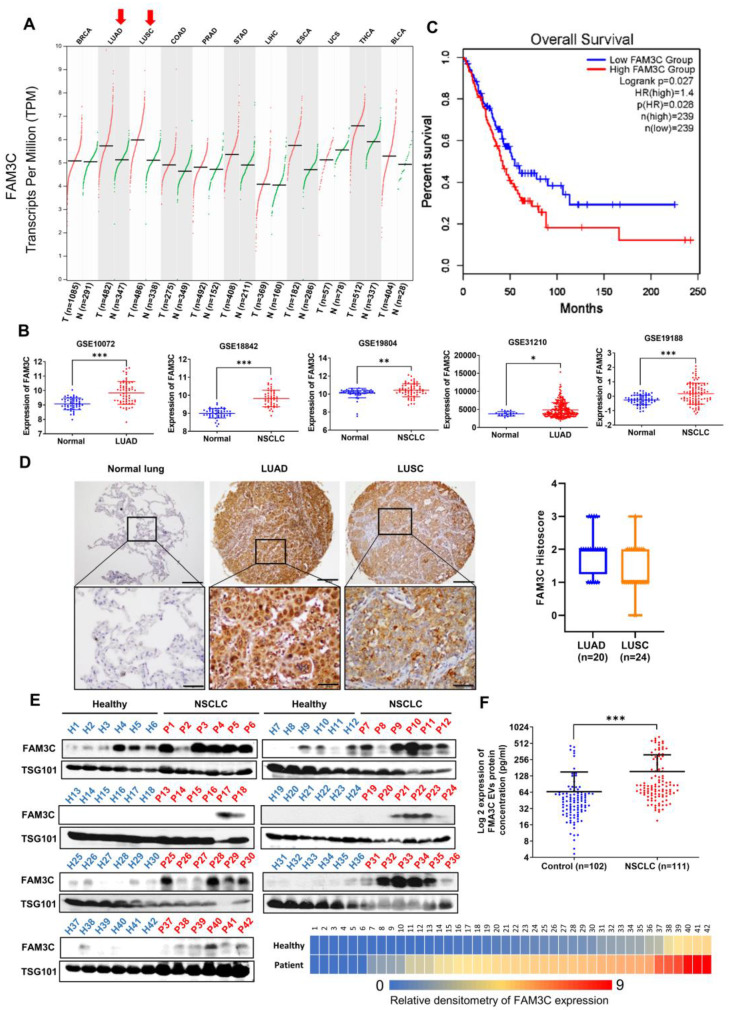
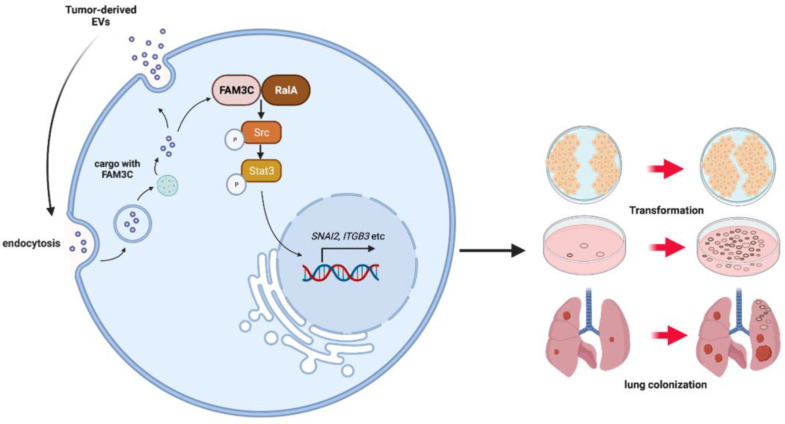
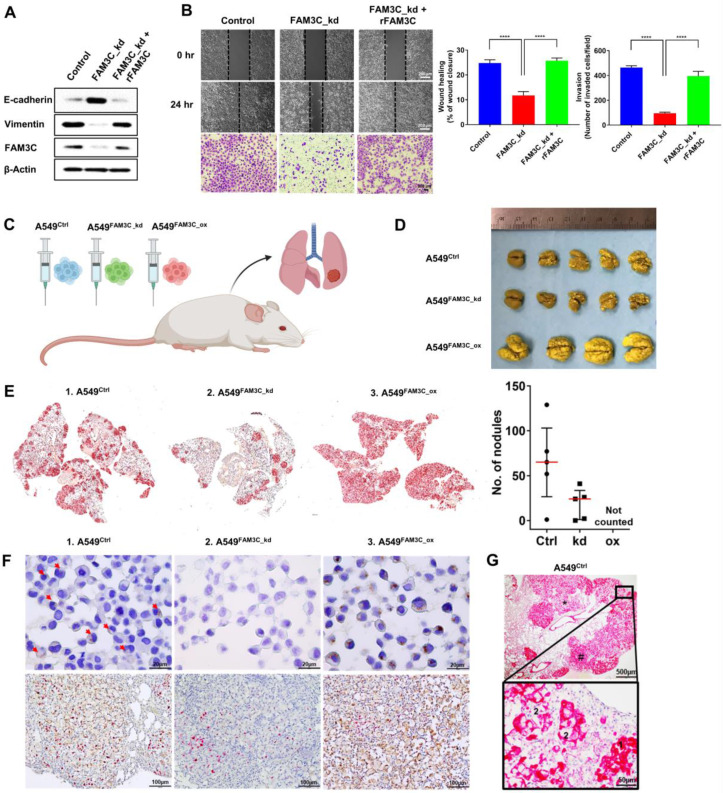
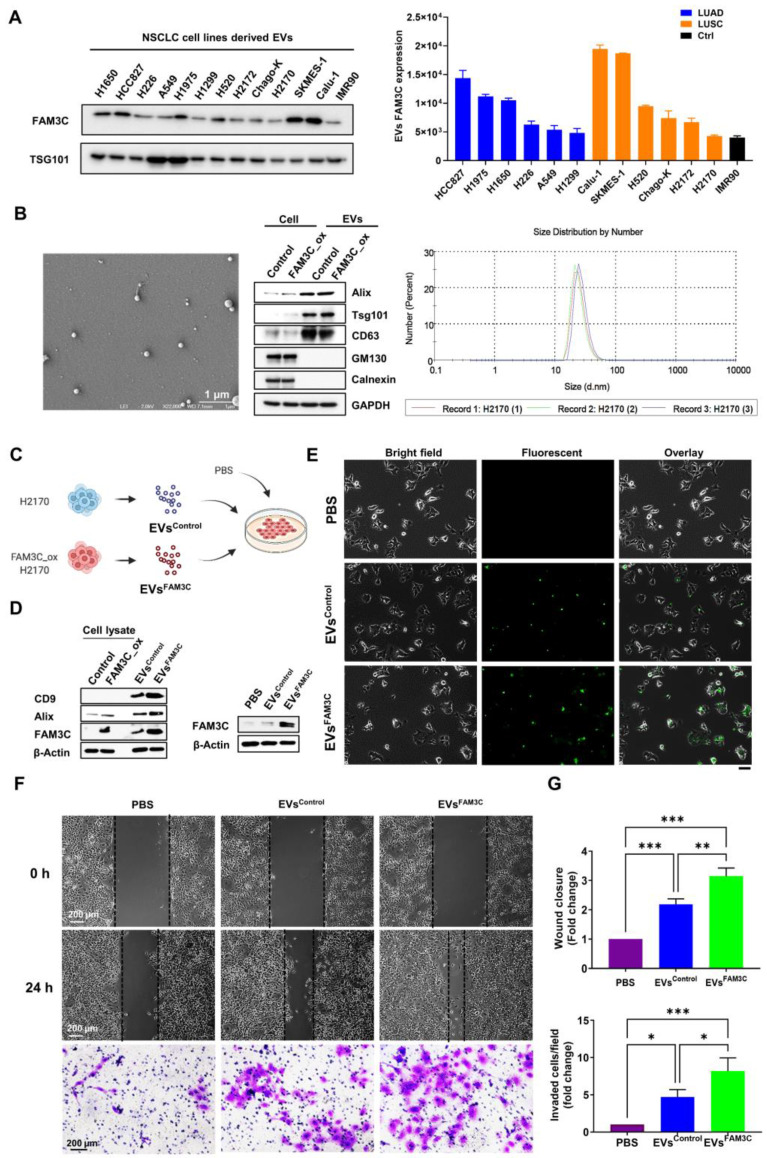
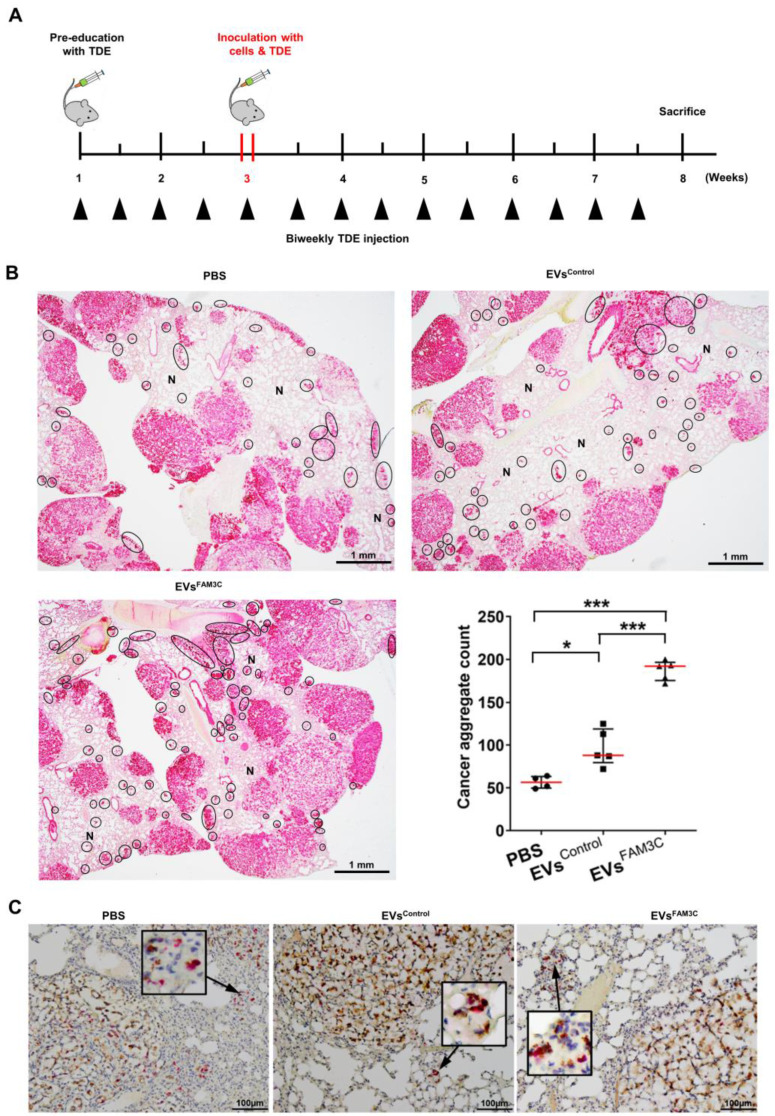
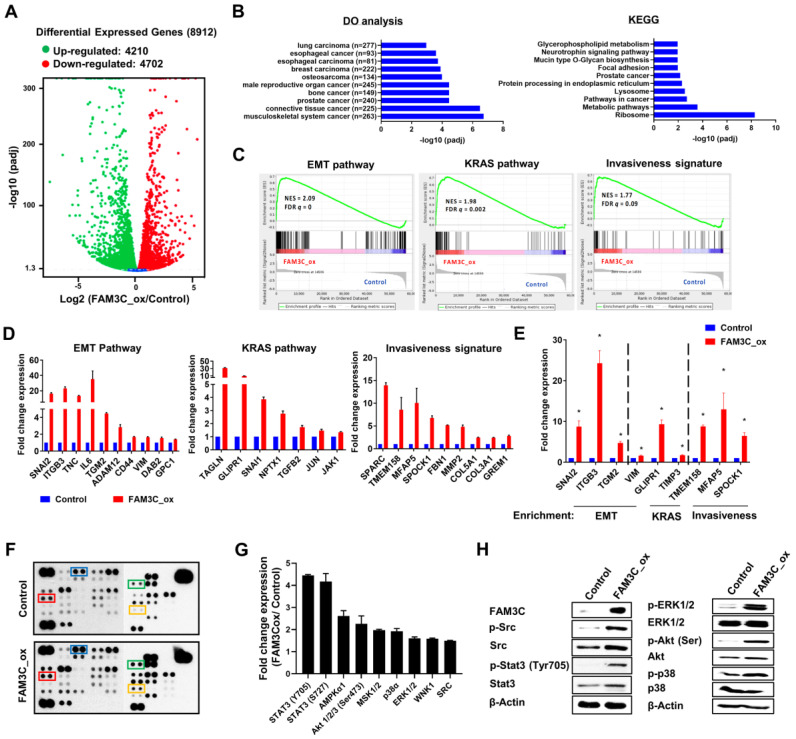
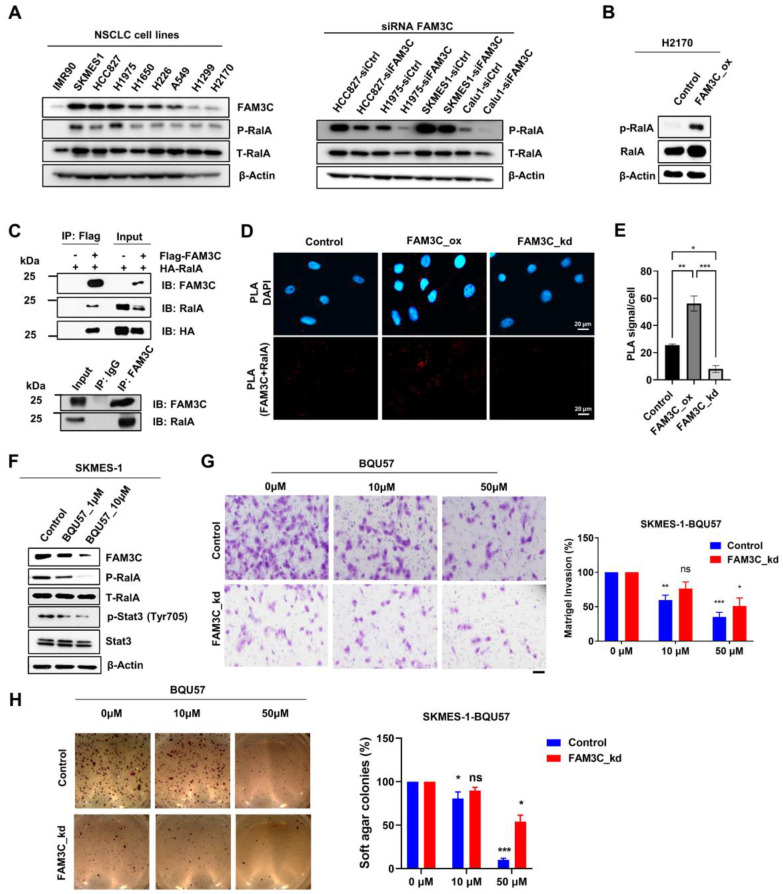
: Metastasis is a complex process with a molecular underpinning that remains unclear. We hypothesize that cargo proteins conducted by extracellular vesicles (EVs) released from tumors may confer growth and metastasis potential on recipient cells. Here, we report that a cytokine-like secreted protein, FAM3C, contributes to late-stage lung tumor progression. : EV protein profiling was conducted with an unbiased proteomic mass spectrometry analysis on non-small cell lung cancer (NSCLC) and normal lung fibroblast cell lines. Expression of FAM3C was confirmed in a panel of NSCLC cell lines, and correlated to the invasive and metastatic potentials. Functional phenotype of endogenous FAM3C and tumor-derived EVs (TDEs) were further investigated using various biological approaches in RNA and protein levels. Metastasis potential of TDEs secreted by FAM3C-overexpressing carcinoma cells was validated in mouse models. : Transcriptomic meta-analysis of pan-cancer datasets confirmed the overexpression of FAM3C - a gene encoding for interleukin-like EMT inducer (ILEI) - in NSCLC tumors, with strong association with poor patient prognosis and cancer metastasis. Aberrant expression of FAM3C in lung carcinoma cells enhances cellular transformation and promotes distant lung tumor colonization. In addition, higher FAM3C concentrations were detected in EVs extracted from plasma samples of NSCLC patients compared to those of healthy subjects. More importantly, we defined a hitherto-unknown mode of microenvironmental crosstalk involving FAM3C in EVs, whereby the delivery and uptake of FAM3C via TDEs enhances oncogenic signaling - in recipient cells that phenocopies the cell-endogenous overexpression of FAM3C. The oncogenicity transduced by FAM3C is executed via a novel interaction with the Ras-related protein RalA, triggering the downstream activation of the Src/Stat3 signaling cascade. : Our study describes a novel mechanism for FAM3C-driven carcinogenesis and shed light on EV FAM3C as a driver for metastatic lung tumors that could be exploited for cancer therapeutics.
转移是一个具有分子基础但仍不清楚的复杂过程。我们假设,肿瘤释放的细胞外囊泡 (EV) 携带的货物蛋白可能赋予受体细胞生长和转移潜能。在这里,我们报告一种细胞因子样分泌蛋白 FAM3C 促进晚期肺肿瘤的进展。
使用非小细胞肺癌 (NSCLC) 和正常肺成纤维细胞系的无偏蛋白组学质谱分析进行 EV 蛋白谱分析。在一系列 NSCLC 细胞系中证实了 FAM3C 的表达,并与侵袭和转移潜能相关。使用各种生物学方法在 RNA 和蛋白质水平上进一步研究了内源性 FAM3C 和肿瘤衍生的 EV (TDE) 的功能表型。在小鼠模型中验证了过表达 FAM3C 的癌细胞分泌的 TDE 的转移潜能。
对泛癌数据集的转录组学荟萃分析证实,FAM3C 基因编码的白细胞介素样 EMT 诱导物 (ILEI) 在 NSCLC 肿瘤中过度表达,与患者预后不良和癌症转移密切相关。肺癌细胞中 FAM3C 的异常表达增强了细胞转化并促进了远处肺肿瘤的定植。此外,与健康受试者相比,从 NSCLC 患者的血浆样本中提取的 EV 中检测到更高浓度的 FAM3C。更重要的是,我们定义了一种涉及 EV 中 FAM3C 的新的微环境串扰模式,通过 TDE 传递和摄取 FAM3C 增强了致癌信号——在受体内,该信号模拟了细胞内源性过表达 FAM3C。FAM3C 转导的致癌性是通过与 Ras 相关蛋白 RalA 的新相互作用执行的,触发了 Src/Stat3 信号级联的下游激活。
我们的研究描述了 FAM3C 驱动的致癌作用的新机制,并阐明了 EV FAM3C 作为转移性肺肿瘤的驱动因素,可用于癌症治疗。