Department of Bioengineering, University of Illinois at Urbana-Champaign, Urbana, IL, USA; Cancer Center at Illinois, University of Illinois at Urbana-Champaign, Urbana, IL, USA; Biomedical Research Center, Mills Breast Cancer Institute, Carle Foundation Hospital, Urbana, IL, USA.
Department of Bioengineering, University of Illinois at Urbana-Champaign, Urbana, IL, USA; Cancer Center at Illinois, University of Illinois at Urbana-Champaign, Urbana, IL, USA; Carle R. Woese Institute for Genomic Biology, Beckman Institute, Holonyak Micro and Nanotechnology Laboratory, Urbana, IL, USA; Biomedical Research Center, Mills Breast Cancer Institute, Carle Foundation Hospital, Urbana, IL, USA.
Acta Biomater. 2023 Mar 1;158:203-215. doi: 10.1016/j.actbio.2023.01.003. Epub 2023 Jan 9.
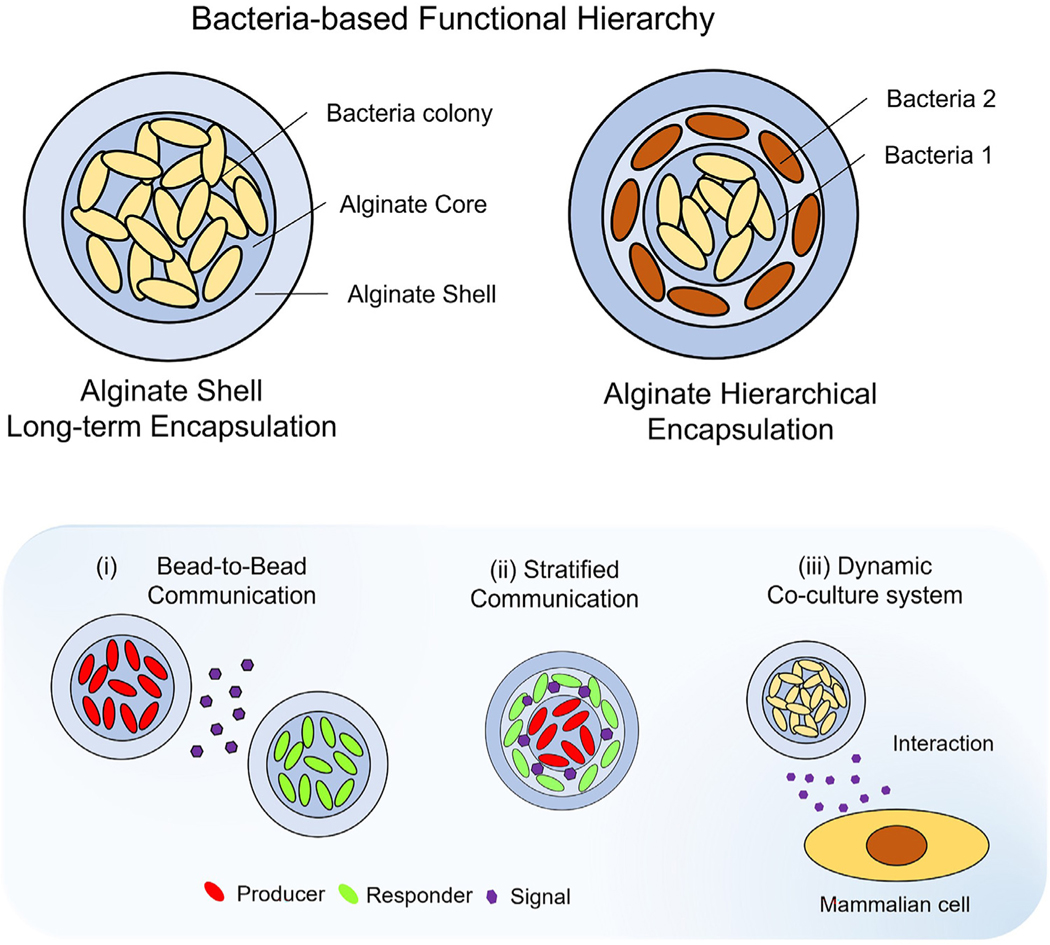
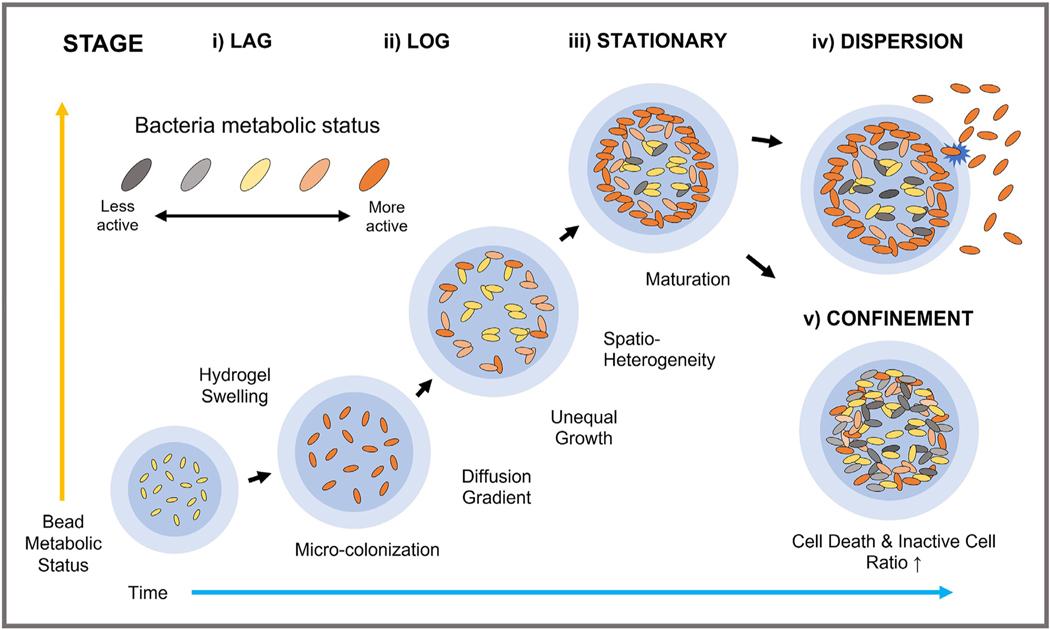
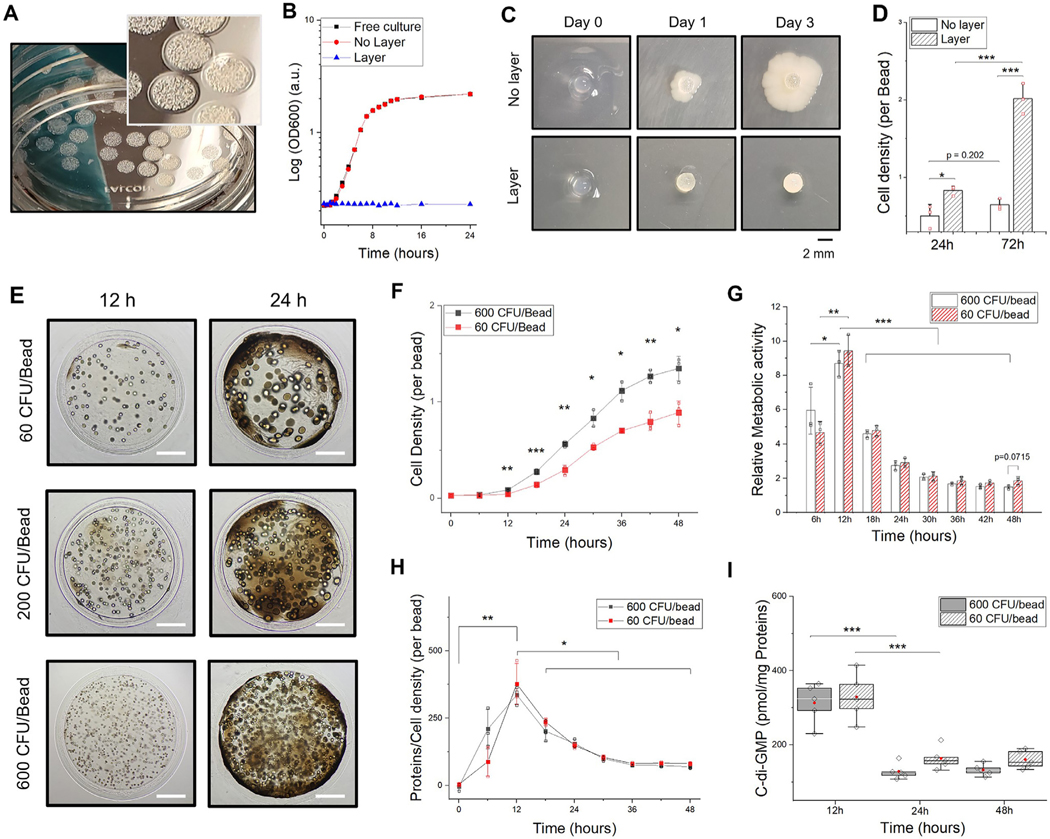
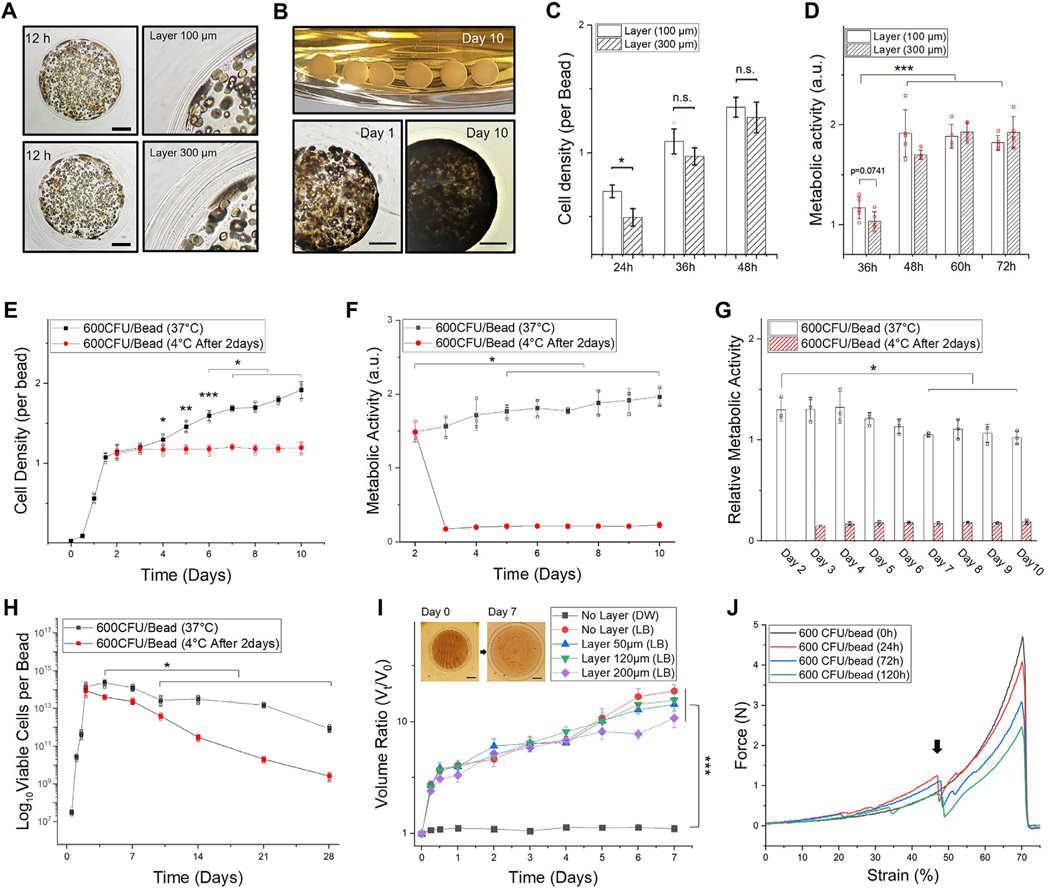
To sequester prokaryotic cells in a biofilm-like niche, the creation of a pertinent and reliable microenvironment that reflects the heterogeneous nature of biological systems is vital for sustenance. Design of a microenvironment that is conducive for growth and survival of organisms, should account for factors such as mass transport, porosity, stability, elasticity, size, functionality, and biochemical characteristics of the organisms in the confined architecture. In this work we present an artificial long-term confinement model fabricated by natural alginate hydrogels that are structurally stable and can host organisms for over 10 days in physiologically relevant conditions. A unique feature of the confinement platform is the development of stratified habitats wherein bacterial cells can be entrapped in the core as well as in the shell layers, wherein the thickness and the number of shell layers are tunable at fabrication. We show that the hydrogel microenvironment in the beads can host complex subpopulations of organisms similar to that in a biofilm. Dynamic interaction of bacterial colonies encapsulated in different beads or within the core and stratified layers of single beads was demonstrated to show intra- species communication. Inter- species communication between probiotic bacteria and human colorectal carcinoma cells was also demonstrated to highlight a possible bidirectional communication between the organisms in the beads and the environment. STATEMENT OF SIGNIFICANCE: Bacteria confinement in a natural soft hydrogel structure has always been a challenge due to the collapse of hydrogel architectures. Alternative methods have been attempted to encapsulate microorganisms by employing various processes to avoid/minimize rupturing of hydrogel structures. However, most of the past approaches have been unfavorable in balancing cell proliferation and functionality upon confinement. Our study addresses the fundamental gap in knowledge necessary to create favorable and complex 3D biofilm mimics utilizing natural hydrogel for microbial colonization for long-term studies. Our approach represents a cornerstone in the development of 3D functional architectures not only to advance studies in microbial communication, host-microbe interaction but also to address basic and fundamental questions in biology.
为了将原核细胞隔离在类似生物膜的小生境中,创造一个与生物系统的异质性相吻合的相关且可靠的微环境对于维持生命至关重要。设计有利于生物体生长和存活的微环境,应考虑到质量传输、孔隙率、稳定性、弹性、大小、功能以及受限结构中生物体的生化特性等因素。在这项工作中,我们提出了一种由天然海藻酸盐水凝胶制成的人工长期限制模型,该模型结构稳定,在生理相关条件下可以容纳生物体超过 10 天。该限制平台的一个独特特征是分层栖息地的发展,其中细菌细胞可以被困在核心以及外壳层中,并且在制造时可以调整外壳层的厚度和数量。我们表明,珠状水凝胶微环境可以容纳类似于生物膜的复杂亚群的生物体。通过展示在不同珠状物或单个珠状物的核心和分层层中封装的细菌菌落的动态相互作用,证明了种内通讯。还证明了益生菌和人结直肠癌细胞之间的种间通讯,以突出珠状物内的生物体与环境之间可能存在的双向通讯。
由于水凝胶结构的坍塌,细菌在天然软水凝胶结构中的限制一直是一个挑战。已经尝试了替代方法来封装微生物,采用各种工艺来避免/最小化水凝胶结构的破裂。然而,过去的大多数方法在限制后细胞增殖和功能的平衡方面都不理想。我们的研究解决了在利用天然水凝胶进行微生物定植以进行长期研究时创建有利且复杂的 3D 生物膜模拟物所需的基本知识差距。我们的方法代表了在开发 3D 功能架构方面的基石,不仅可以推进微生物通讯、宿主-微生物相互作用的研究,还可以解决生物学中的基本和基本问题。