Weight Management Center, Kaohsiung Medical University Hospital/Kaohsiung Medical University, No. 100, Tzyou 1st Road, Kaohsiung City, 80756, Taiwan.
Department of Nursing, Kaohsiung Medical University Hospital/Kaohsiung Medical University, Kaohsiung City, Taiwan.
Obes Surg. 2023 Mar;33(3):860-869. doi: 10.1007/s11695-023-06454-0. Epub 2023 Jan 12.
Applying eHealth interventions via social media is common in modern medicine. LINE® is a popular communication app in Taiwan that can deliver messages 24 h a day. In addition to being free of charge, it also allows bariatric nurses (BNs) and patients to enjoy bidirectional communication via telecommunication services instead of direct, face-to-face contact for patients undergoing bariatric-metabolic surgery (BMS). We conducted this retrospective study to determine the frequency and reasons for early post-discharge of LINE® messages/calls and investigate the relationship between this frequency and contents of these messages and postoperative outcomes after BMS.
A retrospective review of prospectively collected data was conducted in an Asian weight management center. The study period ran from August 2016 to December 2021, and a total of 143 native patients with severe obesity were enrolled. All patients were informed of the necessity of a postoperative dietitian consultation before bariatric surgery. The patterns of LINE® communication with the BN and associated actions to resolve patients' needs within 180 days after index BMS were analyzed.
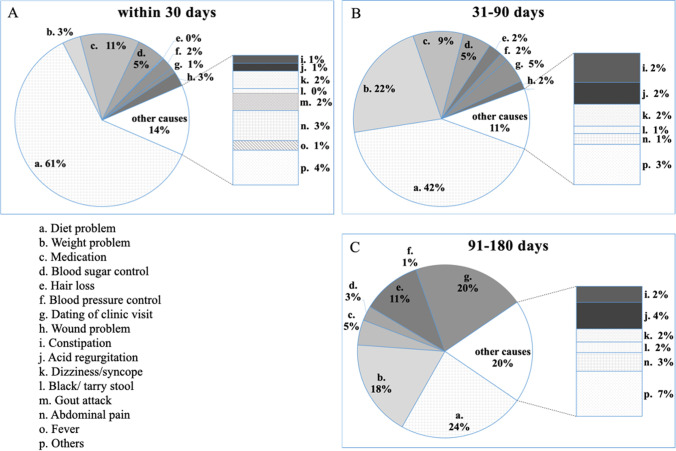
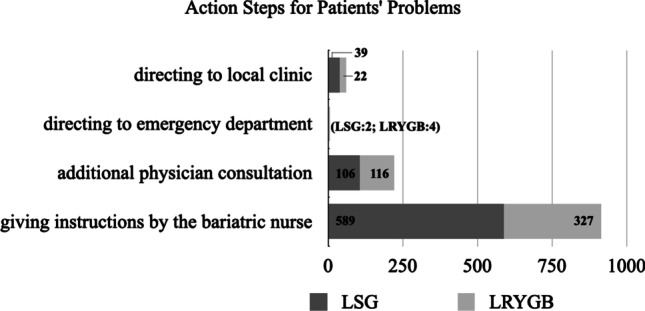
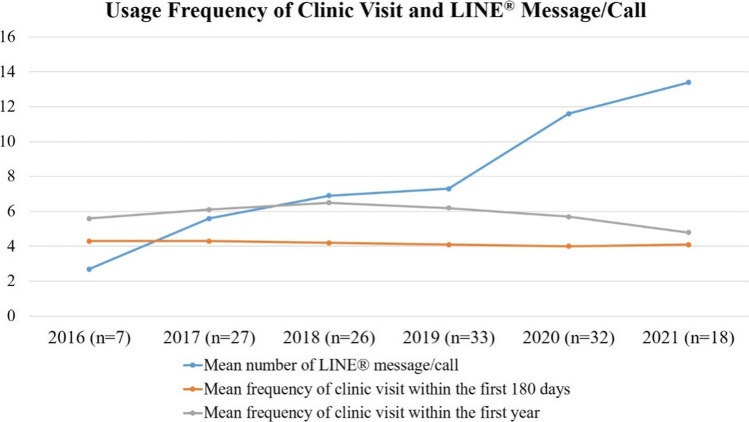
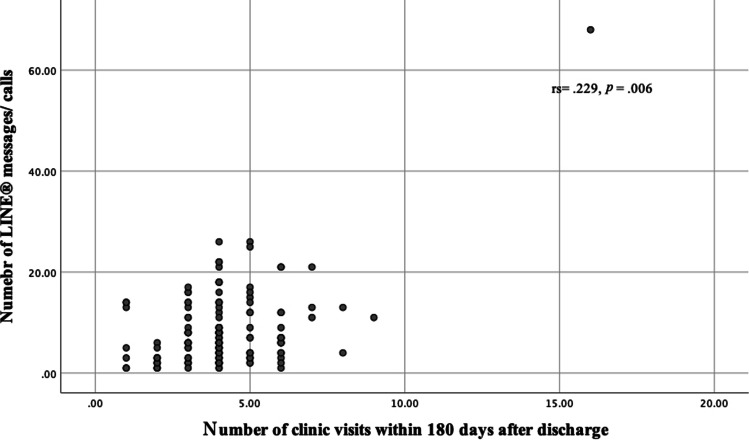
Among the 143 enrolled patients, 100 underwent laparoscopic sleeve gastrectomy and 43 underwent laparoscopic Roux-en-Y gastric bypass. A total of 1205 messages/calls were analyzed concomitantly; most LINE® communications focused on diet problems (47.97%; n = 578), weight problems (11.54%; n = 139), and medications (9.21%; n = 111). Most problems could be resolved by LINE® communications directly, and only a small portion (5.6%) was directed to local clinics or emergency departments. During the COVID-19 pandemic, the usage of LINE® communications significantly increased (12.2 ± 10.4 vs. 6.4 ± 4.9; p < 0.01); nonetheless, a higher frequency of LINE® communications would not hinder the regular clinic visits (r = 0.359; p = 0.01).
Based on our limited experience, the LINE® consultation service operated by the BN could effectively address patients' problems. Moreover, it might reduce the need for emergency department visits or unexpected clinic appointments for patients after BMS.
在现代医学中,通过社交媒体应用电子健康干预措施是很常见的。LINE®是台湾流行的通讯应用程序,可以 24 小时发送消息。除了免费之外,它还允许减肥护士(BN)和患者通过电信服务进行双向交流,而不是对接受减肥代谢手术(BMS)的患者进行直接面对面的接触。我们进行这项回顾性研究,以确定 LINE®消息/电话出院后的早期发送频率和原因,并调查这种频率与这些消息的内容之间的关系,以及 BMS 后的术后结果。
对亚洲体重管理中心前瞻性收集的数据进行回顾性分析。研究期间为 2016 年 8 月至 2021 年 12 月,共纳入 143 名患有严重肥胖症的本地患者。所有患者均在接受减肥手术前被告知需要咨询术后营养师。分析了与 BN 进行 LINE®沟通的模式以及在指数 BMS 后 180 天内解决患者需求的相关行动。
在纳入的 143 名患者中,有 100 名接受了腹腔镜袖状胃切除术,43 名接受了腹腔镜 Roux-en-Y 胃旁路术。同时分析了 1205 条消息/电话;大多数 LINE®交流集中在饮食问题(47.97%;n = 578)、体重问题(11.54%;n = 139)和药物问题(9.21%;n = 111)。大多数问题可以通过 LINE®通信直接解决,只有一小部分(5.6%)指向当地诊所或急诊室。在 COVID-19 大流行期间,LINE®通信的使用显著增加(12.2 ± 10.4 比 6.4 ± 4.9;p < 0.01);尽管如此,更高的 LINE®通信频率并不会阻碍常规门诊就诊(r = 0.359;p = 0.01)。
根据我们的有限经验,BN 运营的 LINE®咨询服务可以有效地解决患者的问题。此外,它可能会减少 BMS 后患者对急诊室就诊或意外门诊预约的需求。