Allergology Department, Department of Allergology and Immunology and "Octavian Fodor" Institute of Gastroenterology and Hepatology, "Iuliu Hatieganu" University of Medicine and Pharmacy, 400347, Cluj-Napoca, Romania.
Clinical Department 5, "Carol Davila" University of Medicine and Pharmacy, Bulevardul Eroii Sanitari 8, 050474, Bucharest, Romania.
BMC Pulm Med. 2023 Jan 17;23(1):22. doi: 10.1186/s12890-023-02309-7.
During the Covid-19 pandemic patients suffering from asthma raised many concerns regarding the outcome ofthe impact of COVID-19 disease on their preexisting condition. The 2021 GINA report indicates that people with asthma do not appear to be at increased risk of a severe form of COVID-19.
This study is a retrospective study of patients (n = 163) median age = 27.8 years, M:F = 1:1.26, with asthma evaluated using ACT (asthma control test) and VAS (visual analog scale) before and after COVID-19 disease. An ACT score over 20 points placed patients in the controlled asthma group.
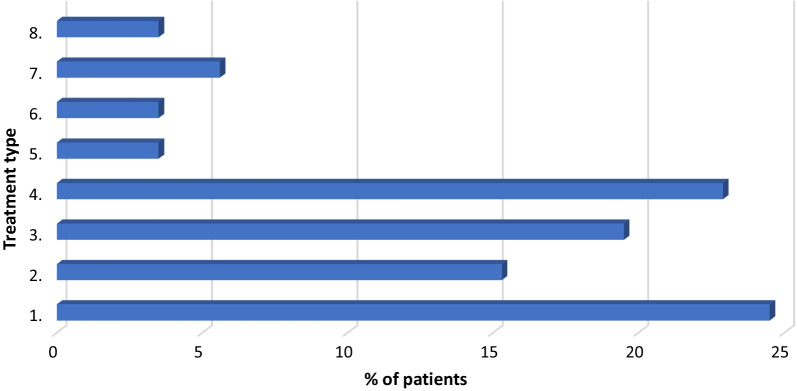
The overall evaluation for COVID-19 in our asthma patients revealed that 22.7% of the studied group had the COVID-19 disease (21.5% in the controlled asthma group and 24.5% in uncontrolled asthma group). Asthma disease history was longer in the uncontroled asthma group (128 ± 96.8 months vs. 296 ± 59.7 months, p = 0.05). Asthma treatment was conducted according to the GINA guideline, and 18.4% (30 pts) of the patients were on allergen immunotherapy treatment. Significantly more uncontrolled patients were significantly more in Step 1 and 5 of treatment (p = 0.05 and p = 0.03). During the COVID-19 pandemic, patients in the GINA step 5 of treatment experienced a worsening of asthma, often twice as severe as compared to patients with asthma in GINA step 1-4. In these patients, even mild COVID-19 disease led to worsened asthma symptoms, while severe COVID-19 led to a severe asthma impairment measured by ACT score (p = 0.03) and VAS scale (p = 0.02), with increased oral corticosteroids consumption.
Maintaining optimal asthma control should be able to reduce risk of severe outcomes after COVID-19 disease. Communication via phone with the specialist involved in their asthma care was very comforting for patients, thus confirming the necessity to include phone calls, smart phone's application or online evaluations and counseling in long-term care of chronic diseases.
在 COVID-19 大流行期间,患有哮喘的患者对 COVID-19 疾病对其先前疾病的影响的结果提出了许多担忧。2021 年 GINA 报告表明,哮喘患者似乎没有罹患 COVID-19 严重形式的风险增加。
本研究是对 163 例患者(中位数年龄 27.8 岁,M:F=1:1.26)的回顾性研究,这些患者在 COVID-19 疾病之前和之后使用 ACT(哮喘控制测试)和 VAS(视觉模拟量表)进行哮喘评估。ACT 评分超过 20 分将患者置于哮喘控制组。
我们对哮喘患者的 COVID-19 进行的总体评估显示,研究组中有 22.7%(哮喘控制组中有 21.5%,未控制哮喘组中有 24.5%)患有 COVID-19 疾病。未控制哮喘组的哮喘病史更长(128±96.8 个月比 296±59.7 个月,p=0.05)。哮喘治疗根据 GINA 指南进行,18.4%(30 例)的患者接受过敏原免疫治疗。未控制组中显著更多的患者处于治疗的第 1 步和第 5 步(p=0.05 和 p=0.03)。在 COVID-19 大流行期间,接受 GINA 第 5 步治疗的患者的哮喘恶化,通常比 GINA 第 1-4 步治疗的患者严重两倍。在这些患者中,即使是轻度 COVID-19 疾病也会导致哮喘症状恶化,而严重 COVID-19 疾病会导致 ACT 评分(p=0.03)和 VAS 评分(p=0.02)衡量的严重哮喘损害,需要增加口服皮质类固醇的使用。
保持哮喘的最佳控制应能够降低 COVID-19 疾病后发生严重结局的风险。通过电话与参与其哮喘护理的专家进行沟通,让患者感到非常安慰,这证实了在慢性病的长期护理中,需要包括电话、智能手机应用程序或在线评估和咨询。