School of Life Sciences, Faculty of Science, University of Technology Sydney, Sydney, NSW, Australia.
Institute for Biomedical Materials and Devices, Faculty of Science, University of Technology Sydney, Sydney, NSW, Australia.
Cell Mol Life Sci. 2023 Jan 18;80(2):44. doi: 10.1007/s00018-022-04648-w.
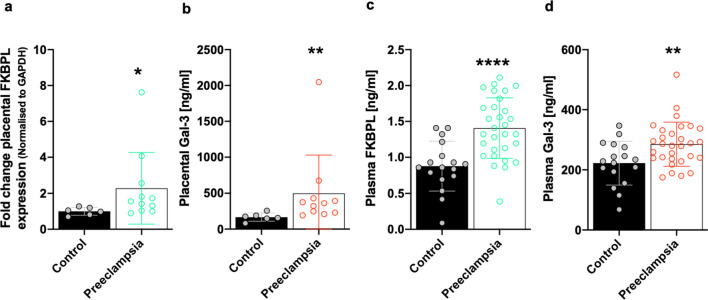
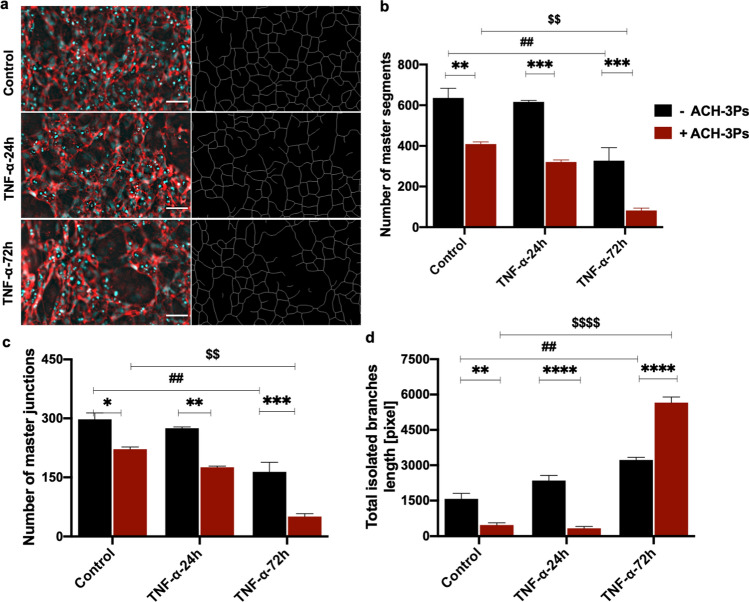
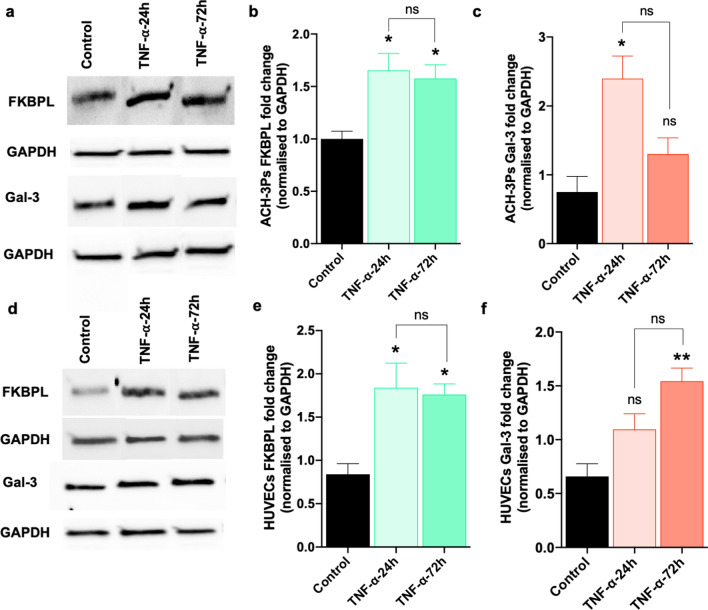
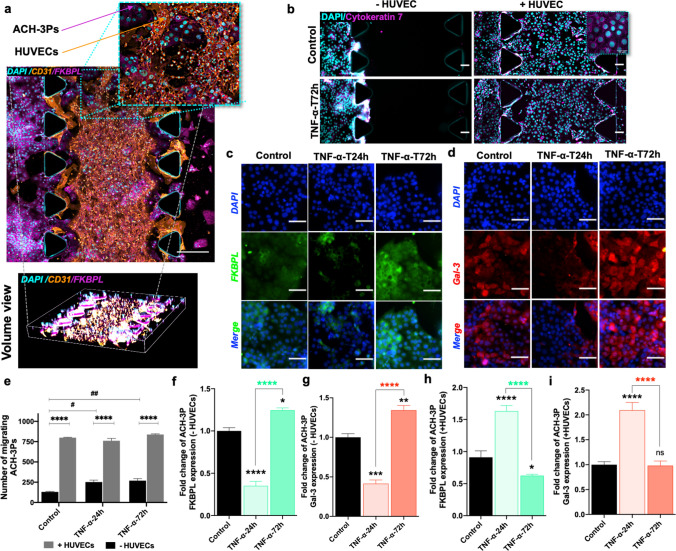
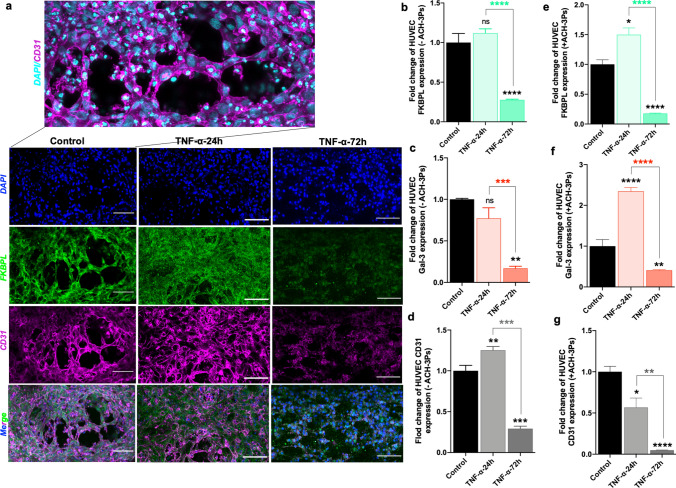
Preeclampsia is a pregnancy-specific cardiovascular disorder, involving significant maternal endothelial dysfunction. Although inappropriate placentation due to aberrant angiogenesis, inflammation and shallow trophoblast invasion are the root causes of preeclampsia, pathogenic mechanisms are poorly understood, particularly in early pregnancy. Here, we first confirm the abnormal expression of important vascular and inflammatory proteins, FK506-binding protein-like (FKBPL) and galectin-3 (Gal-3), in human plasma and placental tissues from women with preeclampsia and normotensive controls. We then employ a three-dimensional microfluidic placental model incorporating human umbilical vein endothelial cells (HUVECs) and a first trimester trophoblast cell line (ACH-3P) to investigate FKBPL and Gal-3 signaling in inflammatory conditions. In human samples, both circulating (n = 17 controls; n = 30 preeclampsia) and placental (n ≥ 6) FKBPL and Gal-3 levels were increased in preeclampsia compared to controls (plasma: FKBPL, p < 0.0001; Gal-3, p < 0.01; placenta: FKBPL, p < 0.05; Gal-3, p < 0.01), indicative of vascular dysfunction in preeclampsia. In our placenta-on-a-chip model, we show that endothelial cells are critical for trophoblast-mediated migration and that trophoblasts effectively remodel endothelial vascular networks. Inflammatory cytokine tumour necrosis factor-α (10 ng/mL) modulates both FKBPL and Gal-3 signaling in conjunction with trophoblast migration and impairs vascular network formation (p < 0.005). Our placenta-on-a-chip recapitulates aspects of inappropriate placental development and vascular dysfunction in preeclampsia.
子痫前期是一种妊娠特异性心血管疾病,涉及显著的母体血管内皮功能障碍。尽管由于异常血管生成、炎症和浅绒毛膜浸润导致的胎盘不当着床是子痫前期的根本原因,但致病机制尚不清楚,特别是在早孕期间。在这里,我们首先证实了 FK506 结合蛋白样(FKBPL)和半乳糖凝集素-3(Gal-3)等重要血管和炎症蛋白在子痫前期妇女的血浆和胎盘组织中的异常表达,并与正常血压对照组进行了比较。然后,我们采用了一种包含人脐静脉内皮细胞(HUVEC)和早孕滋养层细胞系(ACH-3P)的三维微流控胎盘模型,研究了 FKBPL 和 Gal-3 在炎症条件下的信号通路。在人类样本中,与对照组相比(血浆:FKBPL,p<0.0001;Gal-3,p<0.01;胎盘:FKBPL,p<0.05;Gal-3,p<0.01),子痫前期患者的循环(n=17 例对照组;n=30 例子痫前期)和胎盘(n≥6)FKBPL 和 Gal-3 水平均升高,提示子痫前期存在血管功能障碍。在我们的胎盘芯片模型中,我们表明内皮细胞对于滋养层介导的迁移是至关重要的,并且滋养层能够有效地重塑内皮血管网络。炎症细胞因子肿瘤坏死因子-α(10ng/mL)与滋养层迁移一起调节 FKBPL 和 Gal-3 信号通路,并损害血管网络形成(p<0.005)。我们的胎盘芯片模型再现了子痫前期中胎盘发育不当和血管功能障碍的某些方面。