Hoang-Trong Tuan Minh, Ullah Aman, Lederer William Jonathan, Jafri Mohsin Saleet
School of Systems Biology, Krasnow Institute for Advanced Study, George Mason University, Fairfax, VA 22030, USA.
Center for Biomedical Engineering and Technology, University of Maryland School of Medicine, Baltimore, MD 21201, USA.
Membranes (Basel). 2021 Dec 18;11(12):989. doi: 10.3390/membranes11120989.
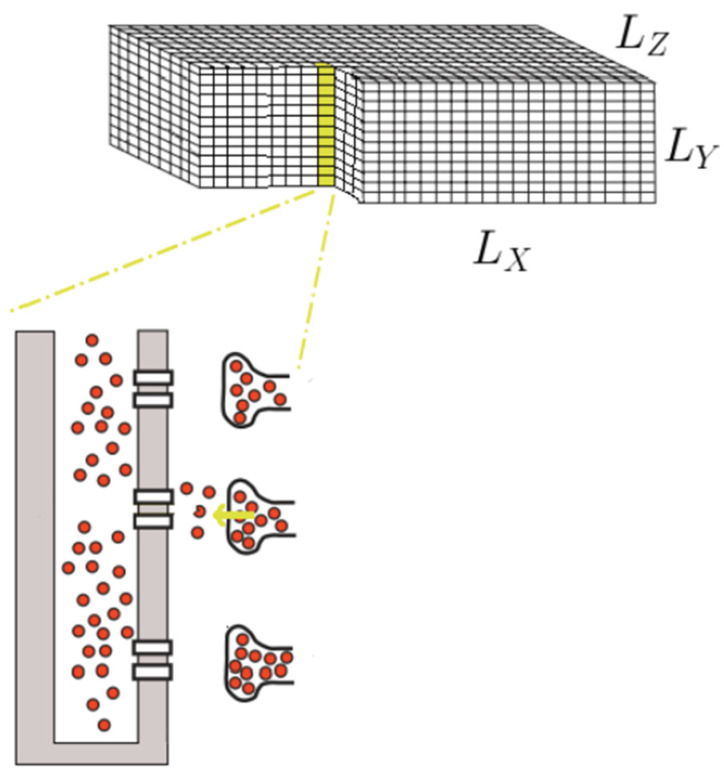
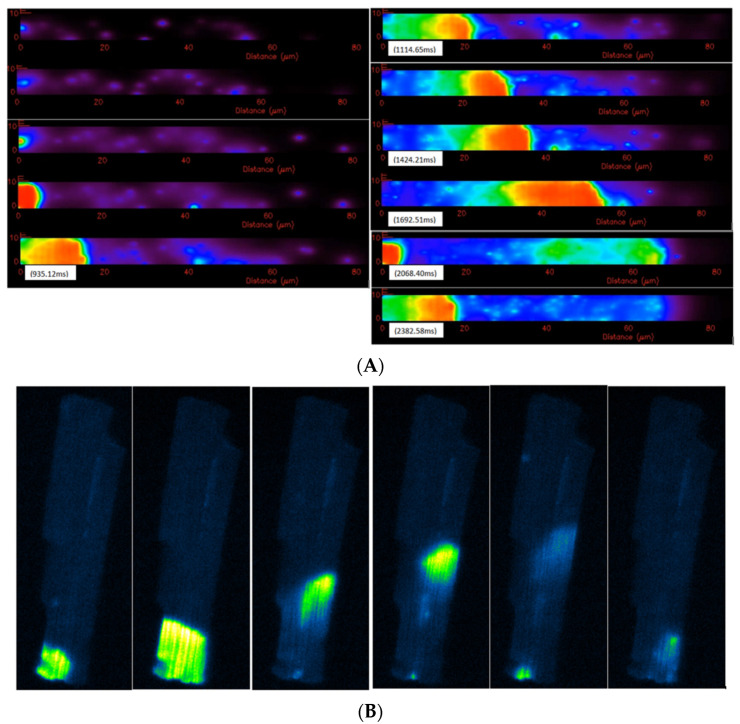
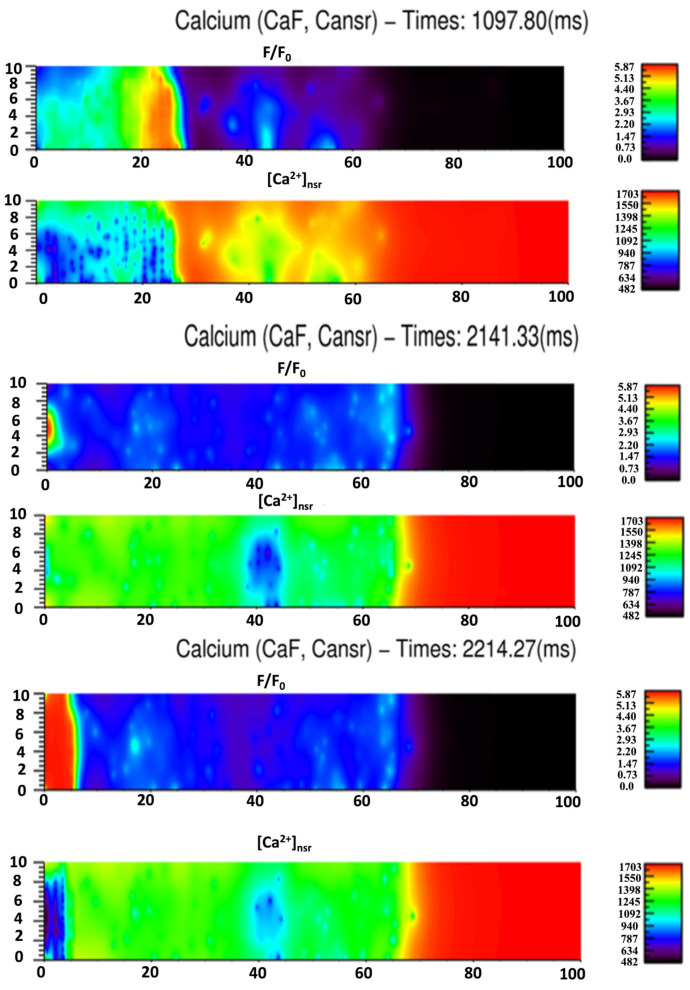
Calcium (Ca) plays a central role in the excitation and contraction of cardiac myocytes. Experiments have indicated that calcium release is stochastic and regulated locally suggesting the possibility of spatially heterogeneous calcium levels in the cells. This spatial heterogeneity might be important in mediating different signaling pathways. During more than 50 years of computational cell biology, the computational models have been advanced to incorporate more ionic currents, going from deterministic models to stochastic models. While periodic increases in cytoplasmic Ca concentration drive cardiac contraction, aberrant Ca release can underly cardiac arrhythmia. However, the study of the spatial role of calcium ions has been limited due to the computational expense of using a three-dimensional stochastic computational model. In this paper, we introduce a three-dimensional stochastic computational model for rat ventricular myocytes at the whole-cell level that incorporate detailed calcium dynamics, with (1) non-uniform release site placement, (2) non-uniform membrane ionic currents and membrane buffers, (3) stochastic calcium-leak dynamics and (4) non-junctional or rogue ryanodine receptors. The model simulates spark-induced spark activation and spark-induced Ca wave initiation and propagation that occur under conditions of calcium overload at the closed-cell condition, but not when Ca levels are normal. This is considered important since the presence of Ca waves contribute to the activation of arrhythmogenic currents.
钙(Ca)在心肌细胞的兴奋和收缩过程中起着核心作用。实验表明,钙释放是随机的且受局部调节,这表明细胞内钙水平可能存在空间异质性。这种空间异质性可能对介导不同的信号通路很重要。在50多年的计算细胞生物学研究中,计算模型不断发展,纳入了更多离子电流,从确定性模型发展到随机模型。虽然细胞质钙浓度的周期性增加驱动心脏收缩,但异常的钙释放可能是心律失常的基础。然而,由于使用三维随机计算模型的计算成本,钙离子空间作用的研究受到了限制。在本文中,我们在全细胞水平上为大鼠心室肌细胞引入了一个三维随机计算模型,该模型纳入了详细的钙动力学,包括(1)释放位点放置不均匀,(2)膜离子电流和膜缓冲不均匀,(3)随机钙泄漏动力学,以及(4)非连接或流氓兰尼碱受体。该模型模拟了在封闭细胞条件下钙超载时发生的火花诱导的火花激活以及火花诱导的钙波起始和传播,但在钙水平正常时则不会发生。这被认为很重要,因为钙波的存在有助于致心律失常电流的激活。