Zhao Zhi-Ping, Nie Chuang, Jiang Cheng-Teng, Cao Sheng-Hao, Tian Kai-Xi, Yu Shan, Gu Jian-Wen
School of Biological Science and Medical Engineering, Beihang University, Beijing 100191, China.
Strategic Support Force Medical Center, Beijing 100101, China.
Brain Sci. 2023 Jan 12;13(1):134. doi: 10.3390/brainsci13010134.
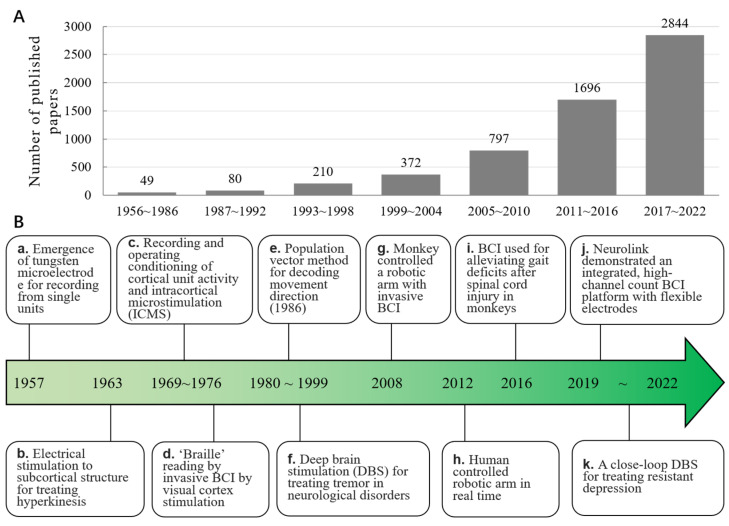
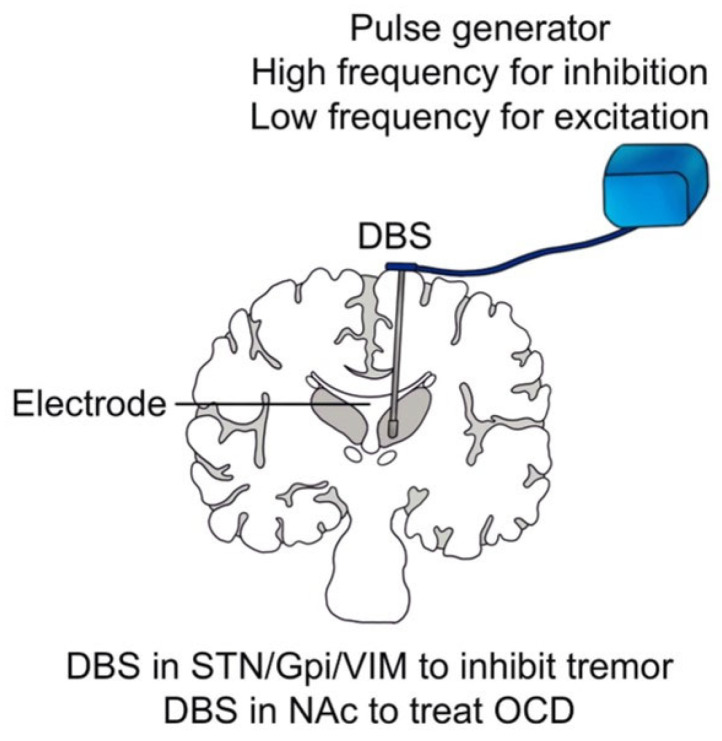
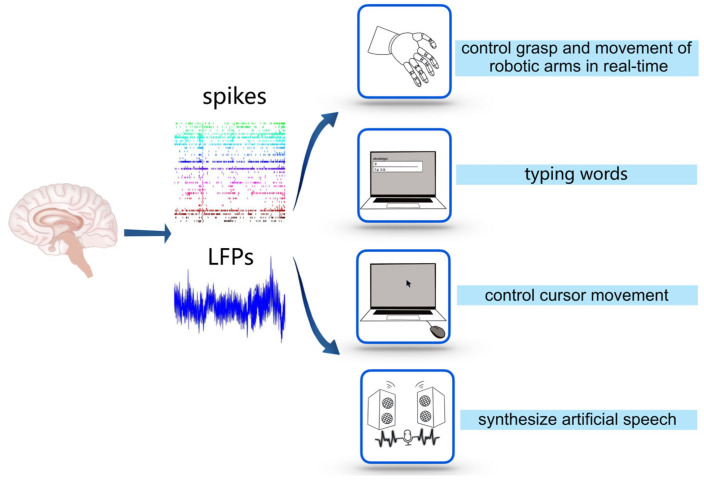
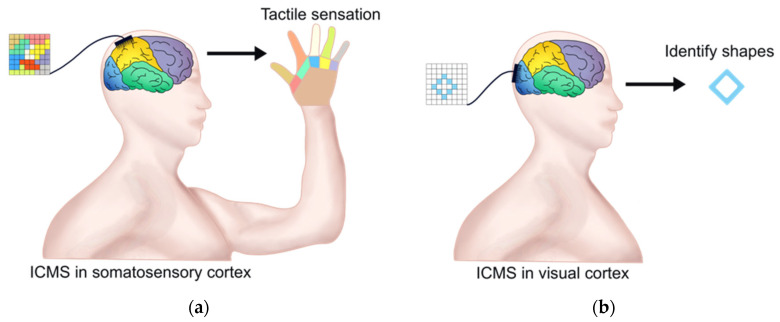
Brain-computer interface (BCI) can be used as a real-time bidirectional information gateway between the brain and machines. In particular, rapid progress in invasive BCI, propelled by recent developments in electrode materials, miniature and power-efficient electronics, and neural signal decoding technologies has attracted wide attention. In this review, we first introduce the concepts of neuronal signal decoding and encoding that are fundamental for information exchanges in BCI. Then, we review the history and recent advances in invasive BCI, particularly through studies using neural signals for controlling external devices on one hand, and modulating brain activity on the other hand. Specifically, regarding modulating brain activity, we focus on two types of techniques, applying electrical stimulation to cortical and deep brain tissues, respectively. Finally, we discuss the related ethical issues concerning the clinical application of this emerging technology.
脑机接口(BCI)可作为大脑与机器之间的实时双向信息网关。特别是,电极材料、微型高效能电子设备以及神经信号解码技术的最新进展推动了侵入性BCI的快速发展,这引起了广泛关注。在本综述中,我们首先介绍神经元信号解码和编码的概念,这些概念是BCI中信息交换的基础。然后,我们回顾侵入性BCI的历史和最新进展,特别是一方面通过使用神经信号控制外部设备,另一方面调节大脑活动的研究。具体而言,关于调节大脑活动,我们重点关注分别对皮质和深部脑组织施加电刺激的两种技术。最后,我们讨论了与这项新兴技术临床应用相关的伦理问题。