Cai Zhenyao, Mao Yimin, Gong Ting, Xin Ying, Lou Jiayun
SILC Business School, Shanghai University, 20 Chengzhong Road, Shanghai 201800, China.
Int J Environ Res Public Health. 2023 Jan 11;20(2):1322. doi: 10.3390/ijerph20021322.
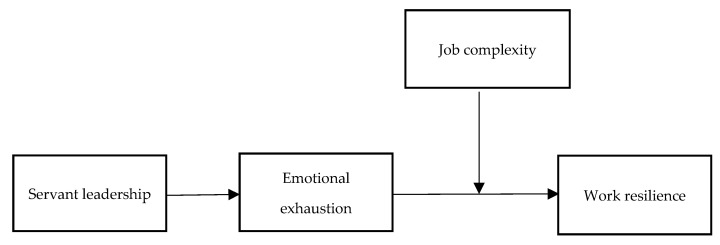
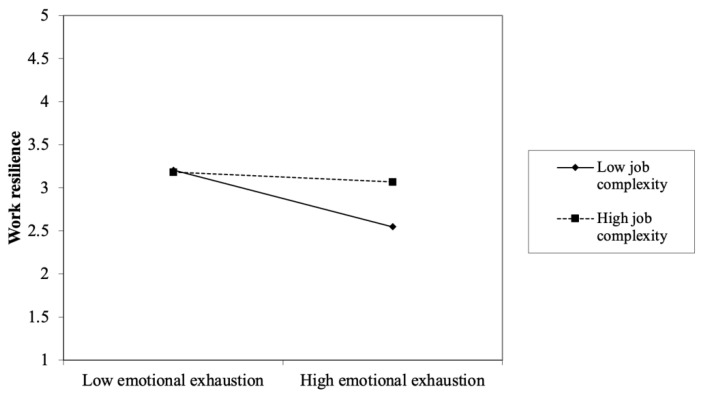
The COVID-19 pandemic is a tremendous crisis for public health, which also has a profound impact on business and social activities because many countries restrict travel and social gatherings to avoid the spread of COVID-19. Workers suffer from mental health problems including depression and anxiety due to the uncertain work environment. Hence, psychological resilience, a positive psychological response to these challenges, is essential to the success of employees and companies. Drawing on the conservation of resources theory (COR), this paper investigates how the leadership style (i.e., servant leadership) enhances the work resilience of hospitality employees through two time-lagged empirical studies. Specifically, study 1 demonstrates a positive relationship between servant leadership and employees' work resilience. Study 2 replicates study 1's result and further demonstrates that emotional exhaustion mediates the relationship between servant leadership and employees' work resilience. Furthermore, study 2 finds a significant moderating effect of job complexity. The findings of this paper provide empirical evidence for practitioners to manage employees' resilience and psychological resources.
新冠疫情是一场巨大的公共卫生危机,它也对商业和社会活动产生了深远影响,因为许多国家限制旅行和社交聚会以避免新冠病毒传播。由于工作环境不确定,员工出现了包括抑郁和焦虑在内的心理健康问题。因此,心理韧性,即对这些挑战的积极心理反应,对员工和公司的成功至关重要。本文借鉴资源保存理论(COR),通过两项时间滞后的实证研究,探讨领导风格(即仆人式领导)如何增强酒店业员工的工作韧性。具体而言,研究1证明了仆人式领导与员工工作韧性之间存在正相关关系。研究2重复了研究1的结果,并进一步证明情绪耗竭在仆人式领导与员工工作韧性之间起中介作用。此外,研究2发现工作复杂性具有显著的调节作用。本文的研究结果为从业者管理员工的韧性和心理资源提供了实证依据。