Mutlu Muzaffer, Bingol Zeynebe, Uc Eda Mehtap, Köksal Ekrem, Goren Ahmet C, Alwasel Saleh H, Gulcin İlhami
Vocational School of Applied Sciences, Gelişim University, Istanbul 34315, Turkey.
Department of Medical Services and Techniques, Tokat Vocational School of Health Services, Gaziosmanpasa University, Tokat 60250, Turkey.
Life (Basel). 2023 Jan 3;13(1):136. doi: 10.3390/life13010136.
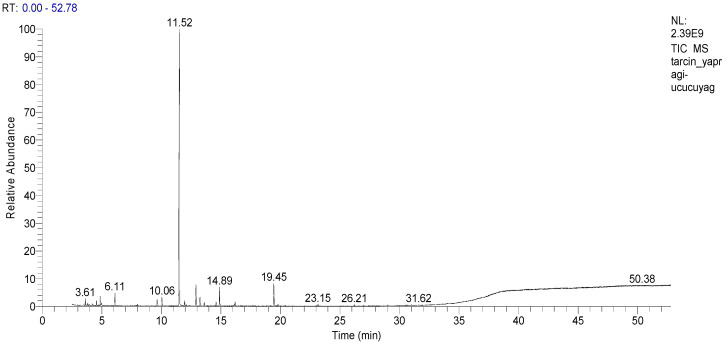
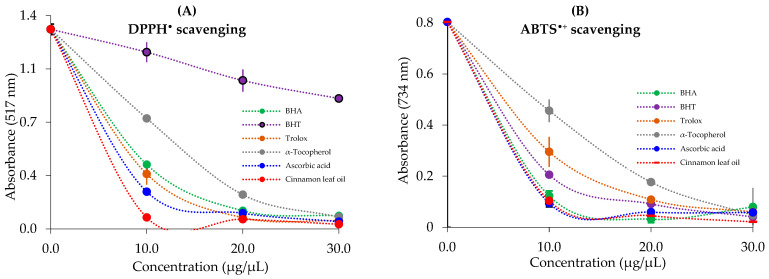
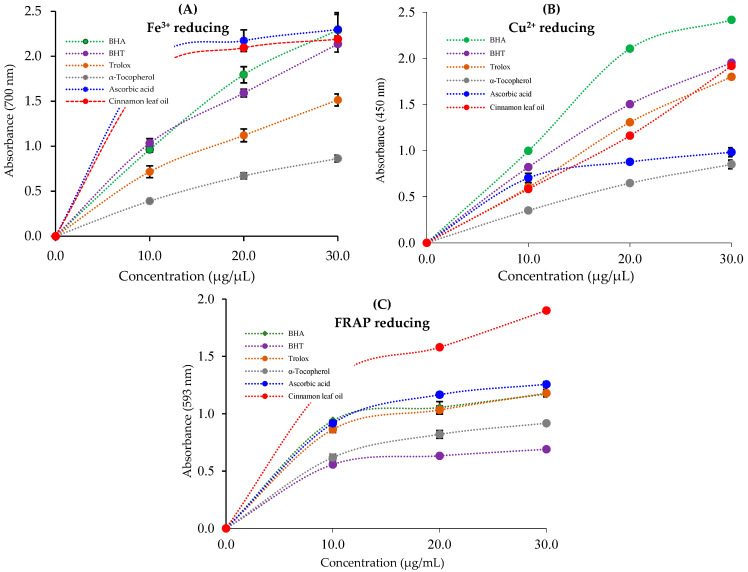
In this study, for the first time, the antioxidant and antidiabetic properties of the essential oil from cinnamon () leaves were evaluated and investigated using various bioanalytical methods. In addition, the inhibitory effects of cinnamon oil on carbonic anhydrase II (hCA II), acetylcholinesterase (AChE), and α-amylase, which are associated with various metabolic diseases, were determined. Further, the phenolic contents of the essential oil were determined using LC-HRMS chromatography. Twenty-seven phenolic molecules were detected in cinnamon oil. Moreover, the amount and chemical profile of the essential oils present in cinnamon oil was determined using GC/MS and GC-FID analyses. ()-cinnamaldehyde (72.98%), benzyl benzoate (4.01%), and -Cinnamyl acetate (3.36%) were the most common essential oils in cinnamon leaf oil. The radical scavenging activities of cinnamon oil were investigated using 1,1-diphenyl-2-picryl-hydrazil (DPPH), 2,2'-azino-bis(3-ethylbenzthiazoline-6-sulfonic acid), and (ABTS) bioanalytical scavenging methods, which revealed its strong radical scavenging abilities (DPPH, IC: 4.78 μg/mL; and ABTS, IC: 5.21 μg/mL). Similarly, the reducing capacities for iron (Fe), copper (Cu), and Fe-2,4,6-tri(2-pyridyl)-S-triazine (TPTZ) were investigated. Cinnamon oil also exhibited highly effective inhibition against hCA II (IC: 243.24 μg/mL), AChE (IC: 16.03 μg/mL), and α-amylase (IC: 7.54μg/mL). This multidisciplinary study will be useful and pave the way for further studies for the determination of antioxidant properties and enzyme inhibition profiles of medically and industrially important plants and their oils.
在本研究中,首次使用各种生物分析方法对肉桂()叶精油的抗氧化和抗糖尿病特性进行了评估和研究。此外,还测定了肉桂油对与各种代谢疾病相关的碳酸酐酶II(hCA II)、乙酰胆碱酯酶(AChE)和α-淀粉酶的抑制作用。此外,使用液相色谱-高分辨质谱(LC-HRMS)色谱法测定了精油中的酚类成分。在肉桂油中检测到27种酚类分子。此外,使用气相色谱/质谱(GC/MS)和气相色谱-火焰离子化检测(GC-FID)分析确定了肉桂油中存在的精油的含量和化学组成。()-肉桂醛(72.98%)、苯甲酸苄酯(4.01%)和乙酸肉桂酯(3.36%)是肉桂叶油中最常见的精油。使用1,1-二苯基-2-苦基肼(DPPH)、2,2'-偶氮双(3-乙基苯并噻唑啉-6-磺酸)和(ABTS)生物分析清除方法研究了肉桂油的自由基清除活性,结果表明其具有很强的自由基清除能力(DPPH,IC:4.78μg/mL;ABTS,IC:5.21μg/mL)。同样,研究了对铁(Fe)、铜(Cu)和铁-2,4,6-三(2-吡啶基)-S-三嗪(TPTZ)的还原能力。肉桂油对hCA II(IC:243.24μg/mL)、AChE(IC:16.03μg/mL)和α-淀粉酶(IC:7.54μg/mL)也表现出高效抑制作用。这项多学科研究将是有用的,并为进一步研究医学和工业上重要植物及其油的抗氧化特性和酶抑制谱铺平道路。