Geleta Tesfaye Abebe, Maggay Irish Valerie, Chang Yung, Venault Antoine
R&D Center for Membrane Technology, Department of Chemical Engineering, Chung Yuan Christian University, Chung-Li 32023, Taiwan.
Membranes (Basel). 2023 Jan 2;13(1):58. doi: 10.3390/membranes13010058.
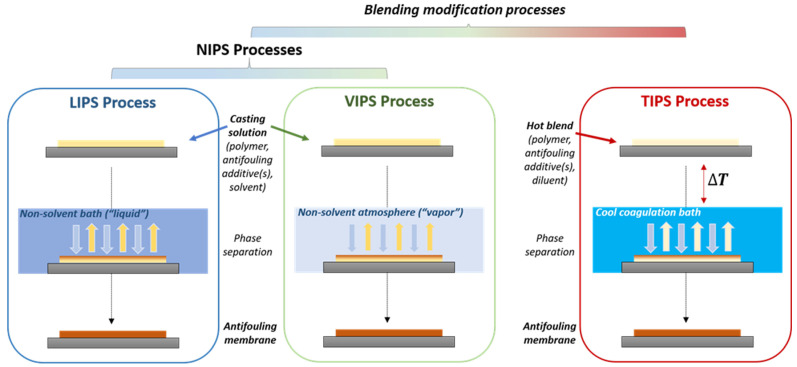
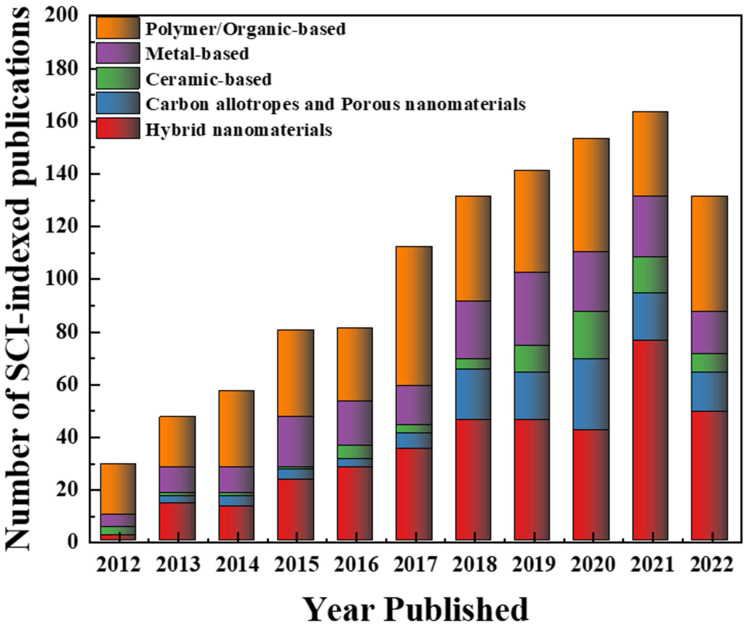
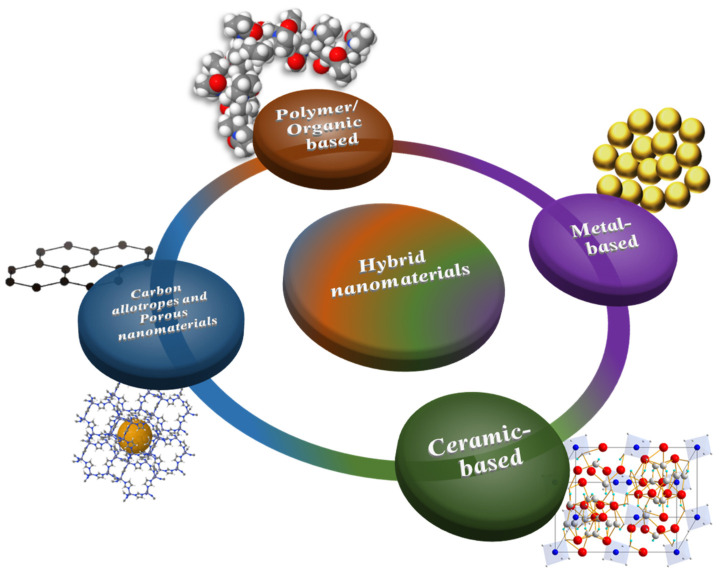
Membrane technology is an essential tool for water treatment and biomedical applications. Despite their extensive use in these fields, polymeric-based membranes still face several challenges, including instability, low mechanical strength, and propensity to fouling. The latter point has attracted the attention of numerous teams worldwide developing antifouling materials for membranes and interfaces. A convenient method to prepare antifouling membranes is via physical blending (or simply blending), which is a one-step method that consists of mixing the main matrix polymer and the antifouling material prior to casting and film formation by a phase inversion process. This review focuses on the recent development (past 10 years) of antifouling membranes via this method and uses different phase-inversion processes including liquid-induced phase separation, vapor induced phase separation, and thermally induced phase separation. Antifouling materials used in these recent studies including polymers, metals, ceramics, and carbon-based and porous nanomaterials are also surveyed. Furthermore, the assessment of antifouling properties and performances are extensively summarized. Finally, we conclude this review with a list of technical and scientific challenges that still need to be overcome to improve the functional properties and widen the range of applications of antifouling membranes prepared by blending modification.
膜技术是水处理和生物医学应用的重要工具。尽管它们在这些领域得到了广泛应用,但基于聚合物的膜仍然面临着几个挑战,包括稳定性差、机械强度低和易污染。后一点已引起全球众多团队的关注,他们致力于开发用于膜和界面的防污材料。制备防污膜的一种便捷方法是通过物理共混(或简单地称为共混),这是一种一步法,即在通过相转化过程浇铸和成膜之前,将主要基体聚合物和防污材料混合。本综述重点关注通过这种方法制备防污膜的最新进展(过去10年),并采用了不同的相转化过程,包括液致相分离、气致相分离和热致相分离。还对这些近期研究中使用的防污材料进行了调查,包括聚合物、金属、陶瓷以及碳基和多孔纳米材料。此外,还广泛总结了防污性能的评估。最后,我们在本综述结尾列出了一系列技术和科学挑战,要改善通过共混改性制备的防污膜的功能特性并拓宽其应用范围,仍需克服这些挑战。