Department of Microbiology, Government College University (GCU), Faisalabad 38000, Pakistan.
Laboratory of Functional and Structural Biology, Institute of Biological Sciences, Federal University of Pará, Belém 66075-110, PA, Brazil.
Molecules. 2023 Jan 11;28(2):710. doi: 10.3390/molecules28020710.
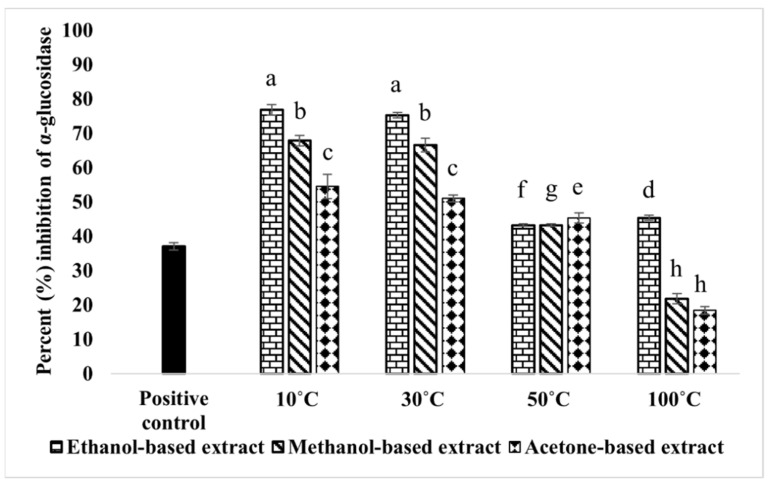
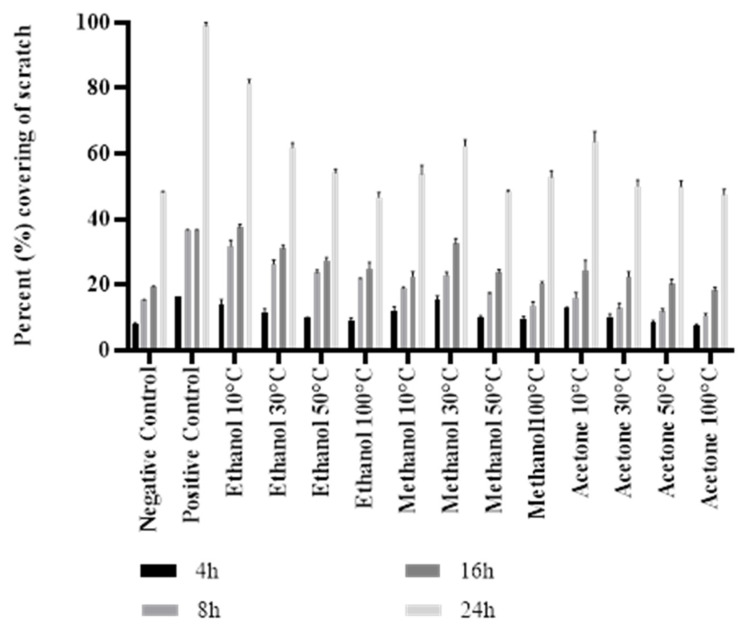
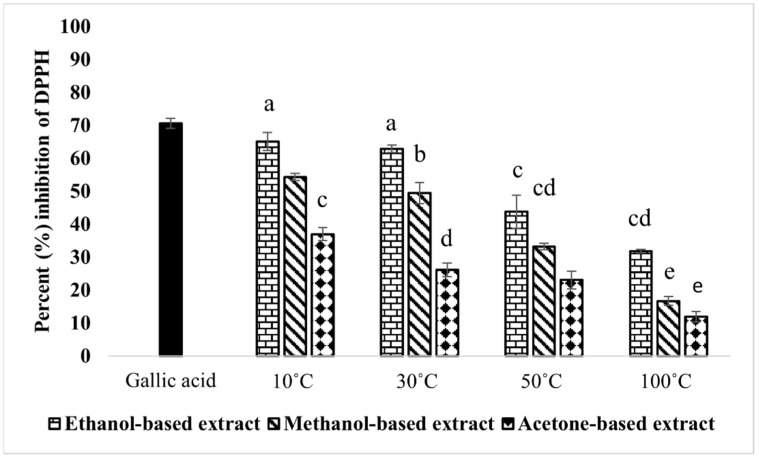
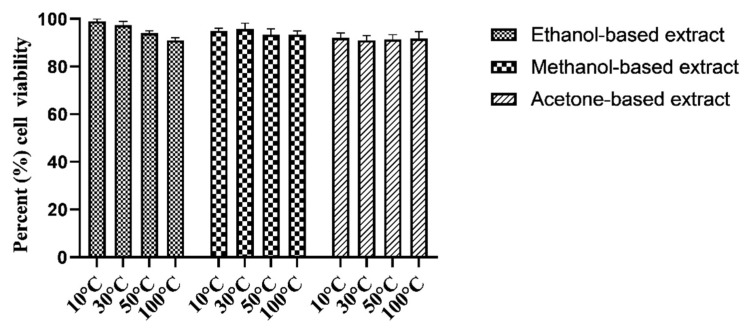
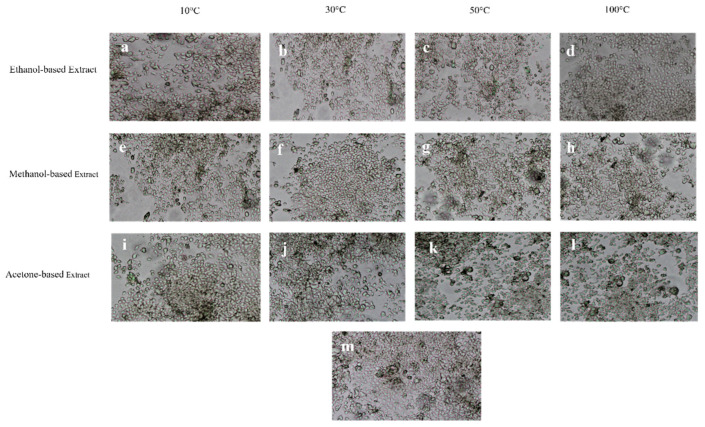
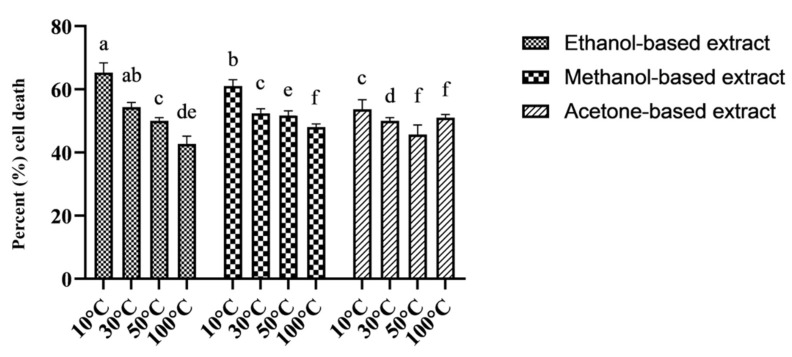
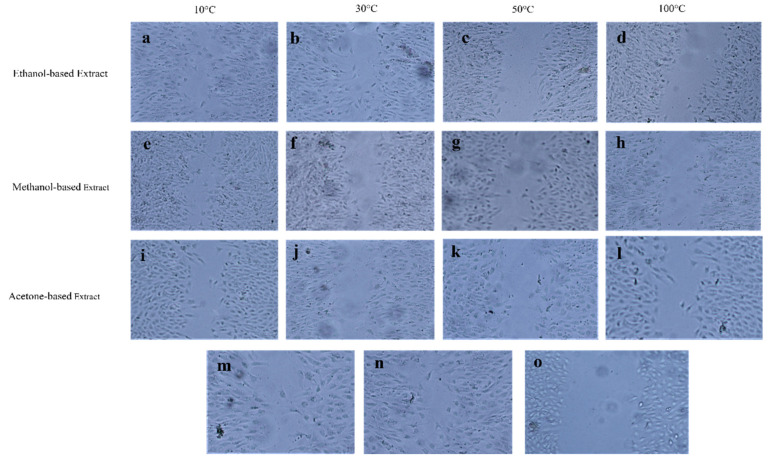
The delayed healing of wounds among people with diabetes is a severe problem worldwide. Hyperglycemia and increased levels of free radicals are the major inhibiting factors of wound healing in diabetic patients. Plant extracts are a rich source of polyphenols, allowing them to be an effective agent for wound healing. Drying temperature and extraction solvent highly affect the stability of polyphenols in plant materials. However, there is a need to optimize the extraction protocol to ensure the efficacy of the final product. For this purpose, the effects of drying temperature and solvents on the polyphenolic composition and diabetic wound healing activity of leaves were examined in the present research. Fresh leaves were oven dried at different temperatures (10 °C, 30 °C, 50 °C, and 100 °C) and extracted in three solvents (acetone, ethanol, and methanol) to obtain twelve extracts in total. The extracts were assessed for free radical scavenging and antihyperglycemic effects using DPPH (2,2-diphenylpicrylhydrazyl) and α- glucosidase inhibition assays. Alongside this, a scratch assay was performed to evaluate the cell migration activity of on the human retinal pigment epithelial cell line. The cytotoxicity of the plant extracts was assessed on human retinal pigment epithelial (RPE) and hepatocellular carcinoma (Huh-7) cell lines. Using high-performance liquid chromatography, phenolic compounds in extracts of were identified. We found that an ethanol-based extract prepared by drying the leaves at 10 °C contained the highest amounts of identified polyphenols. extracts showed remarkable antioxidant, antidiabetic, and cell migration properties. The best results were obtained with leaves dried at 10 °C and 30 °C. Decreased activities were observed with drying temperatures of 50 °C and above. Moreover, extracts exhibited no toxicity on RPE cells, and the same extracts were cytotoxic for Huh-7 cells. This study revealed that leaves extracts can enhance wound healing in diabetic conditions due to their antihyperglycemic, antioxidant, and cell migration effects. The leaves of this plant can be an excellent therapeutic option when extracted at optimum conditions.
糖尿病患者的伤口愈合延迟是一个全球性的严重问题。高血糖和自由基水平升高是糖尿病患者伤口愈合的主要抑制因素。植物提取物是多酚的丰富来源,因此可以成为治疗伤口的有效药物。干燥温度和提取溶剂对植物材料中多酚的稳定性有很大影响。然而,需要优化提取方案以确保最终产品的功效。为此,本研究考察了干燥温度和溶剂对 叶片中多酚组成和糖尿病伤口愈合活性的影响。将新鲜叶片在不同温度(10°C、30°C、50°C 和 100°C)下进行烘箱干燥,并在三种溶剂(丙酮、乙醇和甲醇)中提取,总共得到 12 种提取物。使用 DPPH(2,2-二苯基-1-苦肼基)自由基清除和α-葡萄糖苷酶抑制测定法评估提取物的自由基清除和抗高血糖作用。此外,还进行划痕实验评估 对人视网膜色素上皮细胞系的细胞迁移活性。用人视网膜色素上皮(RPE)和肝癌(Huh-7)细胞系评估植物提取物的细胞毒性。使用高效液相色谱法鉴定了 提取物中的酚类化合物。结果发现,在 10°C 下干燥叶片并使用乙醇制备的提取物中含有最高量的鉴定多酚。 提取物表现出显著的抗氧化、抗糖尿病和细胞迁移特性。在 10°C 和 30°C 下干燥叶片的效果最佳。在 50°C 及以上的干燥温度下,活性降低。此外, 提取物对 RPE 细胞无毒性,而相同的提取物对 Huh-7 细胞具有细胞毒性。这项研究表明, 叶片提取物可以通过其抗高血糖、抗氧化和细胞迁移作用促进糖尿病条件下的伤口愈合。当在最佳条件下提取时,该植物的叶片可以成为一种极好的治疗选择。