Mumtaz Rabia, Zubair Muhammad, Khan Muhammad Asaf, Muzammil Saima, Siddique Muhammad Hussnain
Department of Bioinformatics and Biotechnology, Government College University, Faisalabad, Pakistan.
Institute of Plant Breeding and Biotechnology MNS-University of Agriculture, Multan, Pakistan.
Evid Based Complement Alternat Med. 2022 Apr 15;2022:4953105. doi: 10.1155/2022/4953105. eCollection 2022.
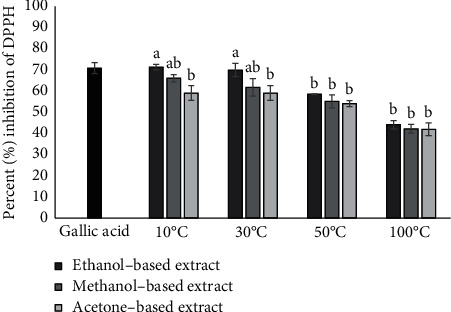
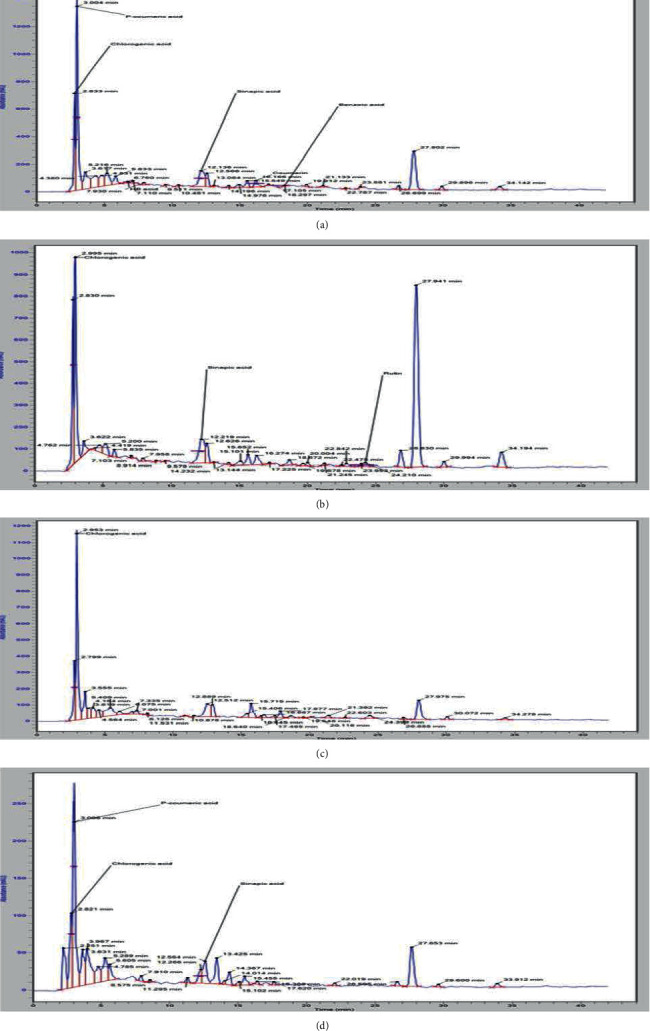
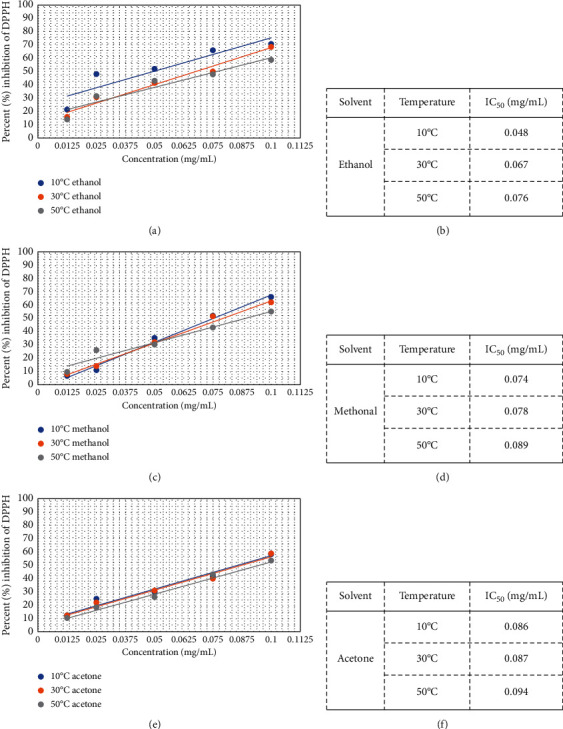
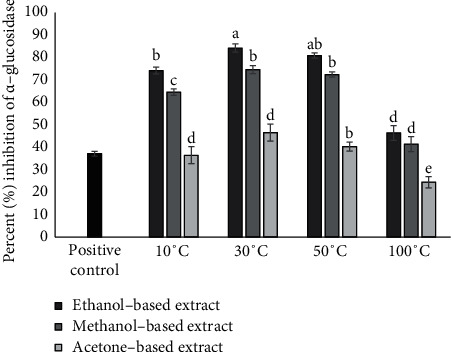
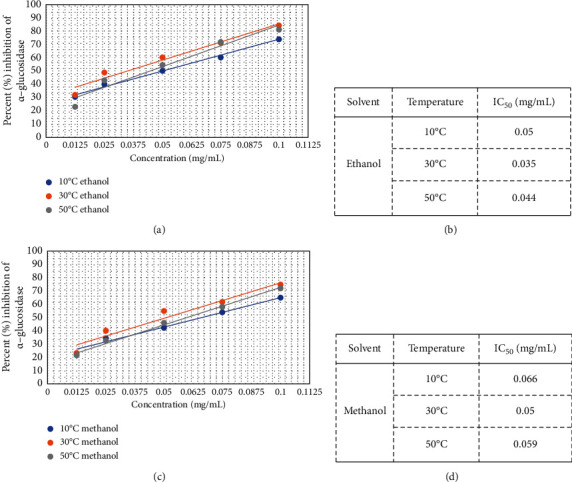
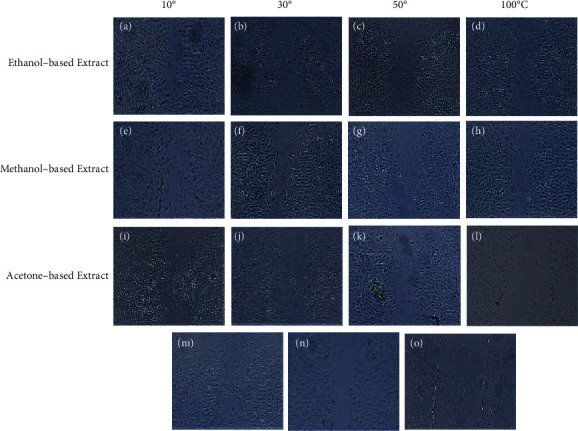
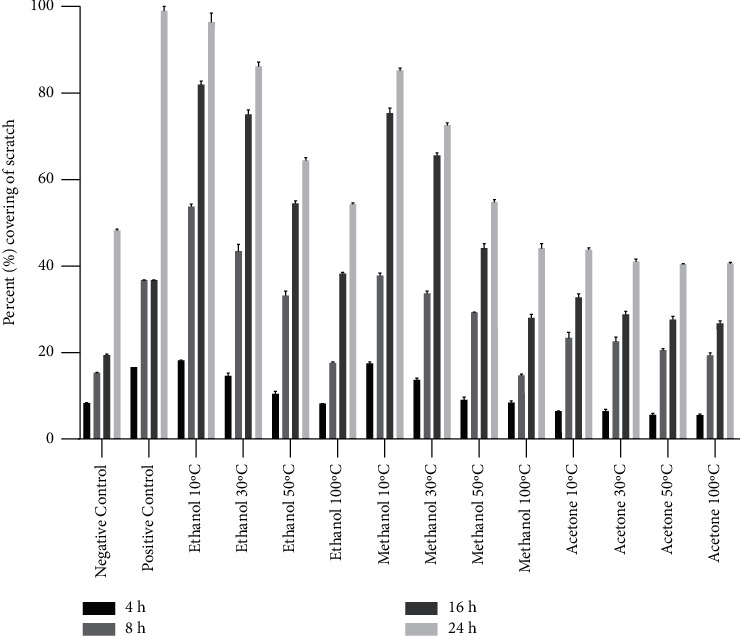
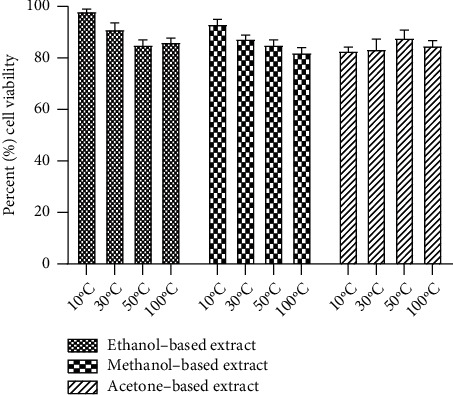
Treatment of diabetic wounds has always been a challenge for primary and acute health care. has been reported to be used for the treatment of wounds and oxidative stress. Effects of using different temperatures and solvents for the extraction of leaves were investigated in terms of diabetic wound healing activity. Leaves of were dried at 10°C, 30°C, 50°C, and 100°C, and dissolved in ethanol, methanol, and acetone to obtain a total of 12 extracts. All the extracts have remarkable antidiabetic, antioxidant, and cell proliferation activities. Among the tested extracts, highest activities were observed with leaves dried at 10°C and 30°C, whereas drying at 100°C resulted in the lowest activities. Ethanol-based extracts exhibited significantly increased cell proliferation compared with methanol- and acetone-based extract. The present study suggests that leaves of should be dried at temperature not more than 30°C and extracted in ethanol for optimum results. However, further studies should focus on the identification of specific bioactive compounds in leaves.
糖尿病伤口的治疗一直是初级和急性医疗保健面临的挑战。据报道,其可用于伤口治疗和氧化应激。就糖尿病伤口愈合活性而言,研究了使用不同温度和溶剂提取叶片的效果。将叶片在10°C、30°C、50°C和100°C下干燥,并溶解于乙醇、甲醇和丙酮中,共获得12种提取物。所有提取物均具有显著的抗糖尿病、抗氧化和细胞增殖活性。在测试的提取物中,10°C和30°C干燥的叶片活性最高,而100°C干燥的叶片活性最低。与基于甲醇和丙酮的提取物相比,基于乙醇的提取物表现出显著增加的细胞增殖。本研究表明,叶片应在不超过30°C的温度下干燥,并以乙醇提取以获得最佳效果。然而,进一步的研究应集中于鉴定叶片中的特定生物活性化合物。