Bankole Adefolake A, Kumsa Bersissa, Mamo Gezahegne, Ogo Ndudim I, Elelu Nusirat, Morgan Winston, Cutler Sally J
Department of Bioscience, School of Health, Sport & Bioscience, University of East London, London E16 2RD, UK.
Department of Pathology and Parasitology, College of Veterinary Medicine & Agriculture, Addis Ababa University, Bishoftu, Addis Ababa P.O. Box 34, Ethiopia.
Pathogens. 2023 Jan 3;12(1):81. doi: 10.3390/pathogens12010081.
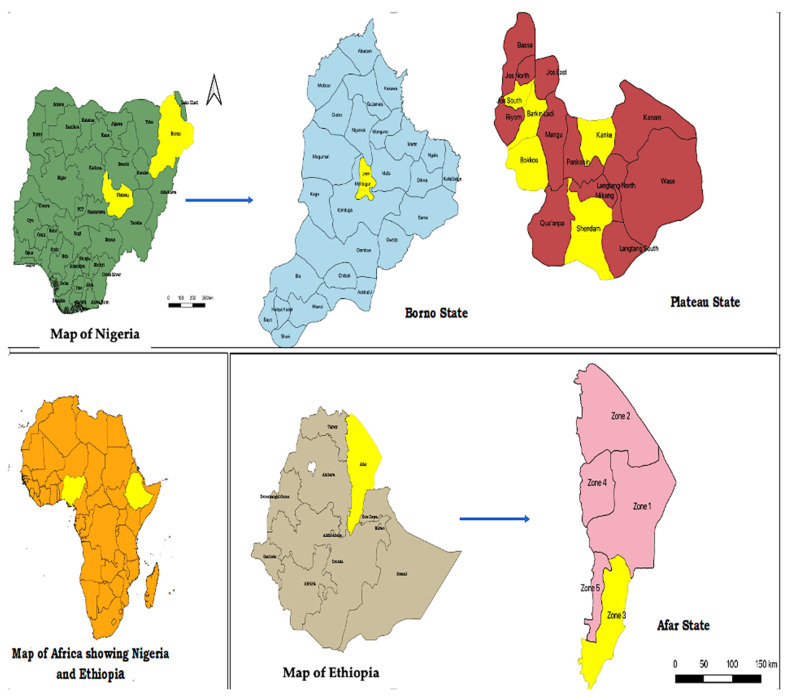
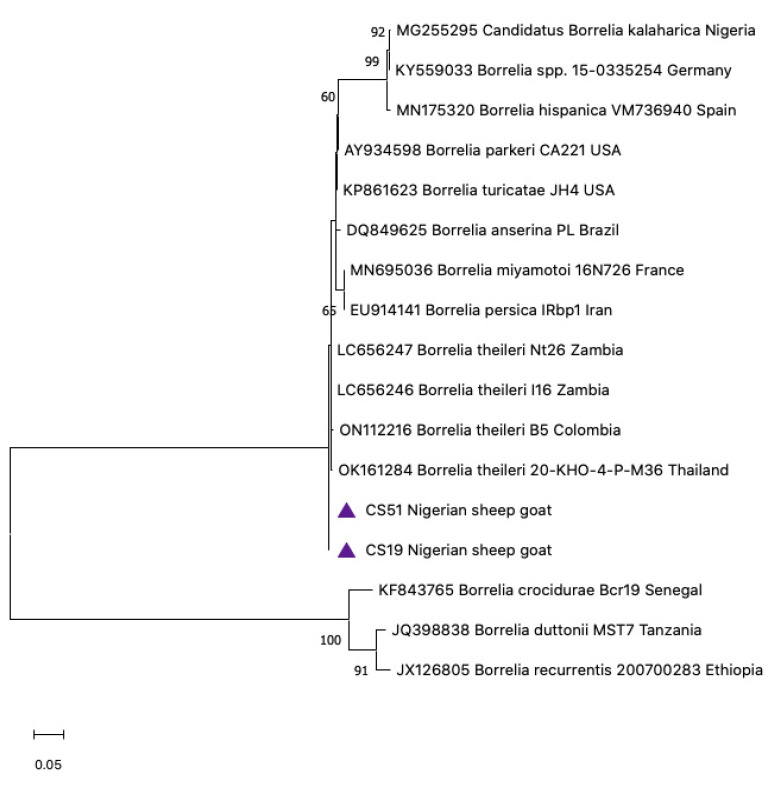
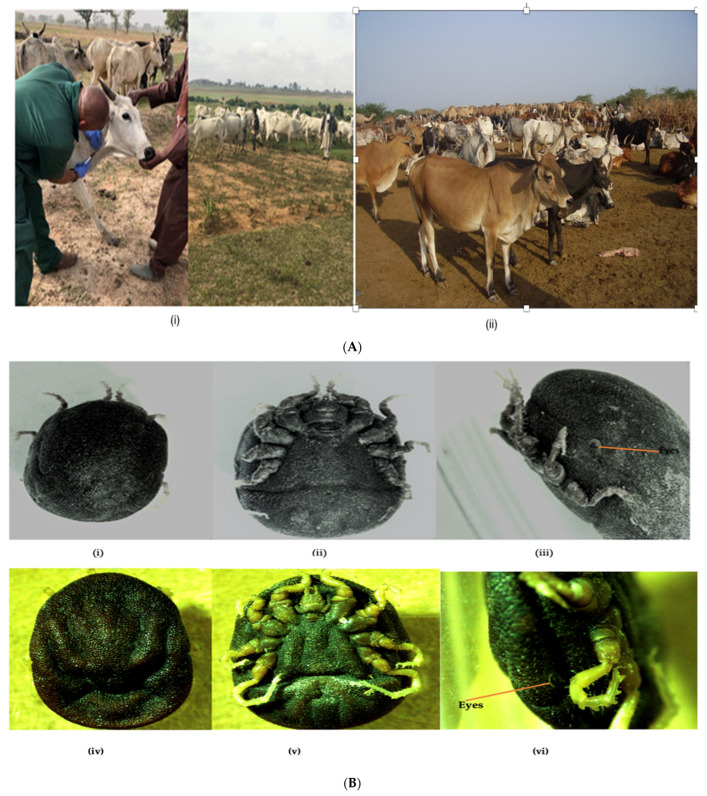
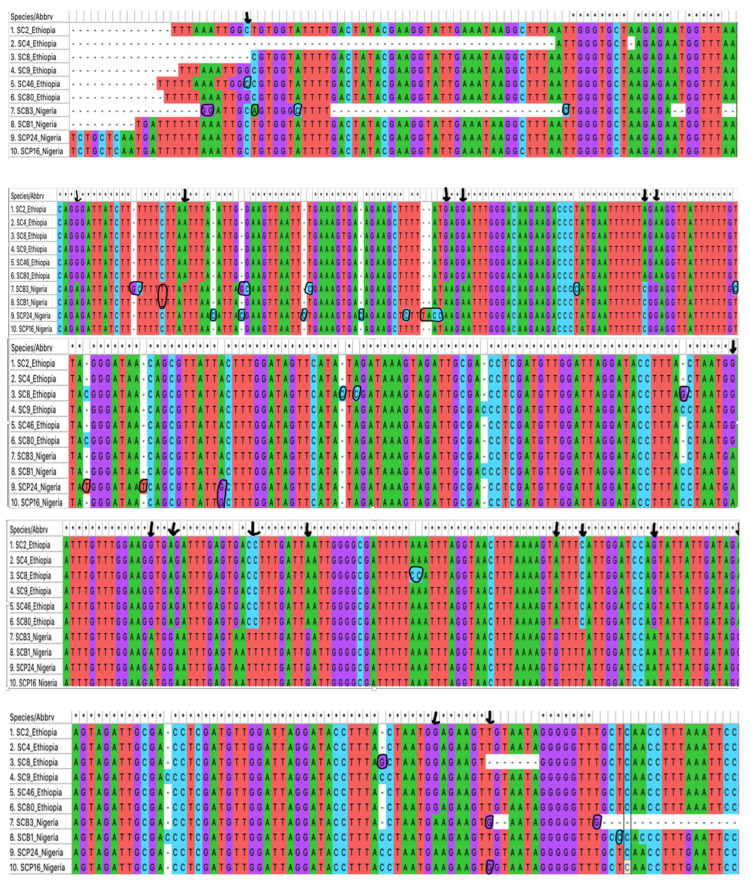
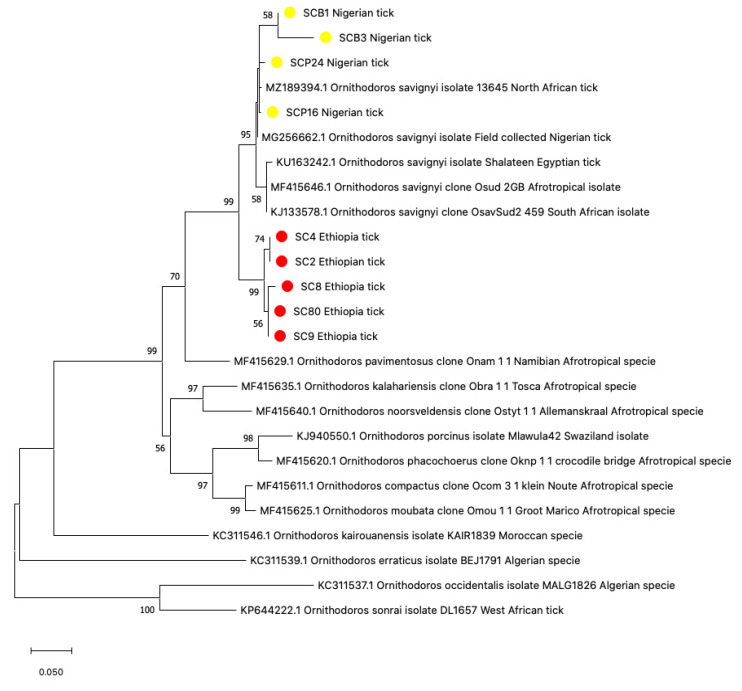
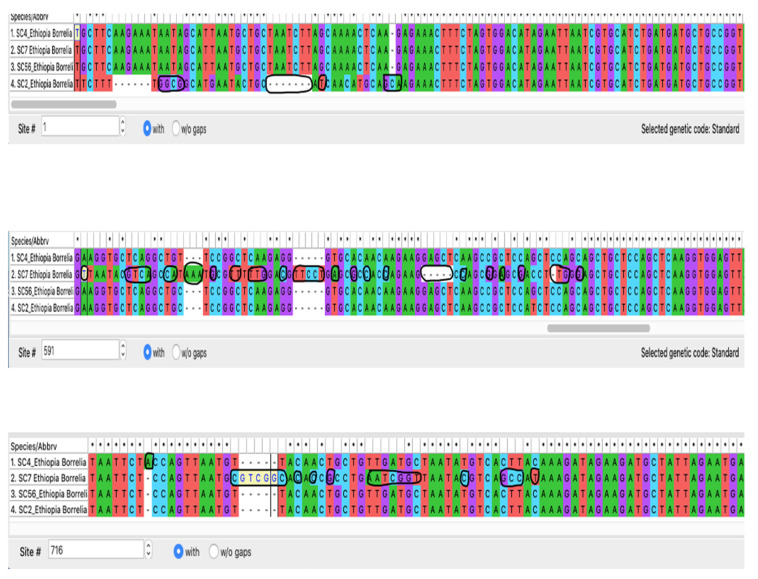
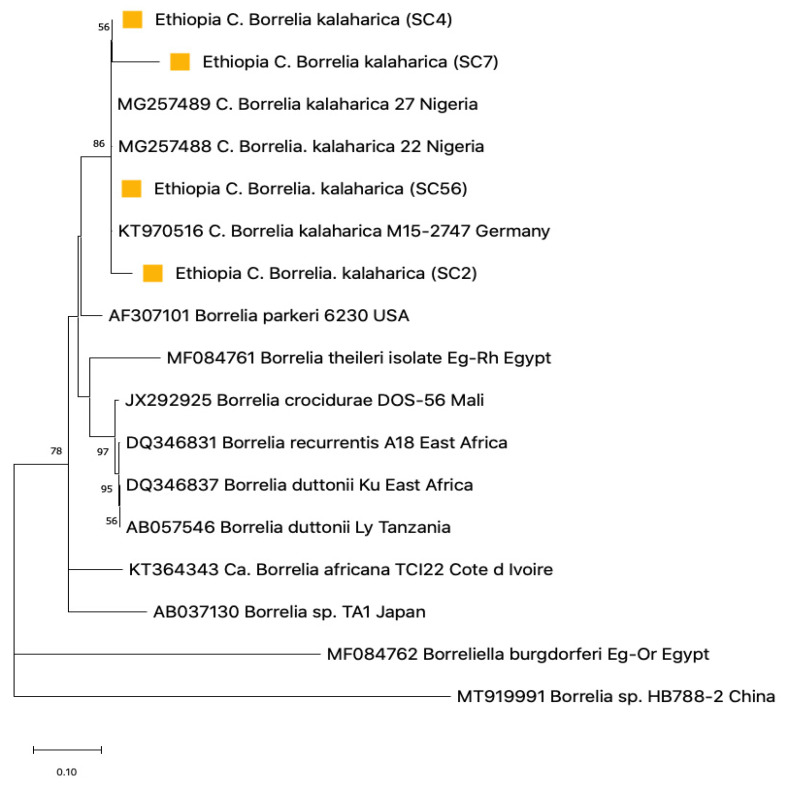
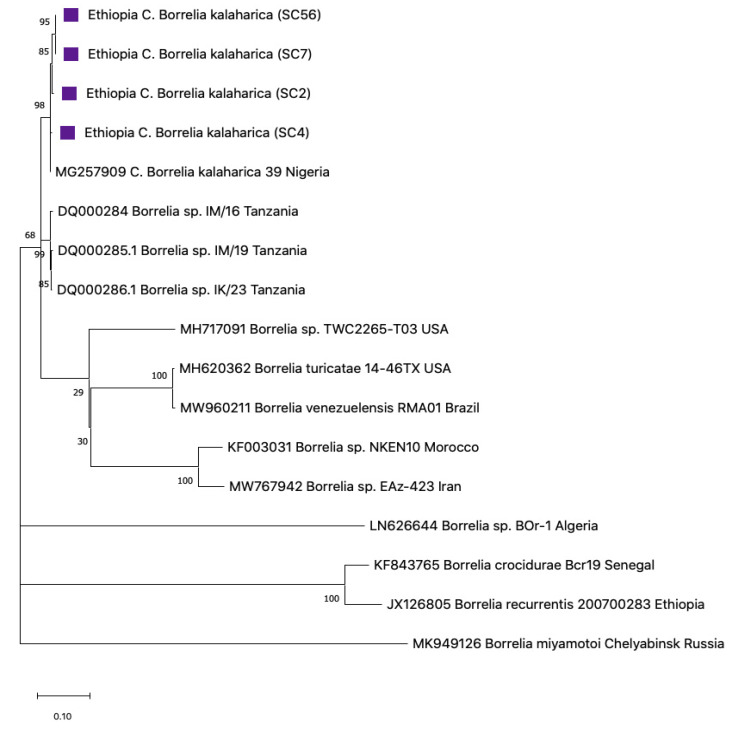
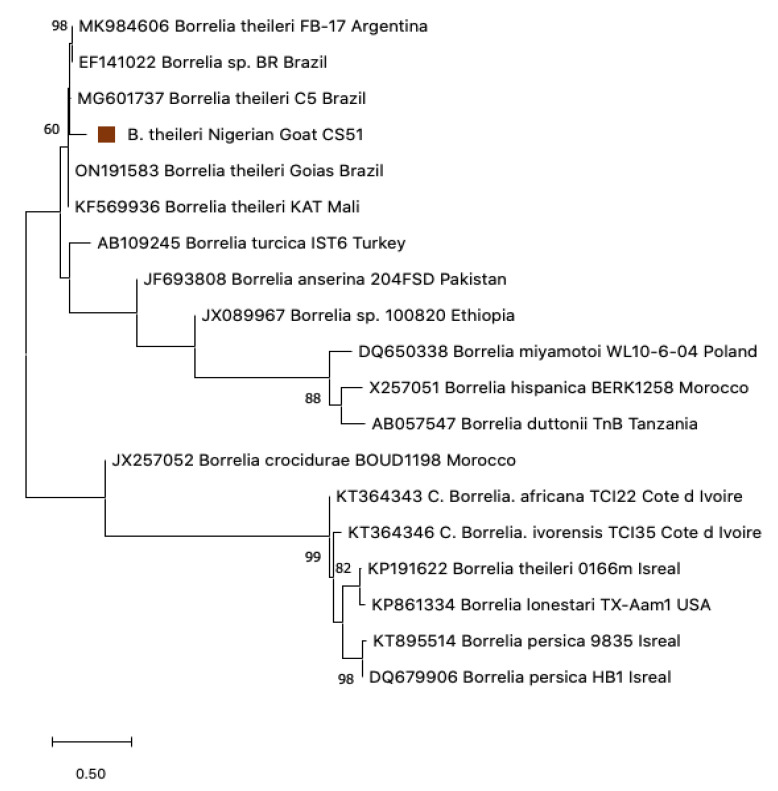
Despite increasing reports of tick-borne diseases in Africa, remarkably, reports of tick-borne relapsing fever (TBRF) in Nigeria are lacking. from Nigeria have been reported with the relapsing fever Borrelia kalaharica. Conversely, in Ethiopia, the agent of relapsing fever is the louse-borne relapsing fever (LBRF) spirochaete with no TBRF reported to occur. A total of 389 ticks, Ethiopia (N = 312) and Nigeria (N = 77), were sampled, together with 350 cattle, and 200 goat sera were collected from Nigeria. Samples were screened for spp. by RT-PCR. Reactive samples were confirmed, then sequenced using flagellin B, 16S rRNA, and 16S-23S intergenic spacer region. The prevalence of spp. in livestock was 3.8% (21/550) and 14% (3/21) after final molecular confirmation. Of 312 ticks from Ethiopia, 3.5% (11/312) were positive for , with 36% (4/11) by conventional PCR. Sequencing revealed that the borreliae in soft ticks was B. kalaharica, whilst that found in animals was . Soft ticks were confirmed by sequencing 7% (22/312) and 12% (9/77) of the Ethiopian and Nigerian ticks, respectively. Phylogenetic analysis revealed that these were . This is the first evidence of . B. kalaharica in Ethiopia and demonstrates the co-existence of TBRF in a country endemic to LBRF. Important, this might cause a diagnostic challenge given that LBRF is predominantly diagnosed by microscopy, which cannot differentiate these two spirochaetes. Furthermore, we report in ruminants in Nigeria, which may also be of veterinary and economic importance.
尽管非洲蜱传疾病的报告日益增多,但值得注意的是,尼日利亚缺乏蜱传回归热(TBRF)的报告。有来自尼日利亚的复发性发热博拉疏螺旋体卡拉哈里亚种(Borrelia kalaharica)的报告。相反,在埃塞俄比亚,回归热的病原体是虱传回归热(LBRF)螺旋体,未报告有TBRF发生。共采集了389只蜱虫,其中埃塞俄比亚312只、尼日利亚77只,同时采集了350头牛和从尼日利亚收集的200份山羊血清。通过逆转录聚合酶链反应(RT-PCR)对样本进行疏螺旋体属(spp.)筛查。对反应性样本进行确认,然后使用鞭毛蛋白B、16S核糖体RNA(rRNA)和16S - 23S基因间隔区进行测序。最终分子确认后,家畜中疏螺旋体属的流行率为3.8%(21/550),蜱虫中为14%(3/21)。埃塞俄比亚的312只蜱虫中,3.5%(11/312)对疏螺旋体呈阳性,其中36%(4/11)通过常规聚合酶链反应呈阳性。测序显示软蜱中的疏螺旋体是卡拉哈里亚种,而在动物中发现的是其他种类。通过测序分别确认埃塞俄比亚和尼日利亚软蜱的比例为7%(22/312)和12%(9/77)。系统发育分析表明这些是特定种类。这是埃塞俄比亚存在卡拉哈里亚种的首个证据,证明了TBRF在虱传回归热流行的国家中并存。重要的是,鉴于虱传回归热主要通过显微镜诊断,而显微镜无法区分这两种螺旋体,这可能会带来诊断挑战。此外,我们报告了尼日利亚反刍动物中存在某种疏螺旋体,这可能也具有兽医和经济重要性。