Sharma Vijay, Singh Chandra Mohan, Chugh Vishal, Prajapati Pawan Kumar, Mishra Anuj, Kaushik Prashant, Dhanda Parmdeep Singh, Yadav Alpa
Department of Genetics and Plant Breeding, College of Agriculture, Banda University of Agriculture and Technology, Banda 210001, India.
Department of Basic and Social Sciences, College of Horticulture, Banda University of Agriculture and Technology, Banda 210001, India.
Plants (Basel). 2023 Jan 5;12(2):256. doi: 10.3390/plants12020256.
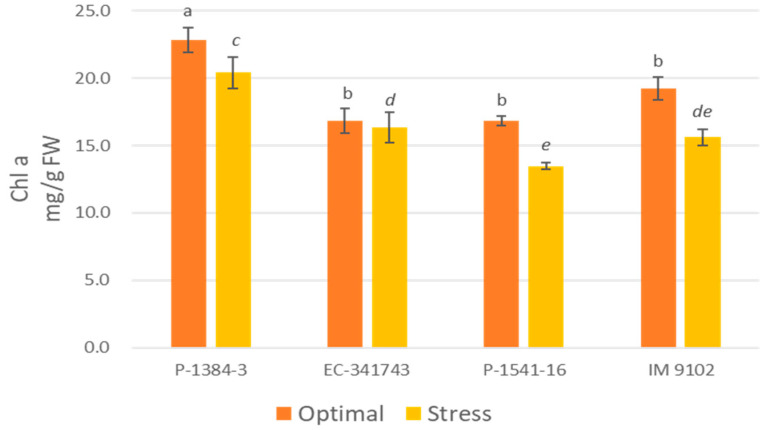
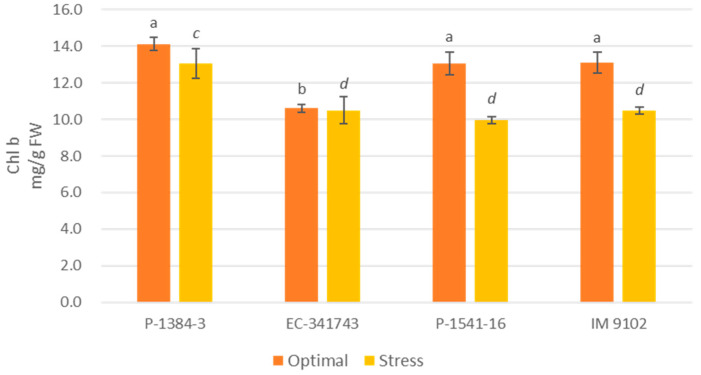
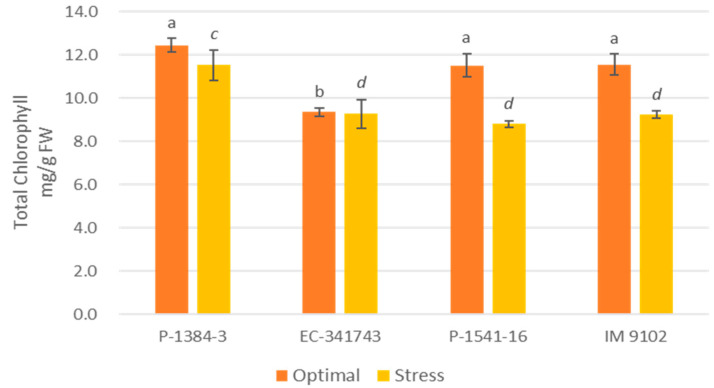
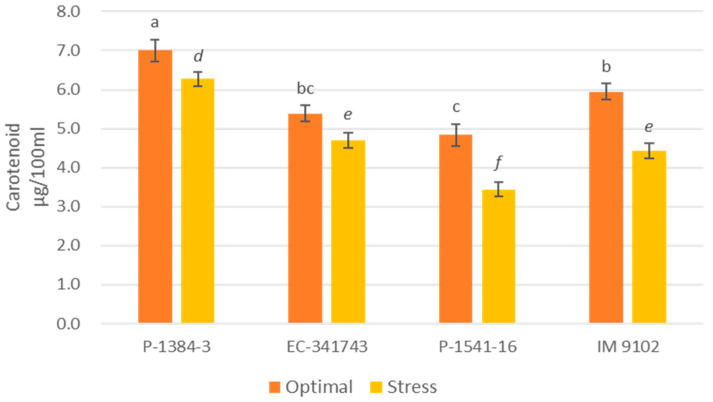
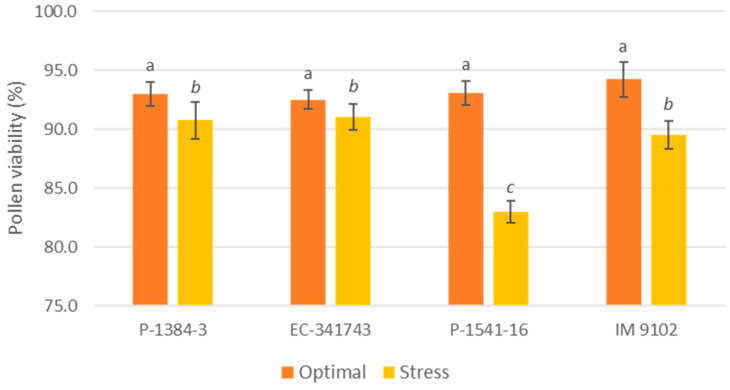
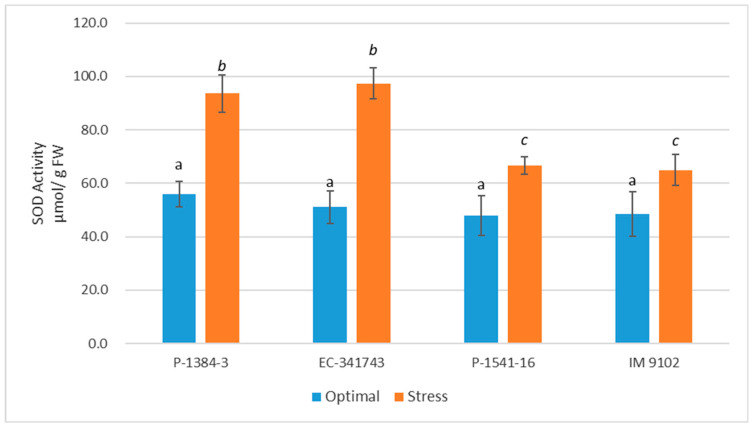
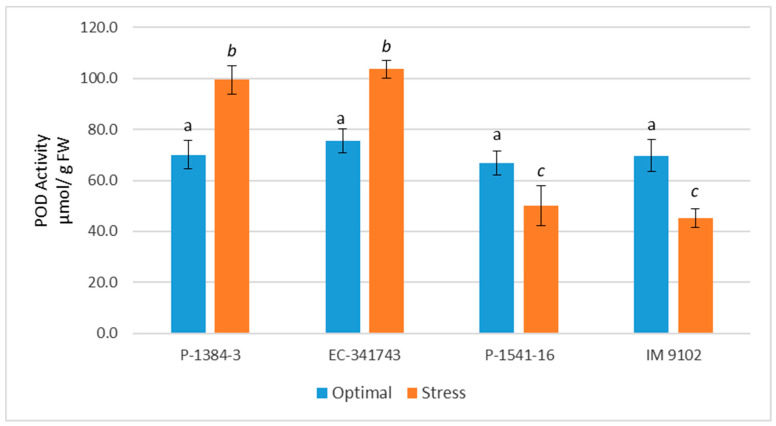
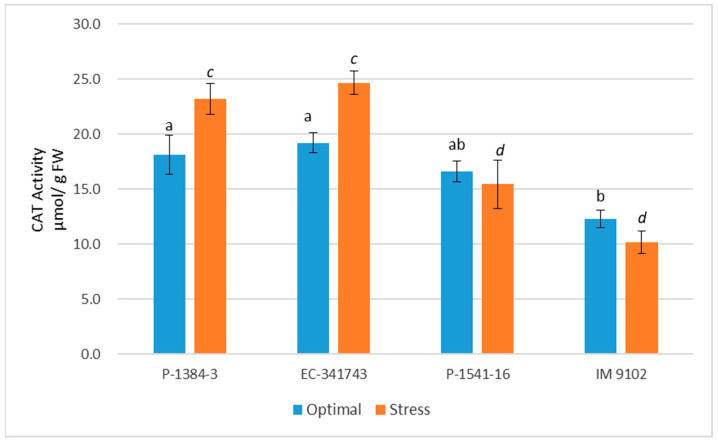
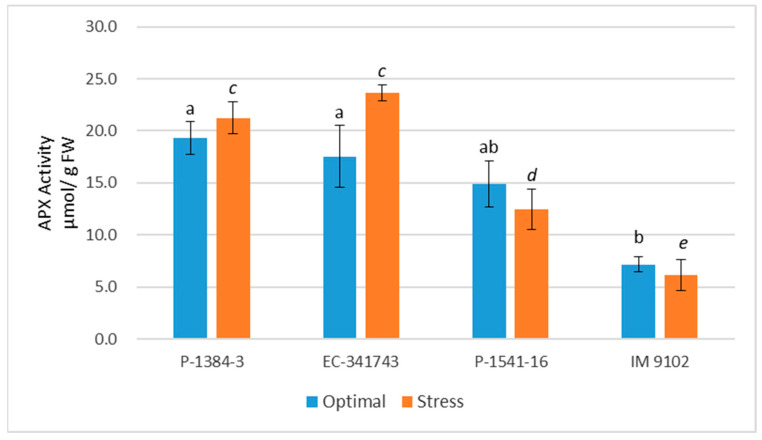
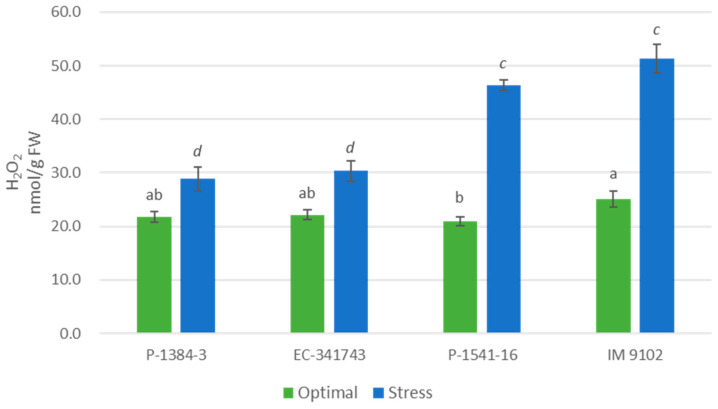
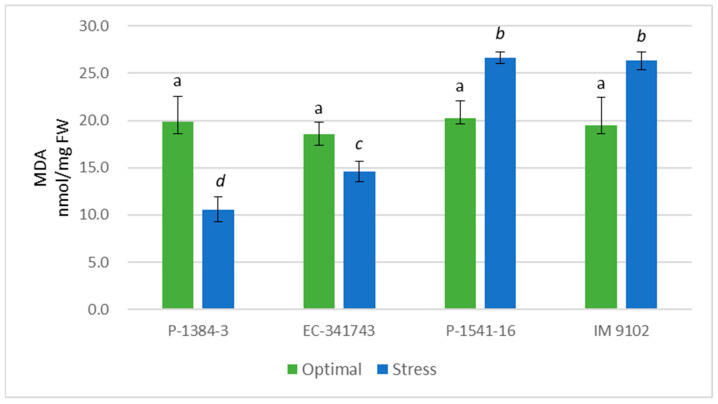
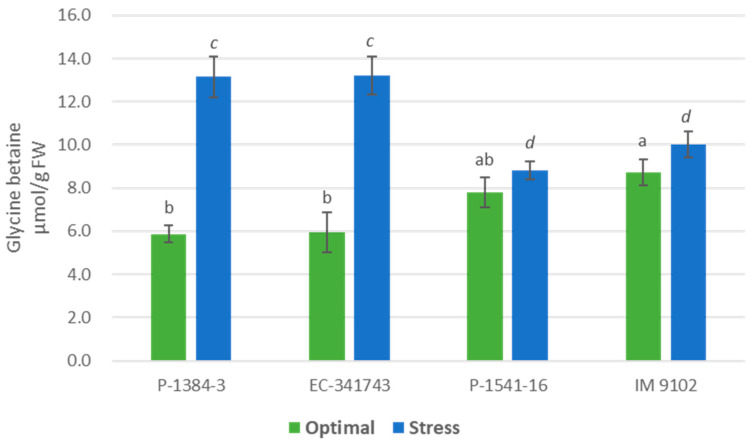
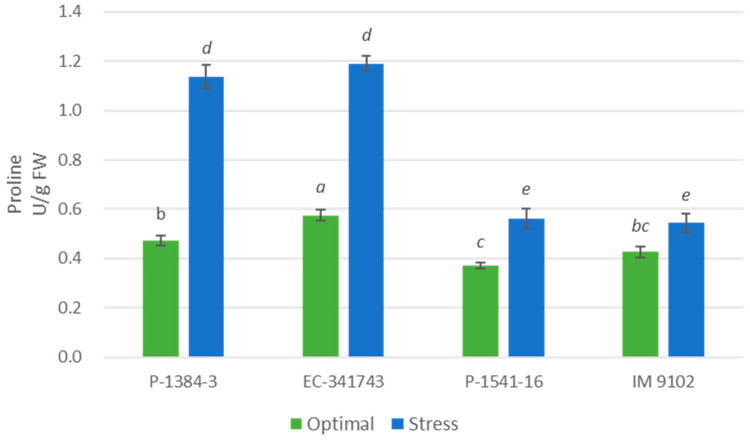
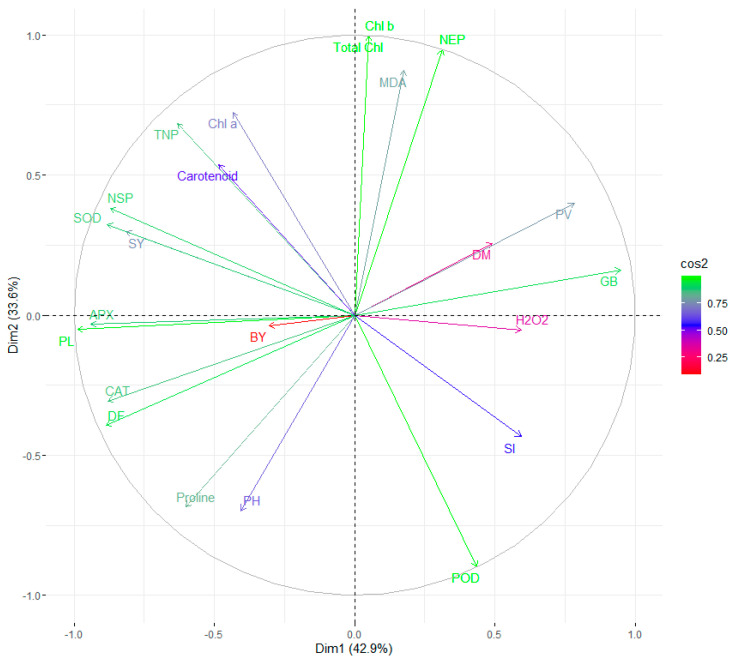
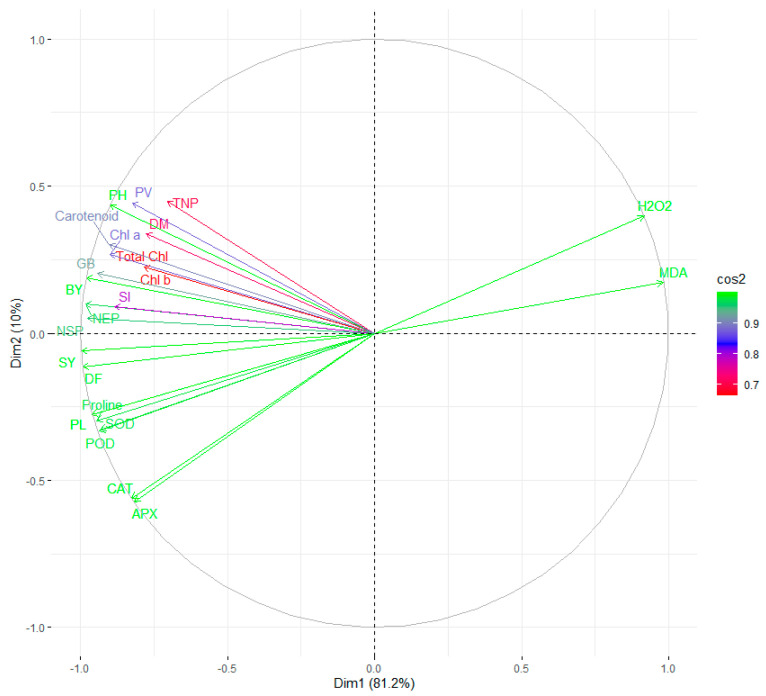
Field pea is one of the important short-duration cool season pulse crops which contributes significantly towards food and nutritional security. Two heat-susceptible (HS) and two heat-tolerant (HT) genotypes were selected from the previous study for further characterization. A significant variation was observed for morpho-physiological traits studied. Principal component analysis explained that first two principal components, i.e., PC1 and PC2 showed 76.5% of the total variance in optimal condition, whereas 91.2% of the total variance was covered by the first two PCs in heat stress environment. The seed yield per plant determined significant and positive association with superoxide dismutase and number of seeds per pod under optimal conditions, whereas under heat stress condition, it was positively associated with number of effective pods per plant, biological yield per plant, proline, pod length, number of seeds per pod, superoxide dismutase, and peroxidase. The significant reduction was noticed in the susceptible genotypes, whereas tolerant genotypes showed stable and non-significant reduction in chlorophyll content. Further, minimum cell damage and higher hydrogen peroxide production was noticed in the susceptible genotypes. In addition, the biochemical characterization of HS and HT genotypes revealed that the higher expression of peroxidase, superoxide dismutase, and catalase modulates the tolerant responses in HT genotypes. These genotypes were further used in developing heat-tolerant field pea genotypes.
豌豆是重要的短季冷季豆类作物之一,对粮食和营养安全有重大贡献。从前一项研究中选取了两个热敏感(HS)和两个耐热(HT)基因型进行进一步表征。在所研究的形态生理性状上观察到显著差异。主成分分析表明,前两个主成分,即PC1和PC2,在最佳条件下显示了总方差的76.5%,而在热胁迫环境中,前两个主成分覆盖了总方差的91.2%。在最佳条件下,单株种子产量与超氧化物歧化酶和每荚种子数呈显著正相关,而在热胁迫条件下,它与单株有效荚数、单株生物产量、脯氨酸、荚长、每荚种子数、超氧化物歧化酶和过氧化物酶呈正相关。在敏感基因型中观察到显著降低,而耐受基因型的叶绿素含量显示出稳定且不显著的降低。此外,在敏感基因型中观察到最小的细胞损伤和较高的过氧化氢产生。此外,HS和HT基因型的生化表征表明,过氧化物酶、超氧化物歧化酶和过氧化氢酶的高表达调节了HT基因型的耐受反应。这些基因型进一步用于培育耐热豌豆基因型。