Bhartiya Deepa, Jha Nitu, Tripathi Anish, Tripathi Ashish
Epigeneres Biotech Pvt Ltd, Mumbai, India.
Front Cell Dev Biol. 2023 Jan 4;10:1061022. doi: 10.3389/fcell.2022.1061022. eCollection 2022.
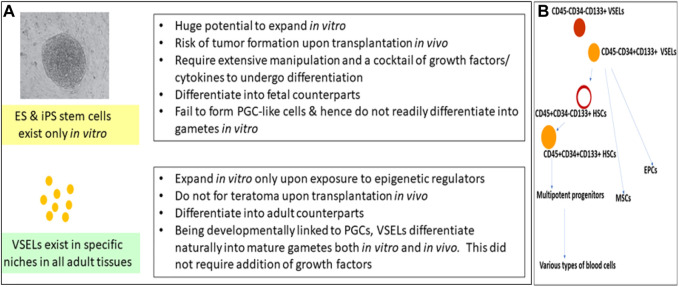
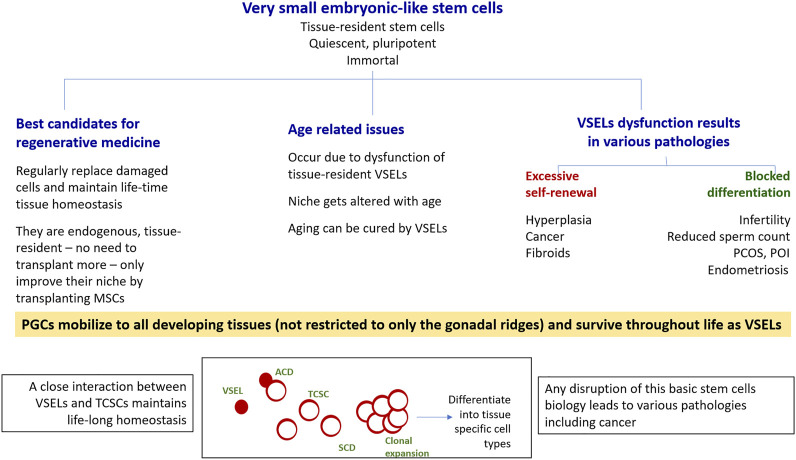
The concept of dedifferentiation and reprogramming of mature somatic cells holds much promise for the three-front "war" against tissue damage, cancer, and aging. It was hoped that reprogramming human somatic cells into the induced pluripotent state, along with the use of embryonic stem cells, would transform regenerative medicine. However, despite global efforts, clinical applications remain a distant dream, due to associated factors such as genomic instability, tumorigenicity, immunogenicity, and heterogeneity. Meanwhile, the expression of embryonic (pluripotent) markers in multiple cancers has baffled the scientific community, and it has been suggested that somatic cells dedifferentiate and "reprogram" into the pluripotent state to initiate cancer. It has also been suggested that aging can be reversed by partial reprogramming . However, better methods are needed; using vectors or Yamanaka factors , for example, is dangerous, and many potential anti-aging therapies carry the same risks as those using induced pluripotent cells, as described above. The present perspective examines the potential of endogenous, pluripotent very small embryonic-like stem cells (VSELs). These cells are naturally present in multiple tissues; they routinely replace diseased tissue and ensure regeneration to maintain life-long homeostasis, and they have the ability to differentiate into adult counterparts. Recent evidence suggests that cancers initiate due to the selective expansion of epigenetically altered VSELs and their blocked differentiation. Furthermore, VSEL numbers have been directly linked to lifespan in studies of long- and short-lived transgenic mice, and VSEL dysfunction has been found in the ovaries of aged mice. To conclude, a greater interest in VSELs, with their potential to address all three fronts of this war, could be the "light at the end of the tunnel."
成熟体细胞的去分化和重编程概念,在对抗组织损伤、癌症和衰老的三方面“战争”中颇具前景。人们曾希望将人类体细胞重编程为诱导多能状态,并结合使用胚胎干细胞,能变革再生医学。然而,尽管全球都在努力,但由于基因组不稳定、致瘤性、免疫原性和异质性等相关因素,临床应用仍是遥不可及的梦想。与此同时,多种癌症中胚胎(多能)标志物的表达令科学界感到困惑,有人提出体细胞会去分化并“重编程”为多能状态以引发癌症。也有人提出衰老可以通过部分重编程来逆转。然而,需要更好的方法;例如,使用载体或山中因子是危险的,而且许多潜在的抗衰老疗法与使用诱导多能细胞的疗法存在相同的风险,如上所述。本文观点探讨了内源性多能极小型胚胎样干细胞(VSELs)的潜力。这些细胞天然存在于多种组织中;它们常规地替代患病组织并确保再生以维持终身的内环境稳定,并且它们有能力分化为成体细胞。最近的证据表明,癌症是由于表观遗传改变的VSELs的选择性扩增及其分化受阻而引发的。此外,在对长寿和短寿转基因小鼠的研究中,VSEL数量已直接与寿命相关联,并且在老年小鼠的卵巢中发现了VSEL功能障碍。总之,对VSELs的更大关注,因其有可能应对这场“战争”的所有三个方面,可能是“隧道尽头的曙光”。