State Key Laboratory of Wheat and Maize Crop Science, College of Life Sciences, Henan Agricultural University, Zhengzhou, China.
State Key Laboratory of Wheat and Maize Crop Science, College of Agronomy and Center for Crop Genome Engineering, Henan Agricultural University, Zhengzhou, China.
Microbiol Spectr. 2023 Feb 14;11(1):e0282822. doi: 10.1128/spectrum.02828-22. Epub 2023 Jan 23.
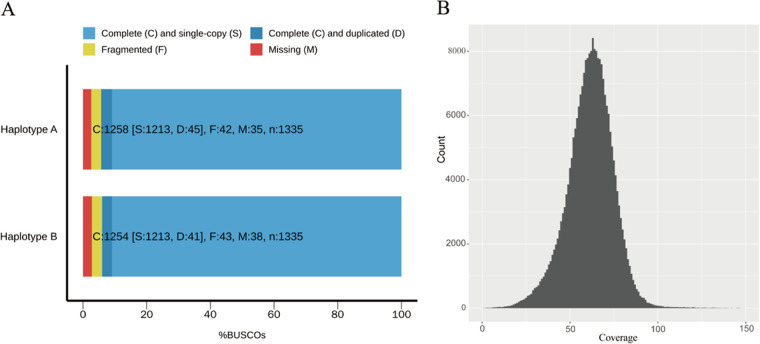
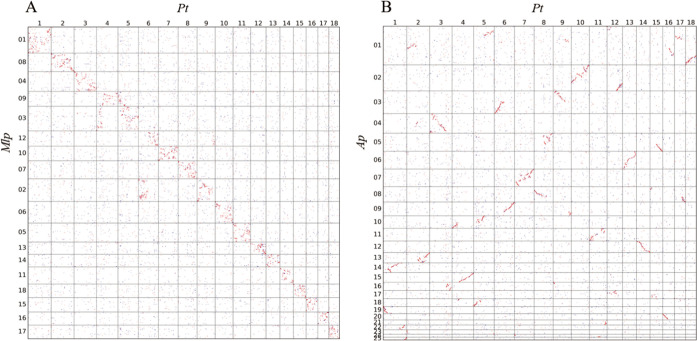
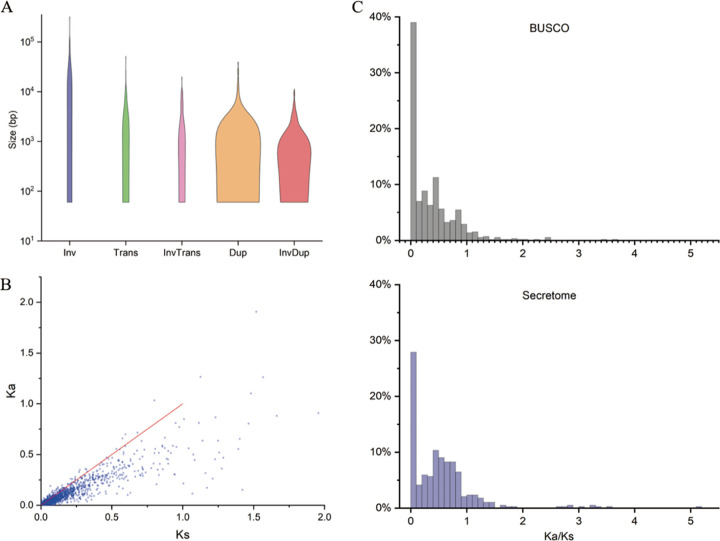
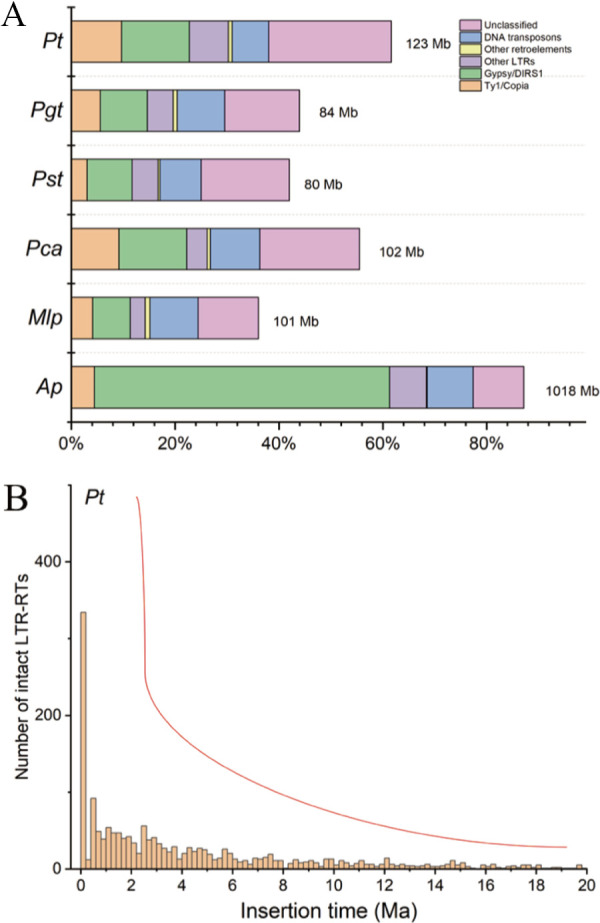
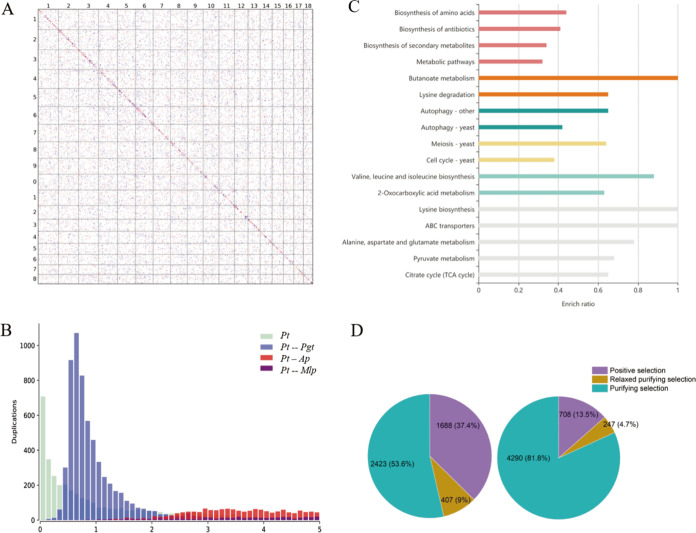
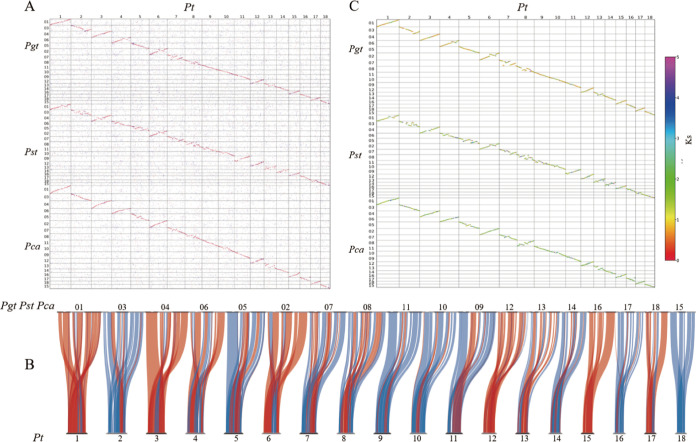
Chromosome evolution drives species evolution, speciation, and adaptive radiation. Accurate genome assembly is crucial to understanding chromosome evolution of species, such as dikaryotic fungi. Rust fungi (Pucciniales) in dikaryons represent the largest group of plant pathogens, but the evolutionary process of adaptive radiation in Pucciniales remains poorly understood. Here, we report a gapless genome for the wheat leaf rust fungus Puccinia triticina determined using PacBio high-fidelity (HiFi) sequencing. This gapless assembly contains two sets of chromosomes, showing that one contig represents one chromosome. Comparisons of homologous chromosomes between the phased haplotypes revealed that highly frequent small-scale sequence divergence shapes haplotypic variation. Genome analyses of along with other rusts revealed that recent transposable element bursts and extensive segmental gene duplications synergistically highlight the evolution of chromosome structures. Comparative analysis of chromosomes indicated that frequent chromosomal rearrangements may act as a major contributor to rapid radiation of Pucciniales. This study presents the first gapless, phased assembly for a dikaryotic rust fungus and provides insights into adaptive evolution and species radiation in Pucciniales. Rust fungi (Pucciniales) are the largest group of plant pathogens. Adaptive radiation is a predominant feature in Pucciniales evolution. Chromosome evolution plays an important role in adaptive evolution. Accurate chromosome-scale assembly is required to understand the role of chromosome evolution in Pucciniales. We took advantage of HiFi sequencing to construct a gapless, phased genome for . Further analyses revealed that the evolution of chromosome structures in rust lineage is shaped by the combination of transposable element bursts and segmental gene duplications. Chromosome comparisons of and other rusts suggested that frequent chromosomal arrangements may make remarkable contributions to high species diversity of rust fungi. Our results present the first gapless genome for Pucciniales and shed light on the feature of chromosome evolution in Pucciniales.
染色体进化驱动物种进化、物种形成和适应性辐射。准确的基因组组装对于理解物种的染色体进化至关重要,例如双核真菌。双核体锈菌(锈菌目)代表了最大的植物病原体群体,但锈菌目适应性辐射的进化过程仍知之甚少。在这里,我们使用 PacBio 高保真(HiFi)测序报告了小麦叶锈菌 Puccinia triticina 的无间隙基因组。这个无间隙的组装包含了两套染色体,表明一个连续体代表一条染色体。在相位单倍型的同源染色体之间进行比较,揭示了高频小尺度序列分歧塑造了单倍型变异。对与其他锈菌的基因组分析表明,最近的转座元件爆发和广泛的片段基因重复协同强调了染色体结构的进化。染色体的比较分析表明,频繁的染色体重排可能是锈菌目快速辐射的主要贡献者。本研究首次提供了双核锈菌的无间隙、相位组装,并为锈菌目中的适应性进化和物种辐射提供了见解。锈菌(锈菌目)是最大的植物病原体群体。适应性辐射是锈菌目进化的主要特征。染色体进化在适应性进化中起着重要作用。准确的染色体尺度组装对于理解染色体进化在锈菌目中的作用是必要的。我们利用 HiFi 测序构建了 Puccinia triticina 的无间隙、相位基因组。进一步的分析表明,锈菌谱系中染色体结构的进化是由转座元件爆发和片段基因重复的组合塑造的。与其他锈菌的染色体比较表明,频繁的染色体排列可能对锈菌的高物种多样性做出了显著贡献。我们的结果展示了锈菌目的第一个无间隙基因组,并阐明了锈菌目染色体进化的特征。