Kronfel Christina M, Cheng Hsiaopo, McBride Jane K, Nesbit Jacqueline B, Krouse Rebecca, Burns Preston, Cabanillas Beatriz, Crespo Jesus F, Ryan Robert, Simon Reyna J, Maleki Soheila J, Hurlburt Barry K
United States Department of Agriculture, Agriculture Research Service, Southern Regional Research Center, New Orleans, LA, United States.
Rho Federal Systems Division, Durham, NC, United States.
Front Allergy. 2023 Jan 9;3:1090114. doi: 10.3389/falgy.2022.1090114. eCollection 2022.
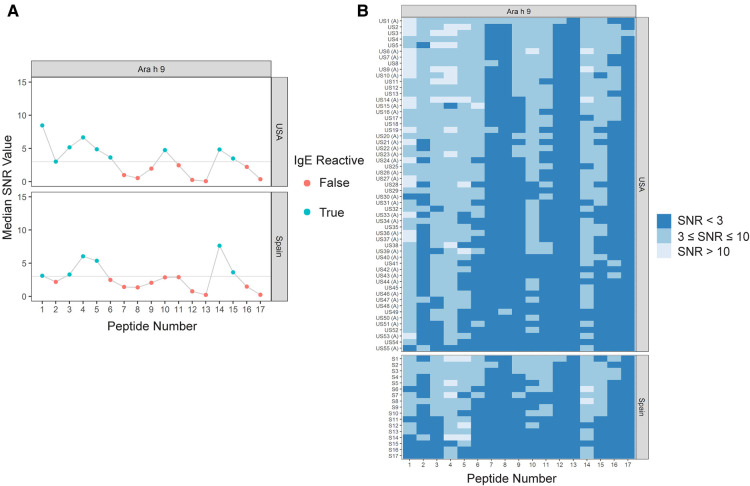
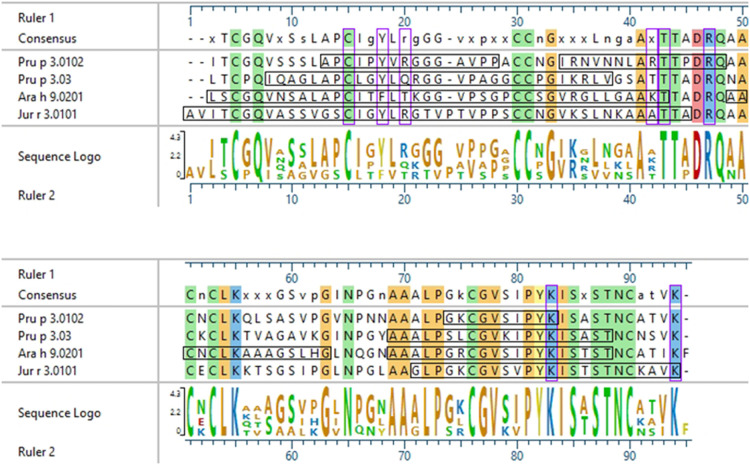
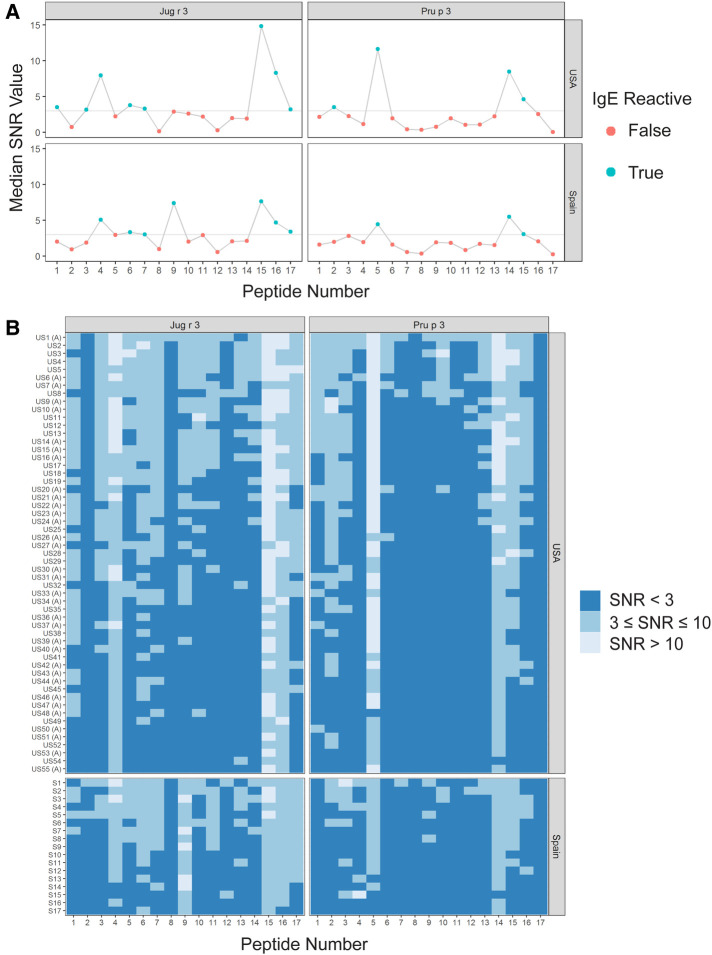
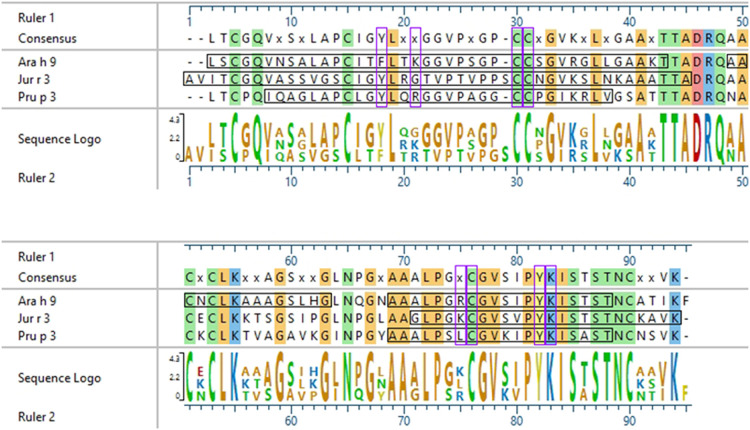
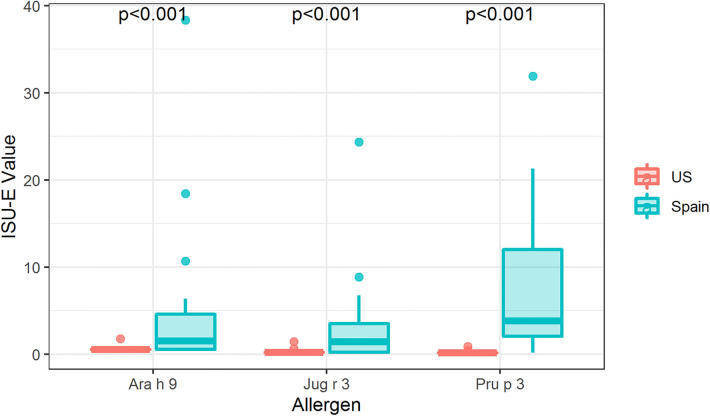
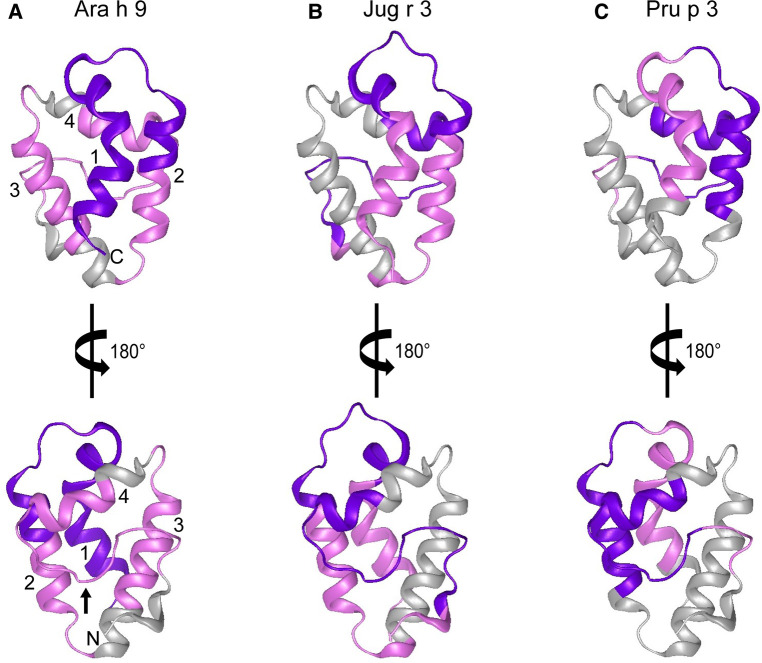
Non-specific lipid transfer proteins (LTPs) are well studied allergens that can lead to severe reactions, but often cause oral allergy syndrome in the Mediterranean area and other European countries. However, studies focused on LTP reactivity in allergic individuals from the United States are lacking because they are not considered major allergens. The goal of this study is to determine if differences in immunoglobulin (Ig) E binding patterns to the peanut allergen Ara h 9 and two homologous LTPs (walnut Jug r 3 and peach Pru p 3) between the US and Spain contribute to differences observed in allergic reactivity. Synthetic overlapping 15-amino acid-long peptides offset by five amino acids from Ara h 9, Jug r 3, and Pru p 3 were synthesized, and the intact proteins were attached to microarray slides. Sera from 55 peanut-allergic individuals from the US were tested for IgE binding to the linear peptides and IgE binding to intact proteins using immunofluorescence. For comparison, sera from 17 peanut-allergic individuals from Spain were also tested. Similar IgE binding profiles for Ara h 9, Jug r 3, and Pru p 3 were identified between the US and Spain, with slight differences. Certain regions of the proteins, specifically helices 1 and 2 and the C-terminal coil, were recognized by the majority of the sera more often than other regions of the proteins. While serum IgE from peanut-allergic individuals in the US binds to peptides of Ara h 9 and its homologs, only IgE from the Spanish subjects bound to the intact LTPs. This study identifies Ara h 9, Jug r 3, and Pru p 3 linear epitopes that were previously unidentified using sera from peanut-allergic individuals from the US and Spain. Certain regions of the LTPs are recognized more often in US subjects, indicating that they represent conserved and possible cross-reactive regions. The location of the epitopes in 3D structure models of the LTPs may predict the location of potential conformational epitopes bound by a majority of the Spanish patient sera. These findings are potentially important for development of peptide or protein-targeting diagnostic and therapeutic tools for food allergy.
非特异性脂质转移蛋白(LTPs)是经过充分研究的过敏原,可导致严重反应,但在地中海地区和其他欧洲国家常引发口腔过敏综合征。然而,由于在美国它们不被视为主要过敏原,因此缺乏针对美国过敏个体中LTP反应性的研究。本研究的目的是确定美国和西班牙花生过敏原Ara h 9以及两种同源LTP(核桃Jug r 3和桃子Pru p 3)的免疫球蛋白(Ig)E结合模式差异是否导致观察到的过敏反应差异。合成了与Ara h 9、Jug r 3和Pru p 3相差五个氨基酸的重叠15个氨基酸长的合成肽,并将完整蛋白附着到微阵列玻片上。使用免疫荧光检测了来自美国的55名花生过敏个体血清与线性肽的IgE结合以及与完整蛋白的IgE结合。作为比较,也检测了来自西班牙的17名花生过敏个体的血清。在美国和西班牙之间鉴定出Ara h 9、Jug r 3和Pru p 3的相似IgE结合谱,但存在细微差异。蛋白质的某些区域,特别是螺旋1和螺旋2以及C末端卷曲,比蛋白质的其他区域更常被大多数血清识别。虽然美国花生过敏个体的血清IgE与Ara h 9及其同源物的肽结合,但只有西班牙受试者的IgE与完整的LTP结合。本研究鉴定了Ara h 9、Jug r 3和Pru p 3的线性表位,这些表位此前使用来自美国和西班牙花生过敏个体的血清未被鉴定。LTP的某些区域在美国受试者中更常被识别,表明它们代表保守且可能具有交叉反应性的区域。LTP三维结构模型中表位的位置可能预测大多数西班牙患者血清所结合的潜在构象表位的位置。这些发现对于开发针对食物过敏的肽或蛋白质靶向诊断和治疗工具可能具有重要意义。