Department of Health Promotion and Rehabilitation, Lithuanian Sports University, 44221, Kaunas, Lithuania.
Faculty of Kinesiology, Sport, and Recreation, University of Alberta, AB T6G 2R3, Edmonton, Canada.
Geroscience. 2023 Jun;45(3):1837-1855. doi: 10.1007/s11357-023-00732-6. Epub 2023 Jan 26.
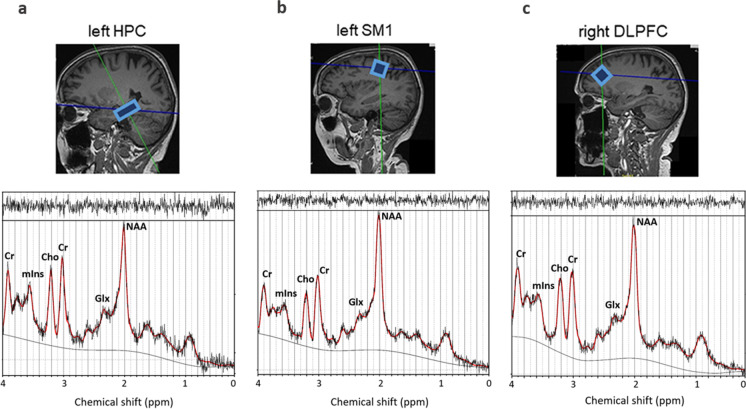
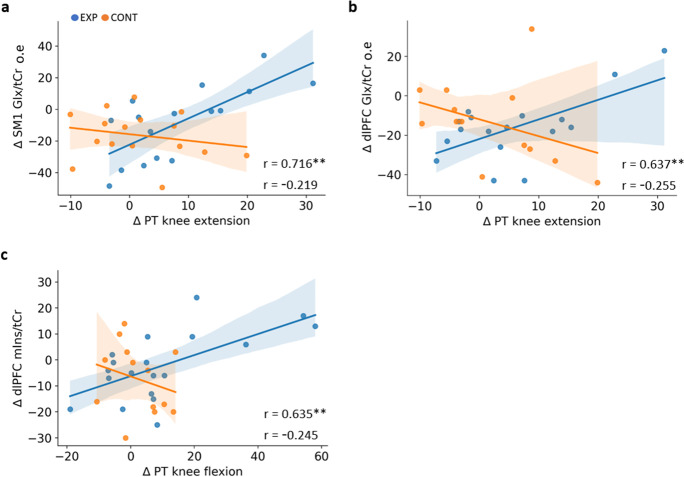
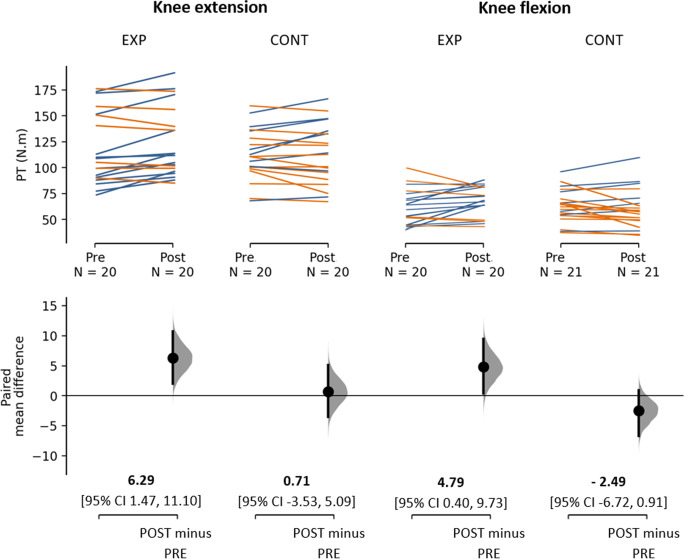
Physical exercise is considered a potent countermeasure against various age-associated physiological deterioration processes. We therefore assessed the effect of 12 weeks of resistance training on brain metabolism in older adults (age range: 60-80 years). Participants either underwent two times weekly resistance training program which consisted of four lower body exercises performed for 3 sets of 6-10 repetitions at 70-85% of 1 repetition maximum (n = 20) or served as the passive control group (n = 21). The study used proton magnetic resonance spectroscopy to quantify the ratio of total N-acetyl aspartate, total choline, glutamate-glutamine complex, and myo-inositol relative to total creatine (tNAA/tCr, tCho/tCr, Glx/tCr, and mIns/tCr respectively) in the hippocampus (HPC), sensorimotor (SM1), and prefrontal (dlPFC) cortices. The peak torque (PT at 60°/s) of knee extension and flexion was assessed using an isokinetic dynamometer. We used repeated measures time × group ANOVA to assess time and group differences and correlation coefficient analyses to examine the pre-to-post change (∆) associations between PT and neurometabolite variables. The control group showed significant declines in tNAA/tCr and Glx/tCr of SM1, and tNAA/tCr of dlPFC after 12 weeks, which were not seen in the experimental group. A significant positive correlation was found between ∆PT knee extension and ∆SM1 Glx/tCr, ∆dlPFC Glx/tCr and between ∆PT knee flexion and ∆dlPFC mIns/tCr in the experimental group. Overall, findings suggest that resistance training seems to elicit alterations in various neurometabolites that correspond to exercise-induced "preservation" of brain health, while simultaneously having its beneficial effect on augmenting muscle functional characteristics in older adults.
体育锻炼被认为是对抗各种与年龄相关的生理衰退过程的有效对策。因此,我们评估了 12 周抗阻训练对老年人(年龄范围:60-80 岁)大脑代谢的影响。参与者要么每周进行两次抗阻训练,包括四项下肢运动,每组 3 次,重复 6-10 次,强度为 1 次重复最大强度的 70-85%(n=20),要么作为被动对照组(n=21)。该研究使用质子磁共振波谱技术来量化海马体(HPC)、感觉运动(SM1)和前额叶(dlPFC)皮质中总 N-乙酰天冬氨酸、总胆碱、谷氨酸-谷氨酰胺复合物和肌醇与总肌酸的比值(分别为 tNAA/tCr、tCho/tCr、Glx/tCr 和 mIns/tCr)。使用等速测力计评估膝关节伸展和弯曲的峰值扭矩(PT 为 60°/s)。我们使用重复测量时间×组 ANOVA 来评估时间和组间差异,并进行相关系数分析,以检查 PT 和神经代谢物变量之间的预到后变化(∆)相关性。对照组在 12 周后,SM1 的 tNAA/tCr 和 Glx/tCr 以及 dlPFC 的 tNAA/tCr 显著下降,而实验组则没有。实验组中,膝关节伸展的∆PT 与 SM1 的∆Glx/tCr、∆dlPFC 的∆Glx/tCr 以及膝关节弯曲的∆PT 与∆dlPFC 的 mIns/tCr 之间存在显著正相关。总的来说,这些发现表明,抗阻训练似乎会引起各种神经代谢物的变化,这些变化与运动诱导的大脑健康“保护”相对应,同时对增强老年人的肌肉功能特性也有有益的影响。