Department of Advanced Pharmaceutics, Faculty of Veterinary Medicine, Hokkaido University, Sapporo, Japan.
Department of Disease Control, Faculty of Veterinary Medicine, Hokkaido University, Sapporo, Japan.
PLoS One. 2023 Jan 26;18(1):e0281143. doi: 10.1371/journal.pone.0281143. eCollection 2023.
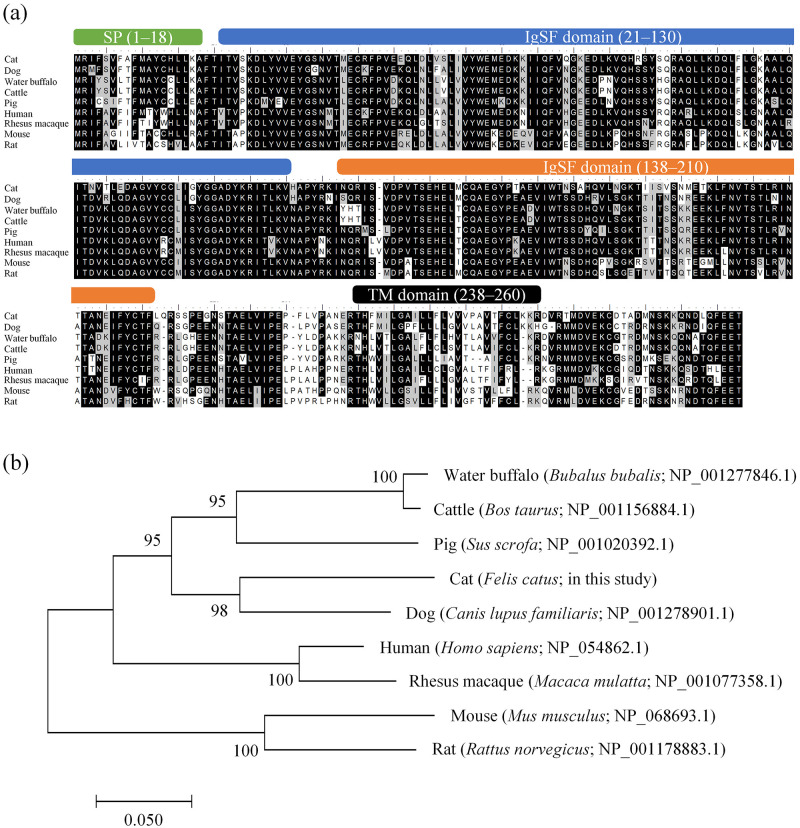
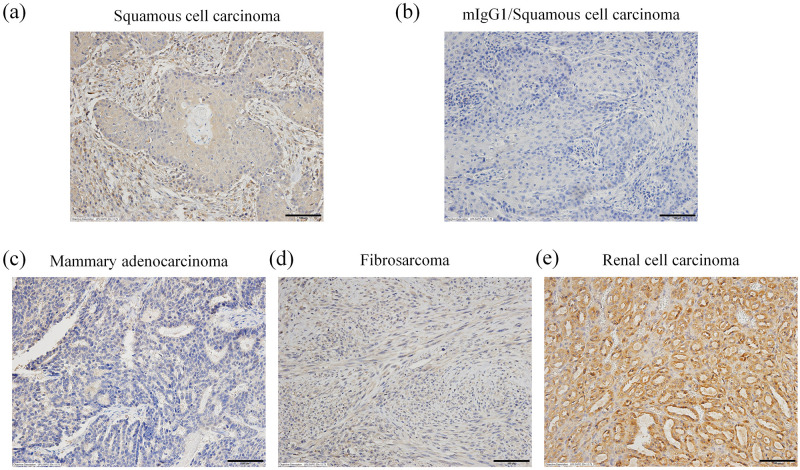
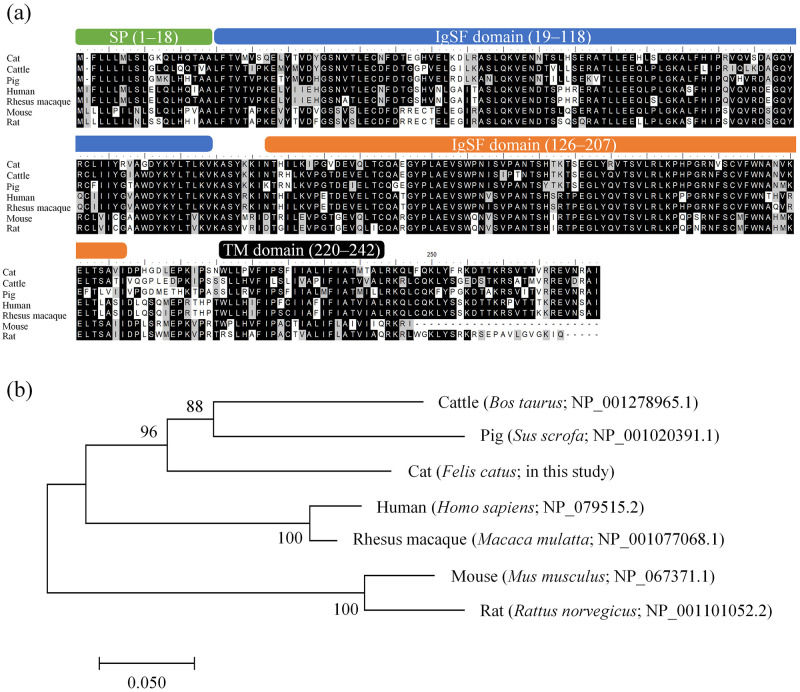
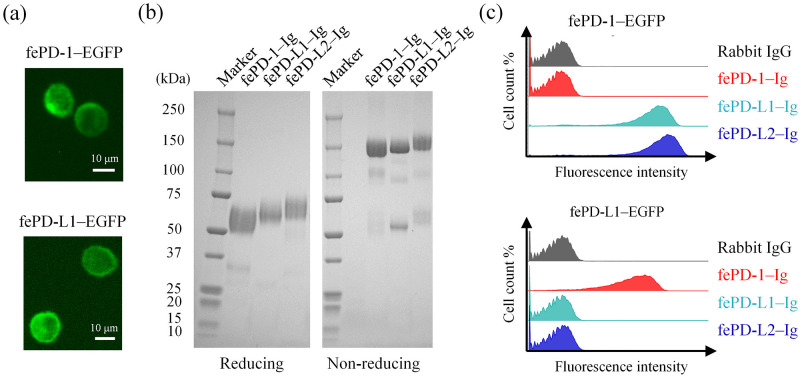
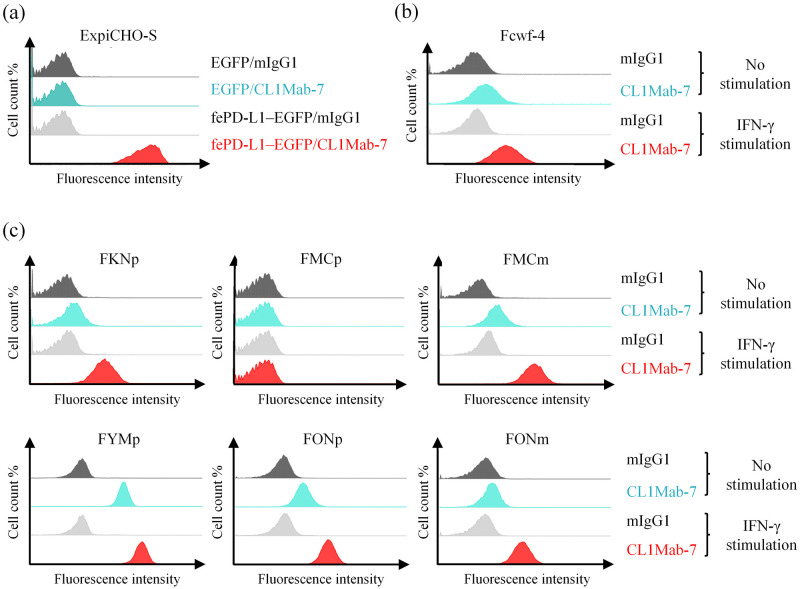
Spontaneous tumors are a major cause of death in cats. Treatment of human tumors has progressed dramatically in the past decade, partly due to the success of immunotherapies using immune checkpoint inhibitors, such as anti-programmed death 1 (PD-1) and anti-PD-ligand 1 (PD-L1) antibodies. However, little is known about the PD-1 pathway and its association with tumor disease in cats. This study investigated the applicability of anti-PD-1/PD-L1 therapy in feline tumors. We first determined the complete coding sequence of feline PD-L1 and PD-L2, and found that the deduced amino acid sequences of feline PD-L1/PD-L2 share high sequence identities (66-83%) with orthologs in other mammalian species. We prepared recombinant feline PD-1, PD-L1, and PD-L2 proteins and confirmed receptor-ligand binding between PD-1 and PD-L1/PD-L2 using flow cytometry. Next, we established an anti-feline PD-L1 monoclonal antibody (clone CL1Mab-7) to analyze the expression of PD-L1. Flow cytometry using CL1Mab-7 revealed the cell surface expression of PD-L1 in a feline macrophage (Fcwf-4) and five mammary adenocarcinoma cell lines (FKNp, FMCm, FYMp, FONp, and FONm), and showed that PD-L1 expression was upregulated by interferon-γ stimulation. Finally, immunohistochemistry using CL1Mab-7 also showed PD-L1 expression in feline squamous cell carcinoma (5/5, 100%), mammary adenocarcinoma (4/5, 80%), fibrosarcoma (5/5, 100%), and renal cell carcinoma (2/2, 100%) tissues. Our results strongly encourage further investigations of the PD-1/PD-L1 pathway as a potential therapeutic target for feline tumors.
自发性肿瘤是猫类死亡的主要原因。在过去的十年中,人类肿瘤的治疗取得了显著进展,部分原因是免疫疗法的成功,如使用免疫检查点抑制剂的疗法,如抗程序性死亡 1(PD-1)和抗 PD-配体 1(PD-L1)抗体。然而,人们对猫科动物的 PD-1 途径及其与肿瘤疾病的关系知之甚少。本研究探讨了抗 PD-1/PD-L1 治疗在猫科肿瘤中的适用性。我们首先确定了猫科 PD-L1 和 PD-L2 的完整编码序列,并发现猫科 PD-L1/PD-L2 的推导氨基酸序列与其他哺乳动物物种的同源物具有高度的序列同一性(66-83%)。我们制备了重组猫科 PD-1、PD-L1 和 PD-L2 蛋白,并通过流式细胞术证实了 PD-1 与 PD-L1/PD-L2 之间的受体-配体结合。接下来,我们建立了一种抗猫科 PD-L1 的单克隆抗体(CL1Mab-7)来分析 PD-L1 的表达。使用 CL1Mab-7 的流式细胞术显示,PD-L1 在猫科巨噬细胞(Fcwf-4)和五种乳腺腺癌细胞系(FKNp、FMCm、FYMp、FONp 和 FONm)中表达于细胞膜表面,并显示 PD-L1 的表达在干扰素-γ刺激下上调。最后,CL1Mab-7 的免疫组织化学也显示 PD-L1 在猫科鳞状细胞癌(5/5,100%)、乳腺腺癌(4/5,80%)、纤维肉瘤(5/5,100%)和肾细胞癌(2/2,100%)组织中表达。我们的结果强烈鼓励进一步研究 PD-1/PD-L1 途径作为猫科肿瘤的潜在治疗靶点。