Hopp Children's Cancer Center Heidelberg (KiTZ), Heidelberg, Germany.
Division of Pediatric Neurooncology, German Cancer Research Center (DKFZ), Heidelberg, Germany.
Nat Cancer. 2023 Feb;4(2):276-289. doi: 10.1038/s43018-022-00509-4. Epub 2023 Jan 26.
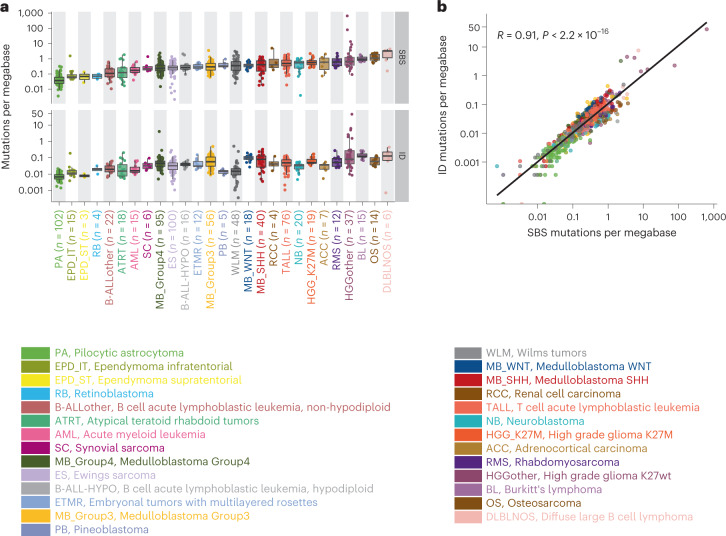
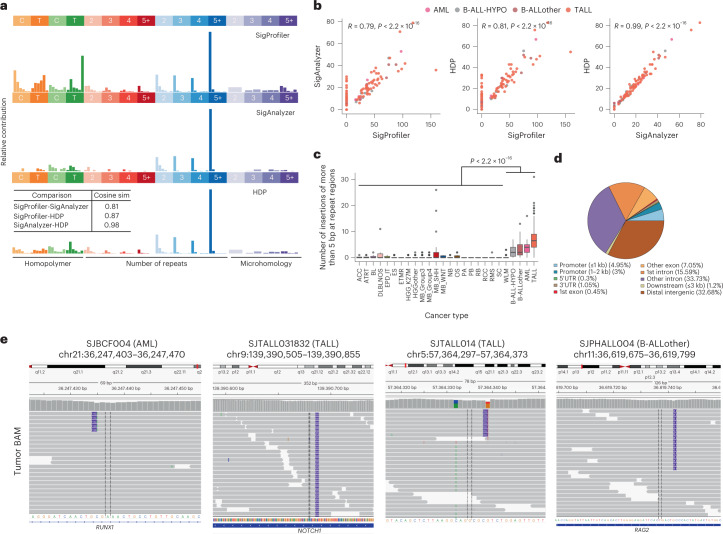
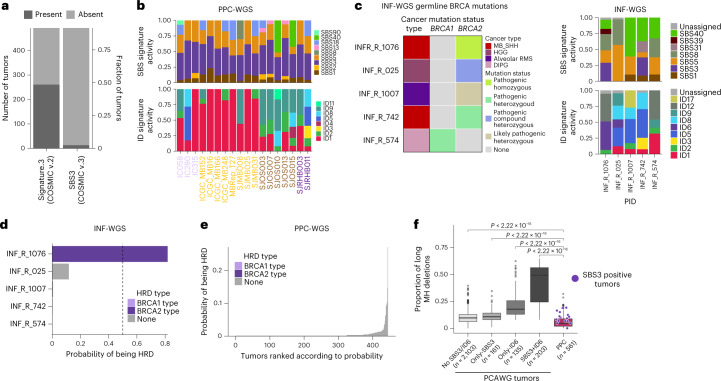
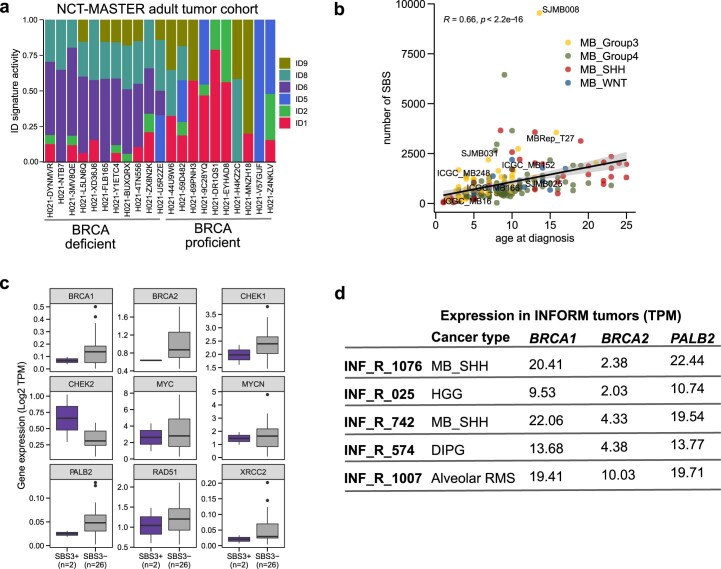
Analysis of mutational signatures can reveal underlying molecular mechanisms of the processes that have imprinted the somatic mutations found in cancer genomes. Here, we analyze single base substitutions and small insertions and deletions in pediatric cancers encompassing 785 whole-genome sequenced tumors from 27 molecularly defined cancer subtypes. We identified only a small number of mutational signatures active in pediatric cancers, compared with previously analyzed adult cancers. Further, we report a significant difference in the proportion of pediatric tumors showing homologous recombination repair defect signatures compared with previous analyses. In pediatric leukemias, we identified an indel signature, not previously reported, characterized by long insertions in nonrepeat regions, affecting mainly intronic and intergenic regions, but also exons of known cancer genes. We provide a systematic overview of COSMIC v.3 mutational signatures active across pediatric cancers, which is highly relevant for understanding tumor biology and enabling future research in defining biomarkers of treatment response.
分析突变特征可以揭示在癌症基因组中发现的体细胞突变所经历的潜在分子机制。在这里,我们分析了涵盖 27 种分子定义的癌症亚型的 785 个全基因组测序肿瘤中的单碱基替换和小插入缺失。与之前分析的成人癌症相比,我们只在儿科癌症中发现了少量活跃的突变特征。此外,我们报告了与之前分析相比,具有同源重组修复缺陷特征的儿科肿瘤比例存在显著差异。在儿科白血病中,我们确定了一个以前未报道的插入缺失特征,其特征是在非重复区域中存在长插入,主要影响内含子和基因间区域,但也影响已知癌症基因的外显子。我们提供了一个跨儿科癌症的 COSMIC v.3 突变特征的系统概述,这对于理解肿瘤生物学和未来研究确定治疗反应的生物标志物非常重要。