Chen Xiaozhe, Ma Yulong, Li Jianhua, Yao Lei, Gui Mingtai, Lu Bo, Zhou Xunjie, Wang Mingzhu, Fu Deyu
Department of Cardiology, Yueyang Hospital of Integrated Traditional Chinese and Western Medicine, Shanghai University of Traditional Chinese Medicine, Shanghai, China.
Front Pharmacol. 2023 Jan 10;13:1083001. doi: 10.3389/fphar.2022.1083001. eCollection 2022.
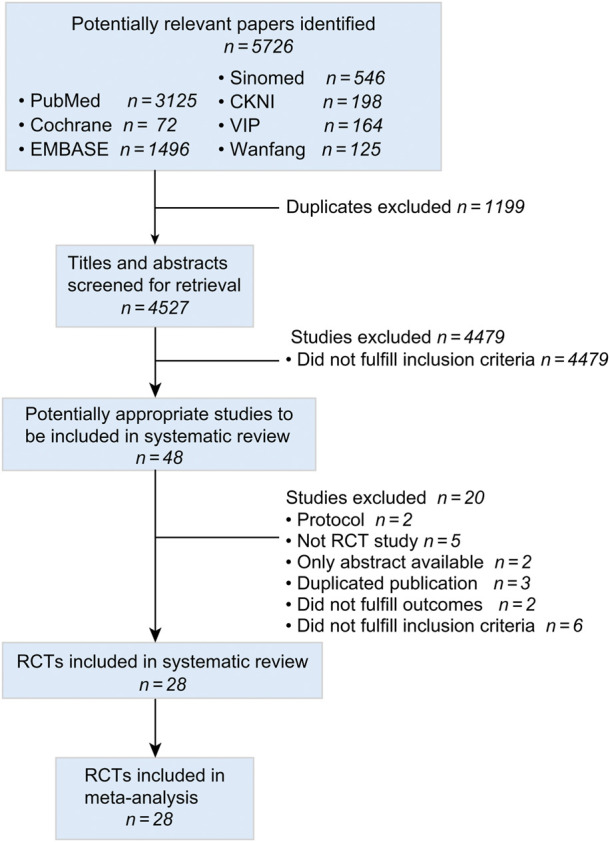
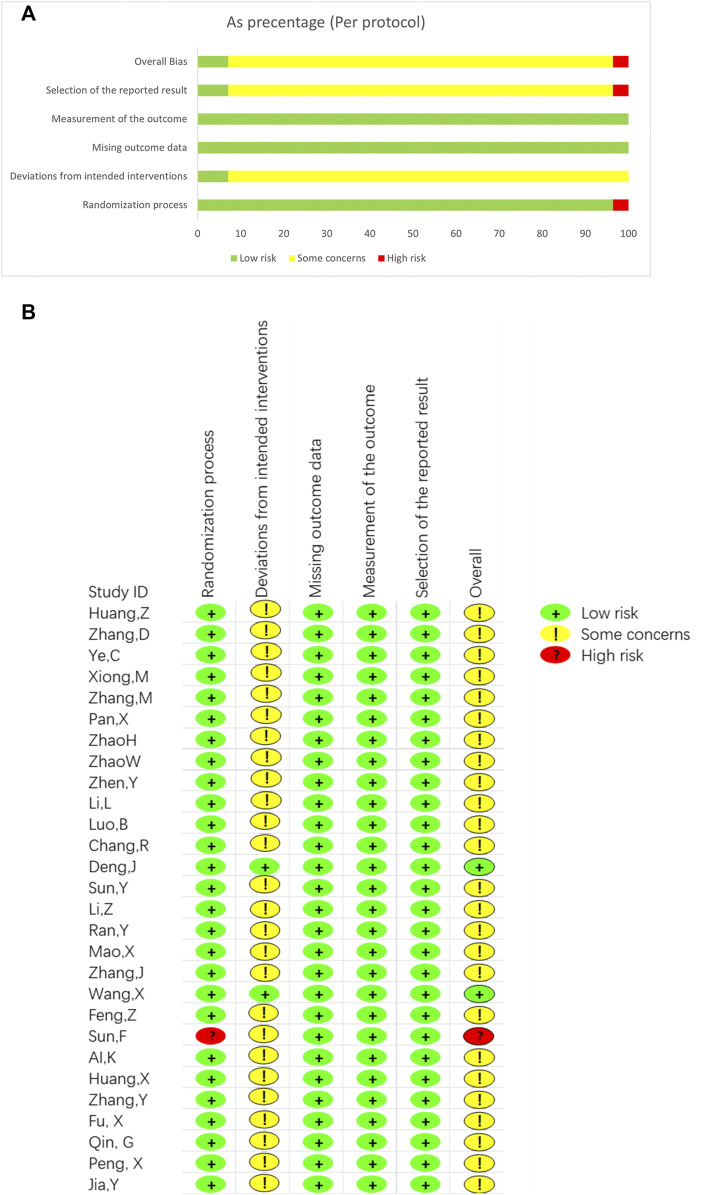
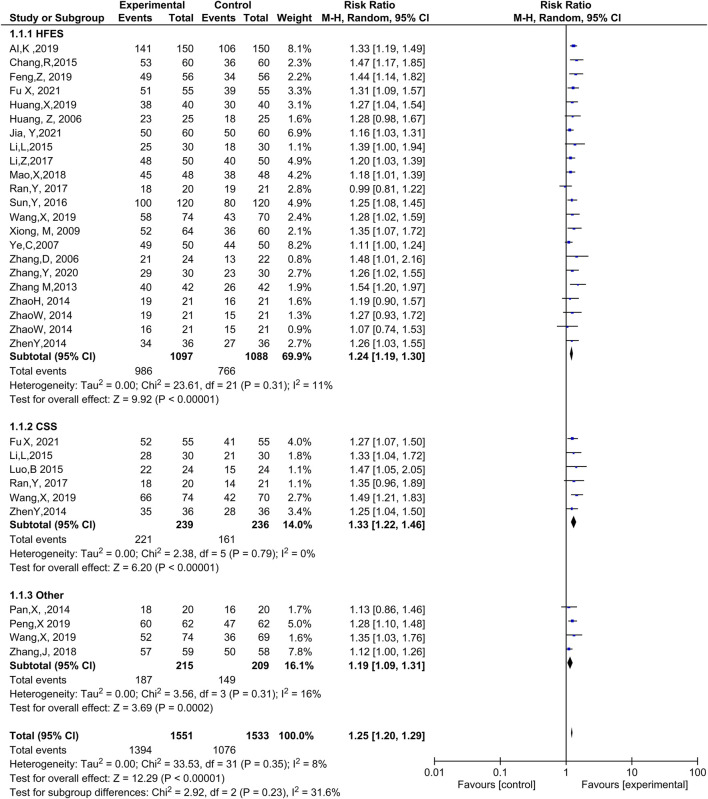
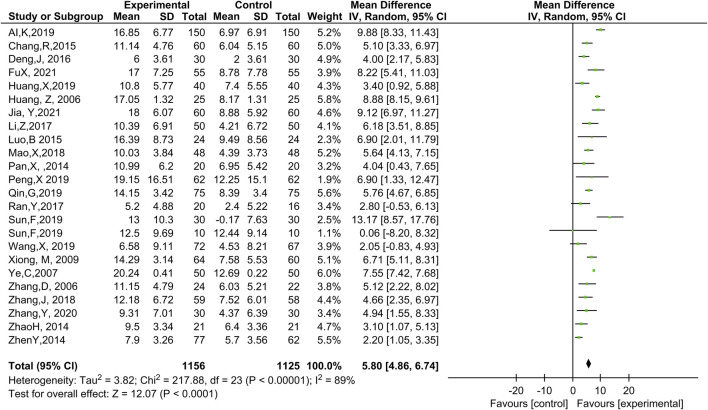
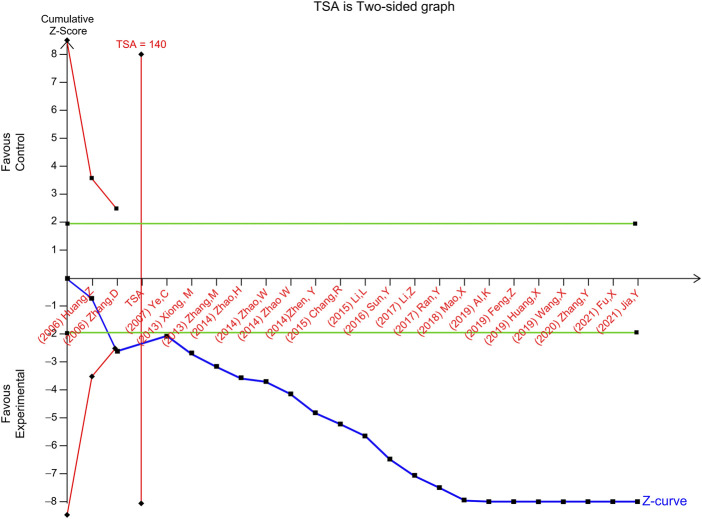
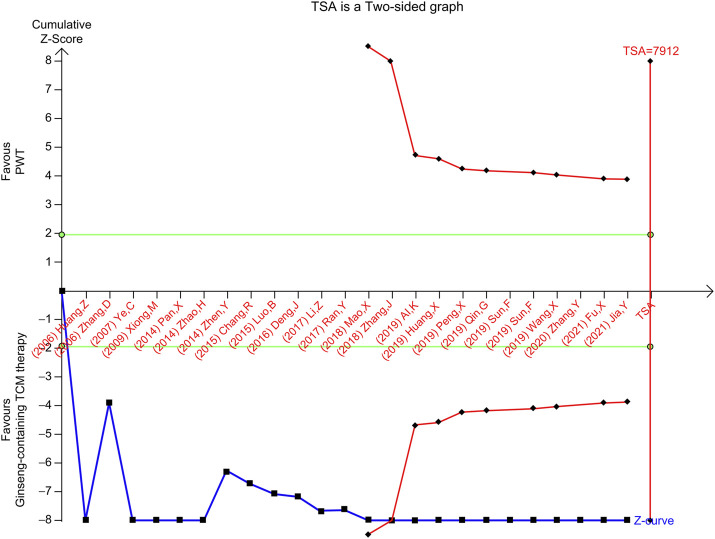
To evaluate the efficacy of ginseng-containing traditional Chinese medicine (TCM) for acute decompensated heart failure (ADHF). Seven databases were included from establishment until 10 July 2022. Pooled data were analyzed with random-effects model. The risk of bias was measured by the risk of bias tool for randomized trials (RoB 2). Modified Jadad scale score was used to assess the quality of including studies. The meta-analysis was performed with RevMan 5.3. Trial sequential analysis was assessed to avoid type I errors. We have registered our protocol in PROSPERO (CRD42021267742). Twenty-eight articles were included. The results demonstrated that compared with conventional western therapy (WT), ginseng-containing TCM combined with WT further improved clinical efficacy (RR: 1.25, 95% CI: 1.20-1.29, < 0.00001, I = 8%), left ventricular ejection fraction (LVEF) (MD: 5.80, 95% CI: 4.86-6.74, < 0.00001, I = 89%), stroke volume (MD: 13.80, 95% CI: 12.66-14.95, < 0.00001, I = 93%), 6-min walk test (MD: 53.03, 95% CI: 20.76-85.29, = 0.001, I = 97%), decreased 6-month rehospitalization (RR: 0.44, 95% CI: 0.18-1.11, = 0.08, I = 0%), brain natriuretic peptide (MD: 188.12, 95% CI: 248.13 to -128.11, < 0.00001, I = 94%), N-terminal pro-B-type natriuretic peptide (MD = -503.29; 95% CI: 753.18 to -253.40, < 0.0001, I = 89%) and Minnesota living heart failure questionnaire scores (MD: 9.68, 95% CI: 13.67 to -5.70, < 0.00001, I = 83%). The ROB2 assessment and modified Jaded scores showed most studies included were with some concerns. Compared with WT alone, ginseng-containing TCM is a possible way to benefit ADHF patients. However, limited by the quality of including trials, more high-quality studies are needed to provide reliable evidence.
评估含人参的中药治疗急性失代偿性心力衰竭(ADHF)的疗效。纳入了从建库至2022年7月10日的7个数据库。采用随机效应模型对汇总数据进行分析。采用随机试验偏倚风险工具(RoB 2)测量偏倚风险。使用改良Jadad量表评分评估纳入研究的质量。使用RevMan 5.3进行荟萃分析。进行试验序贯分析以避免I类错误。我们已在PROSPERO(CRD42021267742)中注册了我们的方案。纳入了28篇文章。结果表明,与传统西医治疗(WT)相比,含人参的中药联合WT进一步提高了临床疗效(RR:1.25,95%CI:1.20 - 1.29,<0.00001,I² = 8%)、左心室射血分数(LVEF)(MD:5.80,95%CI:4.86 - 6.74,<0.00001,I² = 89%)、每搏输出量(MD:13.80,95%CI:12.66 - 14.95,<0.00001,I² = 93%)、6分钟步行试验(MD:53.03,95%CI:20.76 - 85.29,P = 0.001,I² = 97%),降低了6个月再住院率(RR:0.44,95%CI:0.18 - 1.11,P = 0.08,I² = 0%)、脑钠肽(MD:188.12,95%CI:248.13至 - 128.11,<0.00001,I² = 94%)、N末端B型利钠肽原(MD = - 503.29;95%CI:753.18至 - 253.40,<0.0001,I² = 89%)以及明尼苏达心力衰竭生活质量问卷评分(MD:9.68,95%CI:13.67至 - 5.70,<0.00001,I² = 83%)。ROB2评估和改良Jadad评分显示,纳入的大多数研究存在一些问题。与单纯WT相比,含人参的中药可能是使ADHF患者获益的一种方法。然而,受纳入试验质量的限制,需要更多高质量研究来提供可靠证据。