Vaseghi Fatemeh, Yarmohammadian Mohammad Hossein, Raeisi Ahmadreza
Health Services Management, Isfahan University of Medical Sciences, Isfahan, Iran.
Health in Disasters, Health Management and Economics Research Center, Isfahan University of Medical Sciences, Isfahan, Iran.
Iran J Nurs Midwifery Res. 2022 Nov 18;27(6):496-504. doi: 10.4103/ijnmr.ijnmr_476_21. eCollection 2022 Nov-Dec.
Today's health systems require the collaboration of diverse staff such as physicians, nurses, social workers, and other healthcare professionals. In addition to professional competencies, they also need to acquire interprofessional competencies. Effective interprofessional collaboration among healthcare professionals is one of the solutions that can promote the effectiveness of the health system using existing resources.
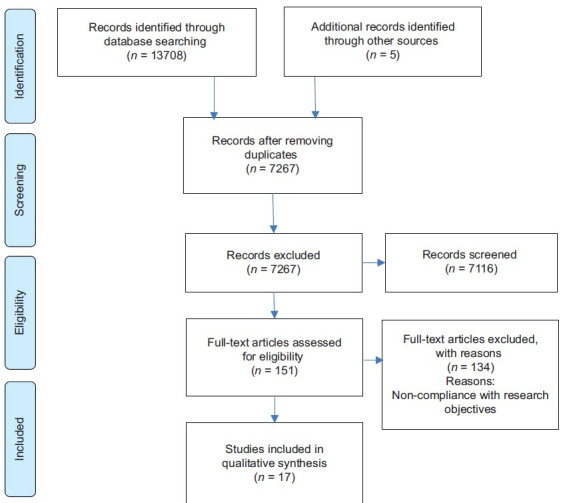
A systematic review was conducted in 2021 according to the PRISMA and through searching Web of Science, Scopus, PubMed, ProQuest, Science Direct, Emerald, Springer Link, Google Scholar, SID, and Magiran databases. The official websites of WHO, United Nations, and World Bank were also searched. The time frame for the research was from 2010 to 2020, and included both the English and Persian languages. Out of 7267 initially retrieved articles, 17 articles finally met the quality evaluation criteria and were analyzed through qualitative content analysis. Then their full texts were retrieved and analyzed in MAXQDA software, and final results were categorized.
Competencies have been explored in various areas of health care, especially in the clinical field. The competencies introduced were extracted and categorized into six domains of "patient-centered care," "interprofessional communication," "participatory leadership," "conflict resolution," "transparency of duties and responsibilities," and "teamwork." The competence of "transparency of duties and responsibilities" was mentioned in all studies and is required for any collaboration.
Interprofessional competencies provide quality, safety, and patient-centeredness through effective collaboration. Integrating interprofessional competencies into the educational curriculum, in-service training, and continue education is essential to form effective interprofessional collaboration.
当今的卫生系统需要医生、护士、社会工作者和其他医疗保健专业人员等不同工作人员之间的协作。除了专业能力外,他们还需要获得跨专业能力。医疗保健专业人员之间有效的跨专业协作是利用现有资源提高卫生系统效率的解决方案之一。
2021年根据PRISMA进行了一项系统综述,通过搜索科学网、Scopus、PubMed、ProQuest、科学Direct、Emerald、Springer Link、谷歌学术、SID和Magiran数据库。还搜索了世界卫生组织、联合国和世界银行的官方网站。研究的时间范围是2010年至2020年,包括英语和波斯语。在最初检索到的7267篇文章中,最终有17篇文章符合质量评估标准,并通过定性内容分析进行了分析。然后检索其全文并在MAXQDA软件中进行分析,最后对结果进行分类。
在医疗保健的各个领域,特别是临床领域,对能力进行了探索。所介绍的能力被提取并归类为“以患者为中心的护理”、“跨专业沟通”、“参与式领导”、“冲突解决”、“职责和责任透明度”以及“团队合作”六个领域。所有研究都提到了“职责和责任透明度”这一能力,任何协作都需要具备这一能力。
跨专业能力通过有效的协作提供质量、安全性和以患者为中心的服务。将跨专业能力纳入教育课程、在职培训和继续教育对于形成有效的跨专业协作至关重要。