Department of Biotechnology and Bioinformatics, JSS Academy of Higher Education and Research, Mysuru, Karnataka, India.
Department of Microbiology, JSS Academy of Higher Education and Research, Mysuru, Karnataka, India.
PLoS One. 2023 Jan 30;18(1):e0280847. doi: 10.1371/journal.pone.0280847. eCollection 2023.
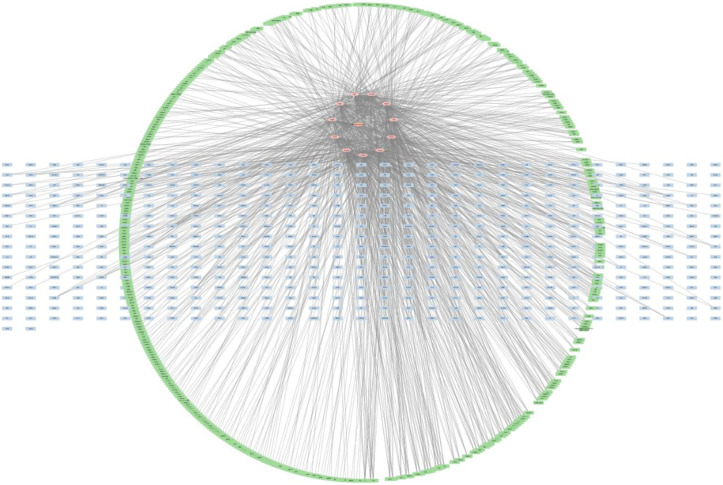
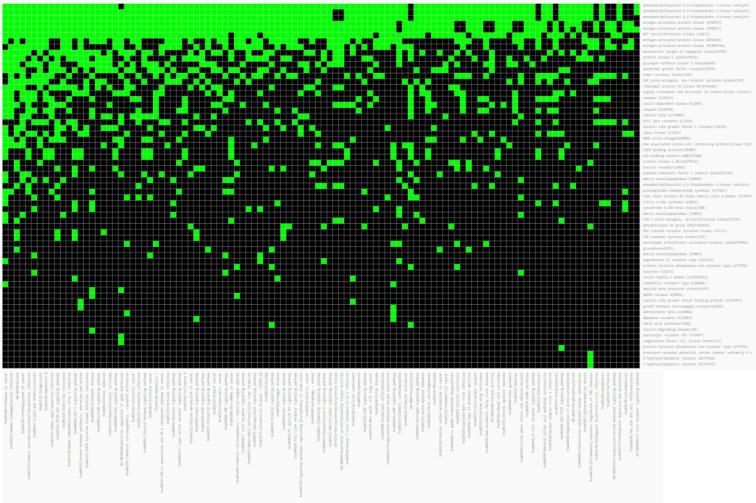
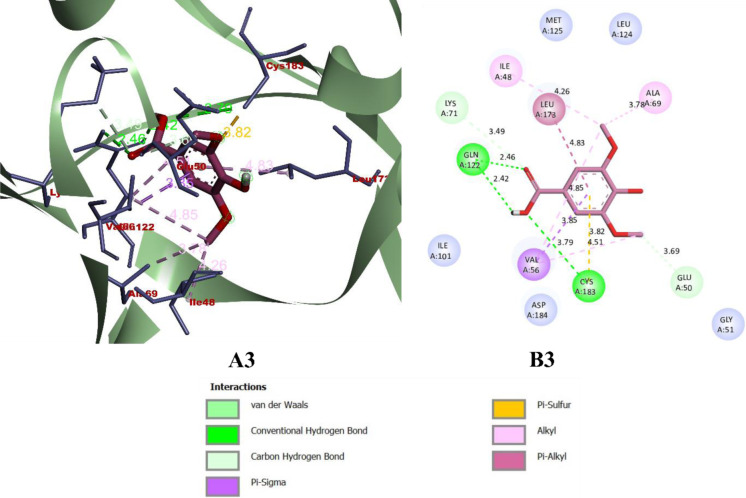
The current study investigates the effectiveness of phytocompounds from the whole green jackfruit flour methanol extract (JME) against obesity-linked diabetes mellitus using integrated network pharmacology and molecular modeling approach. Through network pharmacology, druglikeness and pharmacokinetics, molecular docking simulations, GO analysis, molecular dynamics simulations, and binding free energy analyses, it aims to look into the mechanism of the JME phytocompounds in the amelioration of obesity-linked diabetes mellitus. There are 15 predicted genes corresponding to the 11 oral bioactive compounds of JME. The most important of these 15 genes was MAPK3. According to the network analysis, the insulin signaling pathway has been predicted to have the strongest affinity to MAPK3 protein, which was chosen as the target. With regard to the molecular docking simulation, the greatest notable binding affinity for MAPK3 was discovered to be caffeic acid (-8.0 kJ/mol), deoxysappanone B 7,3'-dimethyl ether acetate (DBDEA) (-8.2 kJ/mol), and syringic acid (-8.5 kJ/mol). All the compounds were found to be stable inside the inhibitor binding pocket of the enzyme during molecular dynamics simulation. During binding free energy calculation, all the compounds chiefly used Van der Waal's free energy to bind with the target protein (caffeic acid: 102.296 kJ/mol, DBDEA: -104.268 kJ/mol, syringic acid: -100.171 kJ/mol). Based on these findings, it may be inferred that the reported JME phytocompounds could be used for in vitro and in vivo research, with the goal of targeting MAPK3 inhibition for the treatment of obesity-linked diabetes mellitus.
本研究采用整合网络药理学和分子对接模拟方法,考察了全绿菠萝蜜粉甲醇提取物(JME)中的植物化合物对肥胖相关糖尿病的治疗效果。通过网络药理学、类药性和药代动力学、分子对接模拟、GO 分析、分子动力学模拟和结合自由能分析,研究了 JME 植物化合物改善肥胖相关糖尿病的作用机制。有 15 个预测基因与 JME 的 11 种口服生物活性化合物相对应。这 15 个基因中最重要的是 MAPK3。根据网络分析,胰岛素信号通路被预测与 MAPK3 蛋白具有最强的亲和力,因此选择 MAPK3 作为靶点。分子对接模拟发现,咖啡酸(-8.0 kJ/mol)、去甲氧基 sappanone B 7,3'-二甲醚乙酸酯(DBDEA)(-8.2 kJ/mol)和丁香酸(-8.5 kJ/mol)对 MAPK3 具有最大的结合亲和力。在分子动力学模拟中,所有化合物都被发现稳定地存在于酶的抑制剂结合口袋内。在结合自由能计算中,所有化合物主要使用范德华自由能与靶蛋白结合(咖啡酸:102.296 kJ/mol,DBDEA:-104.268 kJ/mol,丁香酸:-100.171 kJ/mol)。基于这些发现,可以推断报告的 JME 植物化合物可用于体外和体内研究,旨在靶向抑制 MAPK3 治疗肥胖相关糖尿病。