Hubrecht Institute, Royal Netherlands Academy of Arts and Sciences (KNAW), Uppsalalaan 8, 3584CT Utrecht, the Netherlands; University Medical Center Utrecht, Heidelberglaan 100, 3584CX Utrecht, the Netherlands; Oncode Institute, Jaarbeursplein 6, 3521AL Utrecht, the Netherlands.
Hubrecht Institute, Royal Netherlands Academy of Arts and Sciences (KNAW), Uppsalalaan 8, 3584CT Utrecht, the Netherlands; University Medical Center Utrecht, Heidelberglaan 100, 3584CX Utrecht, the Netherlands; Department of Clinical Sciences, Faculty of Veterinary Medicine, Utrecht University, Yalelaan 1, 3584CL Utrecht, the Netherlands.
Curr Biol. 2023 Mar 13;33(5):912-925.e6. doi: 10.1016/j.cub.2023.01.010. Epub 2023 Jan 30.
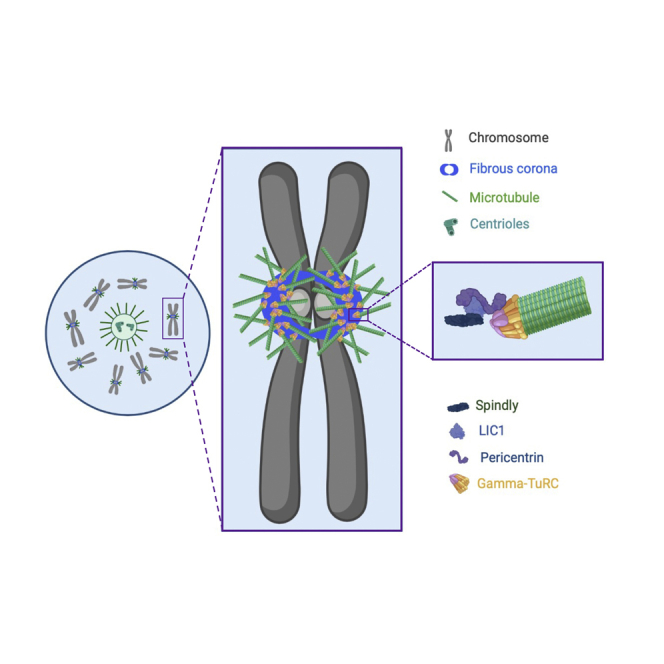
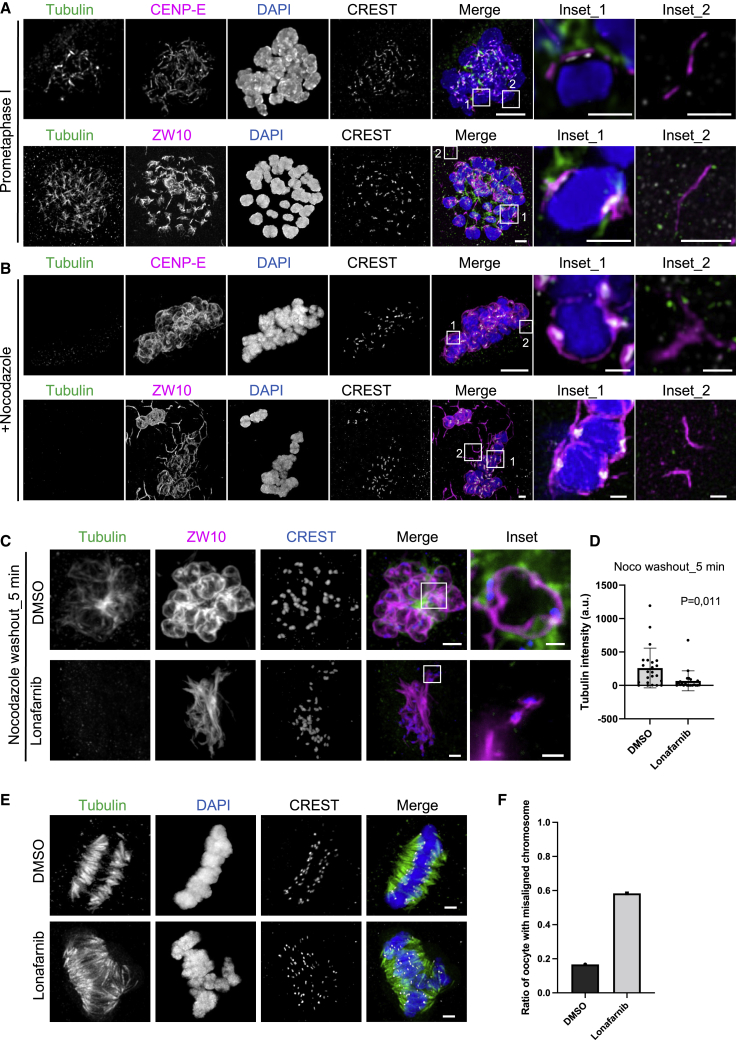
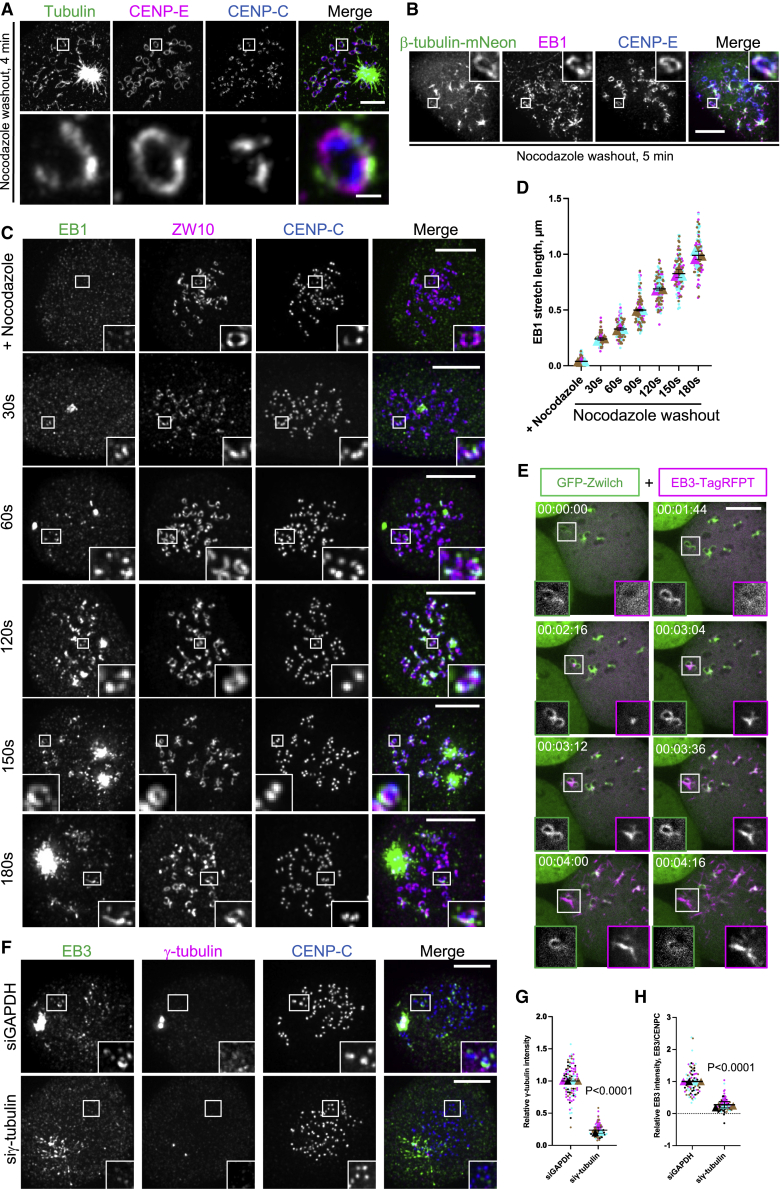
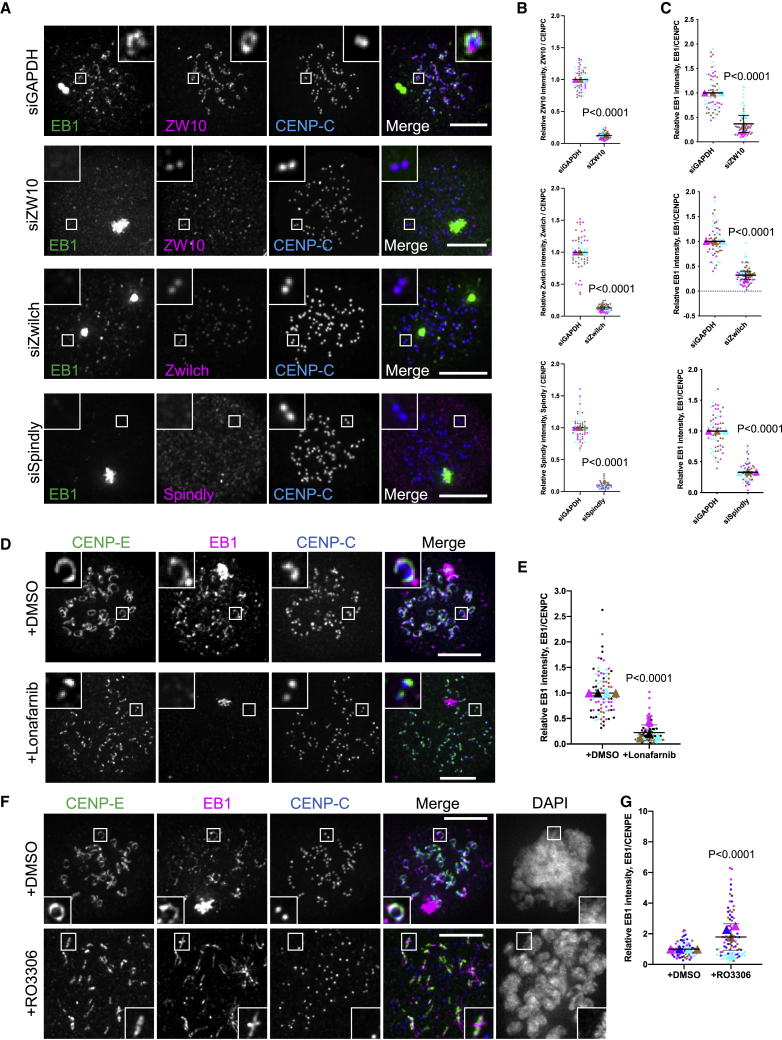
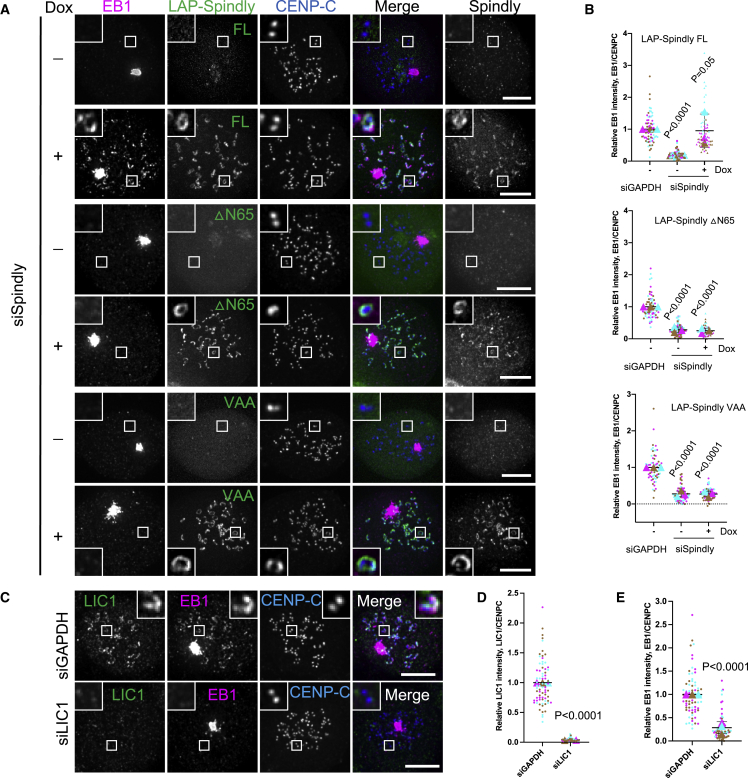
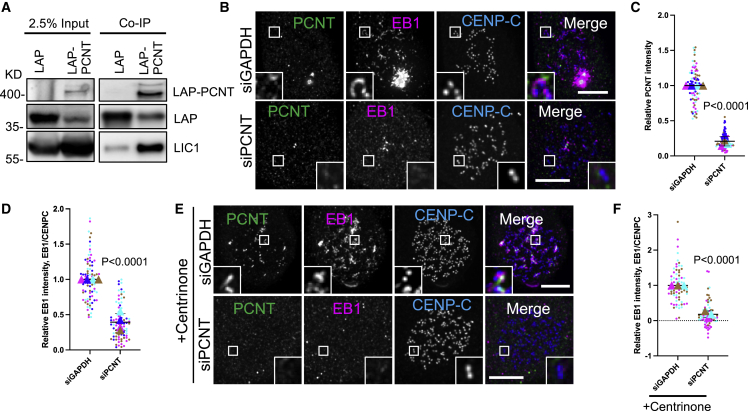
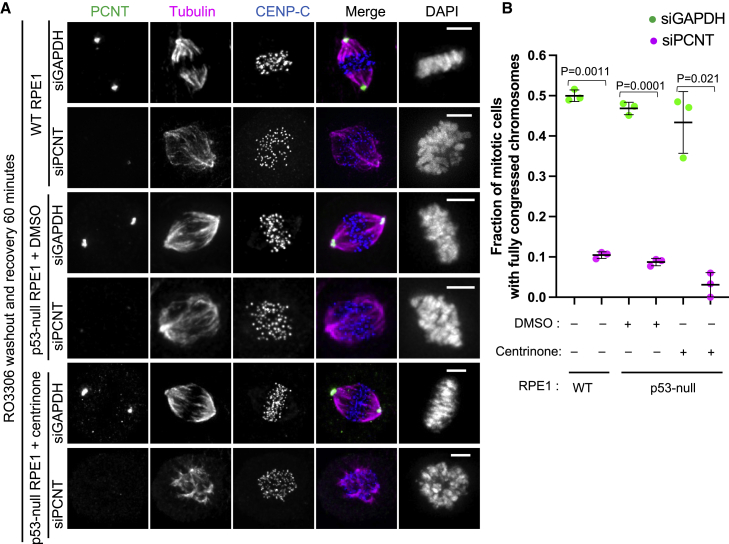
Error-free chromosome segregation in mitosis and meiosis relies on the assembly of a microtubule-based spindle that interacts with kinetochores to guide chromosomes to the cell equator before segregation in anaphase. Microtubules sprout from nucleation sites such as centrosomes, but kinetochores can also promote microtubule formation. It is unclear, however, how kinetochore-derived microtubules are generated and what their role is in chromosome segregation. Here, we show that the transient outer-kinetochore meshwork known as the fibrous corona serves as an autonomous microtubule nucleation platform. The fibrous corona is essential for the nucleation of kinetochore-derived microtubules, and when dissociated from the core kinetochore, it retains microtubule nucleation capacity. Nucleation relies on a fibrous-corona-bound pool of the LIC1 subunit of the dynein motor complex, which interacts with the γ-tubulin-tethering protein pericentrin (PCNT). PCNT is essential for microtubule nucleation from fibrous coronas, and in centrosome-depleted cells, where nearly all mitotic nucleation occurs at fibrous coronas, chromosome congression is fully dependent on PCNT. We further show that chromosomes in bovine oocytes, which naturally lack centrosomes, have highly expanded fibrous coronas that drive chromosome-derived microtubule nucleation. Preventing fibrous corona expansion in these cells impairs chromosome congression and causes spindle assembly defects. Our results show that fibrous coronas are autonomous microtubule-organizing centers that are important for spindle assembly, which may be especially relevant in acentrosomal cells such as oocytes.
在有丝分裂和减数分裂中,染色体的无差错分离依赖于微管为基础的纺锤体的组装,该纺锤体与动粒相互作用,在后期将染色体引导到细胞赤道处,然后进行分离。微管从中心体等起始点萌发,但动粒也可以促进微管的形成。然而,动粒衍生的微管是如何产生的,以及它们在染色体分离中的作用是什么,目前还不清楚。在这里,我们表明,称为纤维冠状物的短暂的外动粒网格作为自主微管成核平台。纤维冠状物对于动粒衍生的微管的成核是必不可少的,并且当与核心动粒解离时,它保留微管成核能力。成核依赖于纤毛动力蛋白复合物的 LIC1 亚基与微管结合的纤维冠状物池,该亚基与γ-微管结合蛋白中心体蛋白(PCNT)相互作用。PCNT 对于纤维冠状物上的微管成核是必不可少的,在中心体耗尽的细胞中,几乎所有的有丝分裂成核都发生在纤维冠状物上,染色体的向心性聚集完全依赖于 PCNT。我们进一步表明,在天然缺乏中心体的牛卵母细胞中,染色体具有高度扩展的纤维冠状物,可驱动染色体衍生的微管成核。阻止这些细胞中纤维冠状物的扩展会损害染色体的向心性聚集,并导致纺锤体组装缺陷。我们的研究结果表明,纤维冠状物是自主的微管组织中心,对于纺锤体的组装很重要,这在没有中心体的细胞(如卵母细胞)中可能尤其重要。