Malyško-Ptašinskė Veronika, Staigvila Gediminas, Novickij Vitalij
Faculty of Electronics, Vilnius Gediminas Technical University, Vilnius, Lithuania.
Department of Immunology, State Research Institute Centre of Innovative Medicine, Vilnius, Lithuania.
Front Bioeng Biotechnol. 2023 Jan 16;10:1094968. doi: 10.3389/fbioe.2022.1094968. eCollection 2022.
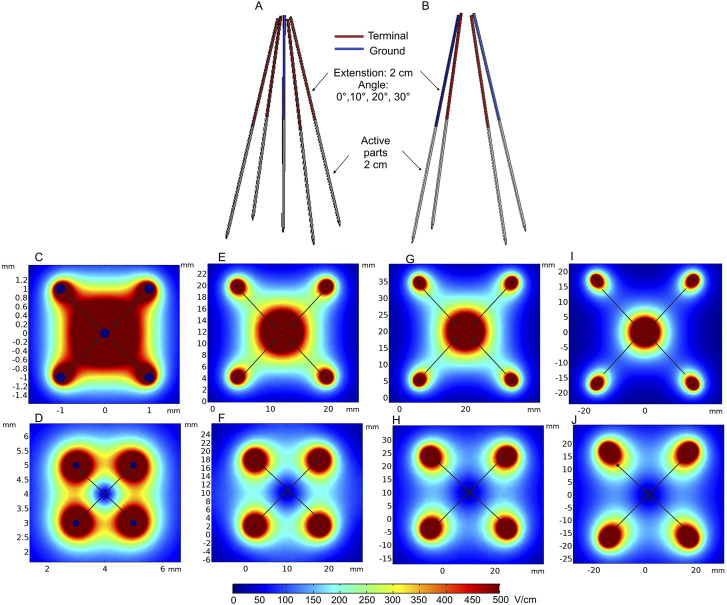
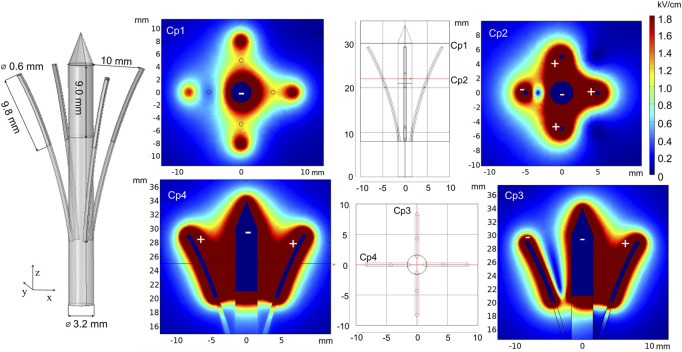
Electroporation is an effective physical method for irreversible or reversible permeabilization of plasma membranes of biological cells and is typically used for tissue ablation or targeted drug/DNA delivery into living cells. In the context of cancer treatment, full recovery from an electroporation-based procedure is frequently dependent on the spatial distribution/homogeneity of the electric field in the tissue; therefore, the structure of electrodes/applicators plays an important role. This review focuses on the analysis of electrodes and models used for electroporation in cancer treatment and gene therapy. We have reviewed various invasive and non-invasive electrodes; analyzed the spatial electric field distribution using finite element method analysis; evaluated parametric compatibility, and the pros and cons of application; and summarized options for improvement. Additionally, this review highlights the importance of tissue bioimpedance for accurate treatment planning using numerical modeling and the effects of pulse frequency on tissue conductivity and relative permittivity values.
电穿孔是一种用于使生物细胞的质膜发生不可逆或可逆通透化的有效物理方法,通常用于组织消融或将靶向药物/DNA递送至活细胞。在癌症治疗的背景下,基于电穿孔的治疗程序的完全恢复通常取决于组织中电场的空间分布/均匀性;因此,电极/施加器的结构起着重要作用。本综述重点分析了用于癌症治疗和基因治疗中的电穿孔的电极及模型。我们已经综述了各种侵入性和非侵入性电极;使用有限元方法分析来分析空间电场分布;评估参数兼容性以及应用的优缺点;并总结了改进方案。此外,本综述强调了组织生物阻抗对于使用数值建模进行准确治疗规划的重要性以及脉冲频率对组织电导率和相对介电常数值的影响。