Nutrition and Metabolism Branch, International Agency for Research on Cancer (IARC), 25 avenue Tony Garnier, CS 90627, 69366, Lyon Cedex 07, France.
Sci Rep. 2023 Feb 2;13(1):1946. doi: 10.1038/s41598-022-26366-w.
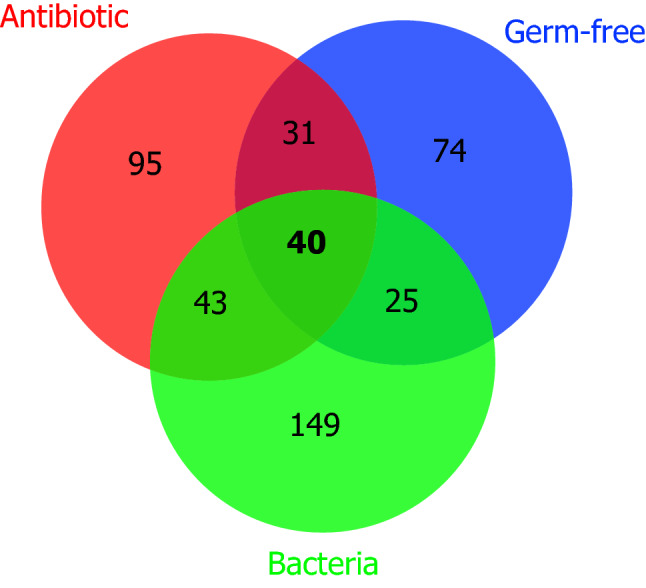
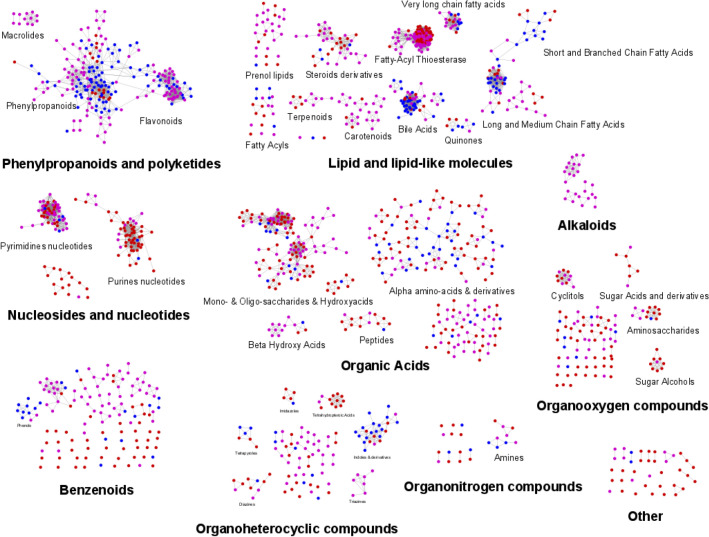
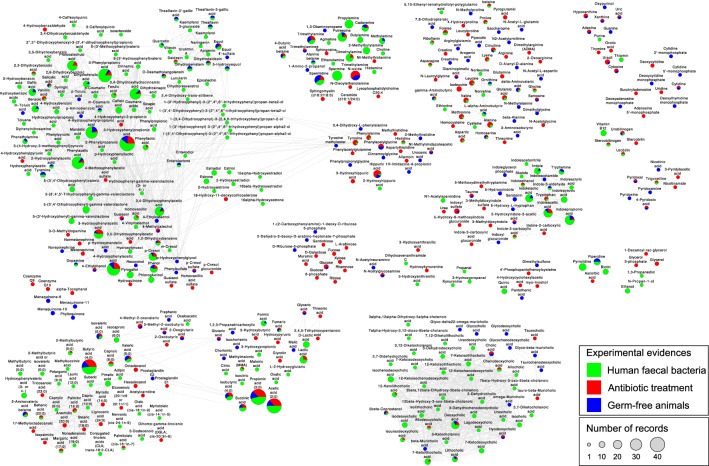
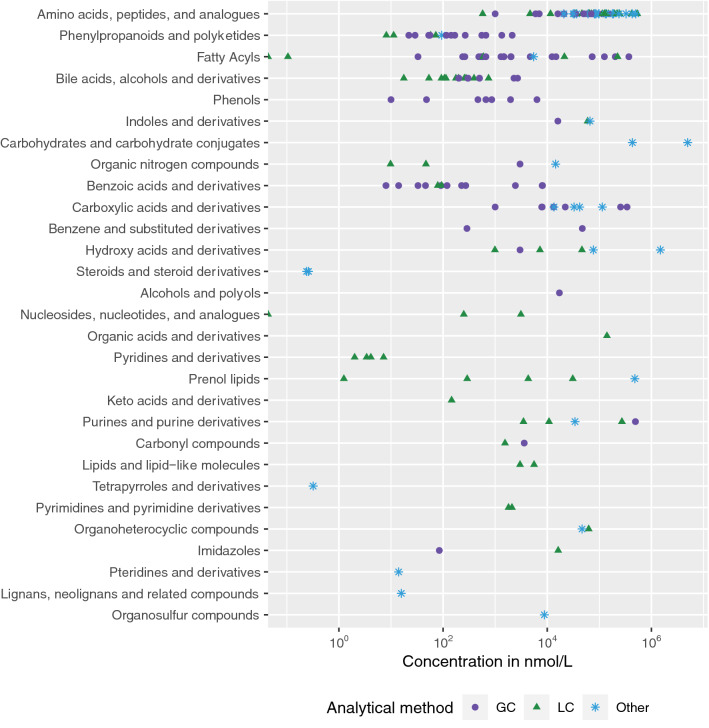
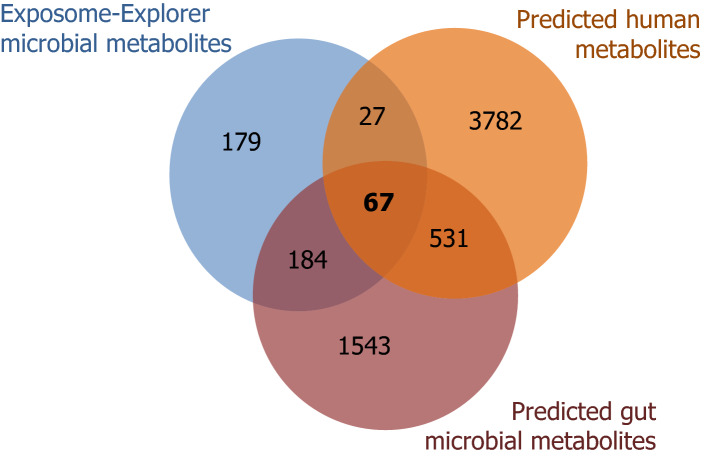
Metabolites produced by the gut microbiota play an important role in the cross-talk with the human host. Many microbial metabolites are biologically active and can pass the gut barrier and make it into the systemic circulation, where they form the gut microbial exposome, i.e. the totality of gut microbial metabolites in body fluids or tissues of the host. A major difficulty faced when studying the microbial exposome and its role in health and diseases is to differentiate metabolites solely or partially derived from microbial metabolism from those produced by the host or coming from the diet. Our objective was to collect data from the scientific literature and build a database on gut microbial metabolites and on evidence of their microbial origin. Three types of evidence on the microbial origin of the gut microbial exposome were defined: (1) metabolites are produced in vitro by human faecal bacteria; (2) metabolites show reduced concentrations in humans or experimental animals upon treatment with antibiotics; (3) metabolites show reduced concentrations in germ-free animals when compared with conventional animals. Data was manually collected from peer-reviewed publications and inserted in the Exposome-Explorer database. Furthermore, to explore the chemical space of the microbial exposome and predict metabolites uniquely formed by the microbiota, genome-scale metabolic models (GSMMs) of gut bacterial strains and humans were compared. A total of 1848 records on one or more types of evidence on the gut microbial origin of 457 metabolites was collected in Exposome-Explorer. Data on their known precursors and concentrations in human blood, urine and faeces was also collected. About 66% of the predicted gut microbial metabolites (n = 1543) were found to be unique microbial metabolites not found in the human GSMM, neither in the list of 457 metabolites curated in Exposome-Explorer, and can be targets for new experimental studies. This new data on the gut microbial exposome, freely available in Exposome-Explorer ( http://exposome-explorer.iarc.fr/ ), will help researchers to identify poorly studied microbial metabolites to be considered in future studies on the gut microbiota, and study their functionalities and role in health and diseases.
肠道微生物群产生的代谢物在与人体宿主的交流中起着重要作用。许多微生物代谢物具有生物活性,可以穿过肠道屏障进入全身循环,在那里它们形成肠道微生物外体组,即宿主体液或组织中肠道微生物代谢物的总和。当研究微生物外体组及其在健康和疾病中的作用时,面临的一个主要困难是区分仅或部分源自微生物代谢的代谢物与源自宿主或来自饮食的代谢物。我们的目标是从科学文献中收集数据,并建立一个关于肠道微生物代谢物及其微生物来源证据的数据库。定义了三种关于肠道微生物外体组微生物来源的证据类型:(1)代谢物由人体粪便细菌在体外产生;(2)抗生素处理后,代谢物在人体或实验动物中的浓度降低;(3)与常规动物相比,无菌动物中的代谢物浓度降低。数据是从同行评议的出版物中手动收集并插入 Exposome-Explorer 数据库中的。此外,为了探索微生物外体组的化学空间并预测微生物群落独特形成的代谢物,比较了肠道细菌株和人类的基因组规模代谢模型(GSMM)。在 Exposome-Explorer 中收集了 1848 条关于 457 种代谢物的一种或多种类型的肠道微生物起源证据的记录。还收集了关于它们已知前体和在人血液、尿液和粪便中的浓度的数据。在预测的肠道微生物代谢物(n=1543)中,约 66%被发现是独特的微生物代谢物,在人类 GSMM 中没有发现,也不在 Exposome-Explorer 中 curated 的 457 种代谢物列表中,并且可以作为新的实验研究的目标。Exposome-Explorer(http://exposome-explorer.iarc.fr/)中提供的关于肠道微生物外体组的新数据将帮助研究人员识别在未来肠道微生物研究中需要考虑的研究较少的微生物代谢物,并研究它们的功能及其在健康和疾病中的作用。