Roeder Jan, Liu Jinghui, Doch Isabel, Ruschhaupt Moritz, Christmann Alexander, Grill Erwin, Helmke Hendrik, Hohmann Sabine, Lehr Stefan, Frackenpohl Jens, Yang Zhenyu
Department of Botany, Technical University of Munich, Freising, Germany.
Research and Development, Weed Control Research, Division Crop Science, Bayer AG, Frankfurt am Main, Germany.
Front Plant Sci. 2023 Jan 19;13:1071710. doi: 10.3389/fpls.2022.1071710. eCollection 2022.
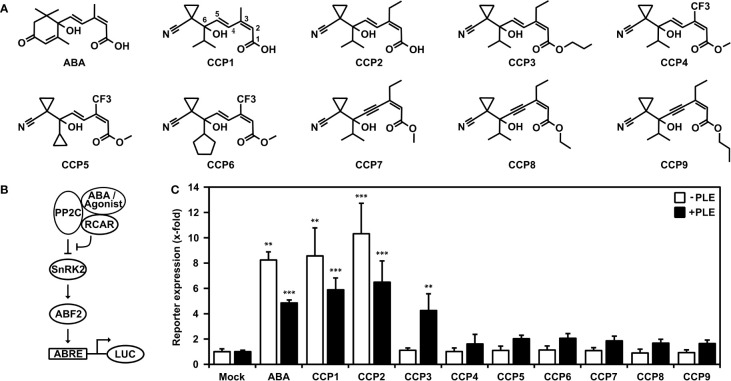
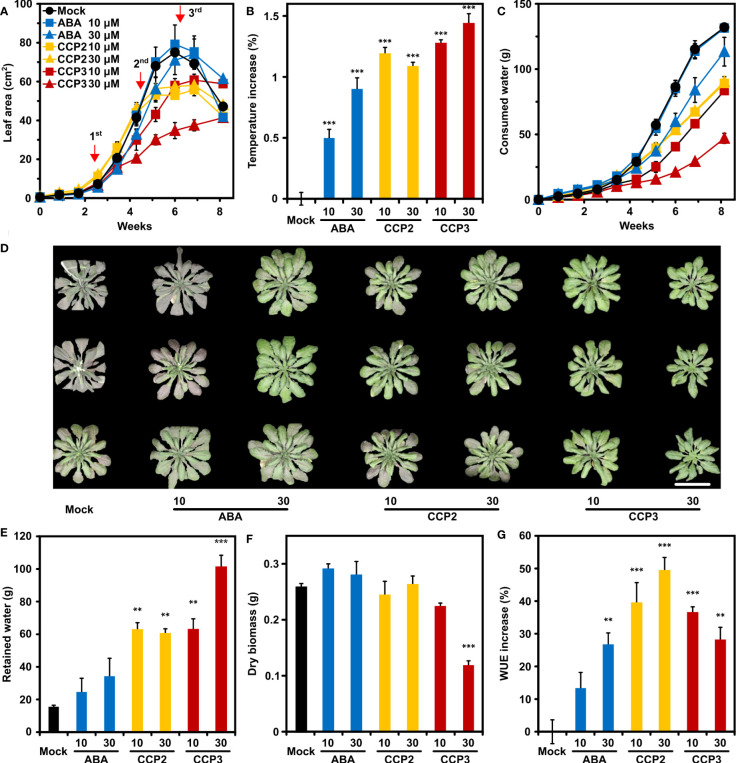
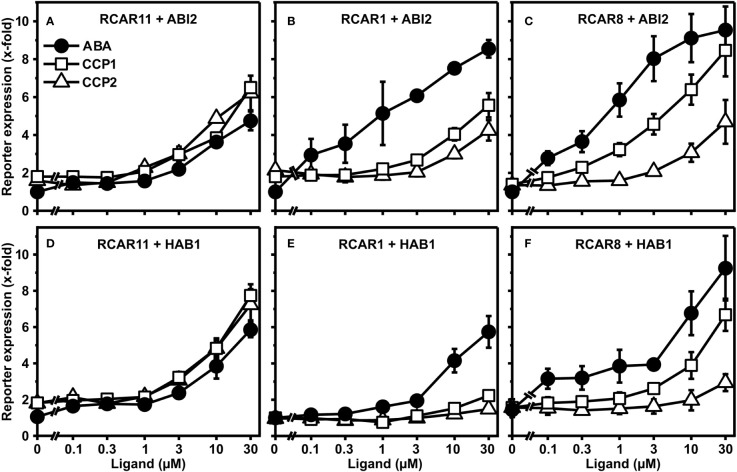
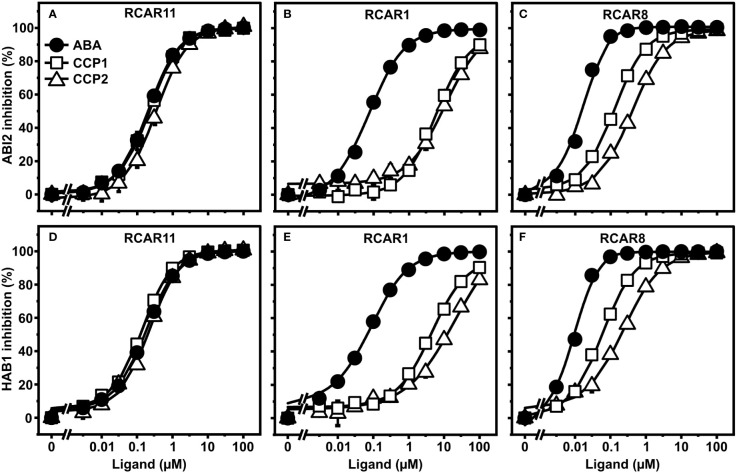
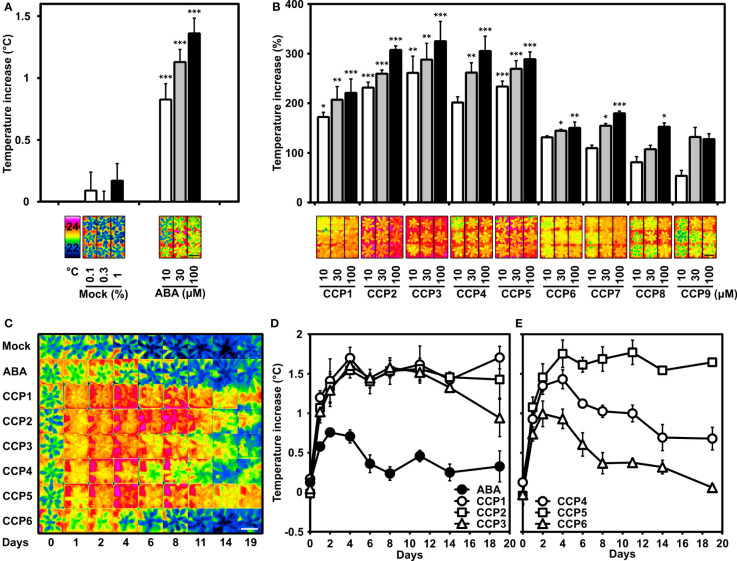
Climate change and overexploitation of groundwater resources cause constraints on water demand for agriculture, thus threatening crop productivity. For future food security, there is an urgent need for crops of high water use efficiency combined with high crop productivity, i.e. having high water productivity. High water productivity means efficient biomass accumulation at reduced transpiration. Recent studies show that plants are able to optimize carbon uptake per water transpired with little or no trade-off in yield. The phytohormone abscisic acid (ABA) plays a pivotal role in minimizing leaf transpiration and mediating enhanced water productivity. Hence, ABA and more chemically stable ABA agonists have the potential to improve crop water productivity. Synthesis, screening, and identification of suitable ABA agonists are major efforts currently undertaken. In this study, we used yeast expressing the plant ABA signal pathway to prescreen ABA-related cyano cyclopropyl compounds (CCPs). The yeast analysis allowed testing the ABA agonists for general toxicity, efficient uptake, and specificity in regulating different ABA receptor complexes. Subsequently, promising ABA-mimics were analyzed for ligand-receptor interaction complemented by physiological analyses. Several CCPs activated ABA signaling in yeast and plant cells. CCP1, CCP2, and CCP5 were by an order of magnitude more efficient than ABA in minimizing transpiration of Arabidopsis plants. In a progressive drought experiment, CCP2 mediated an increase in water use efficiency superior to ABA without trade-offs in biomass accumulation.
气候变化和地下水资源的过度开发对农业用水造成限制,从而威胁到作物生产力。为了保障未来的粮食安全,迫切需要培育兼具高水分利用效率和高作物生产力的作物,即具有高水分生产率的作物。高水分生产率意味着在蒸腾作用降低的情况下实现高效的生物量积累。最近的研究表明,植物能够优化每单位蒸腾水分的碳吸收,而对产量几乎没有或没有权衡。植物激素脱落酸(ABA)在最小化叶片蒸腾和介导提高水分生产率方面起着关键作用。因此,ABA和化学性质更稳定的ABA激动剂有提高作物水分生产率的潜力。目前正在主要致力于合适的ABA激动剂的合成、筛选和鉴定。在本研究中,我们使用表达植物ABA信号通路的酵母对ABA相关的氰基环丙基化合物(CCP)进行预筛选。酵母分析能够测试ABA激动剂的一般毒性、有效吸收以及调节不同ABA受体复合物的特异性。随后,通过生理分析对有前景的ABA模拟物进行配体-受体相互作用分析。几种CCP在酵母和植物细胞中激活了ABA信号。在使拟南芥植株蒸腾作用最小化方面,CCP1、CCP2和CCP5比ABA效率高一个数量级。在渐进干旱实验中,CCP2介导的水分利用效率提高优于ABA,且在生物量积累方面没有权衡。