• 文献检索
  • 文档翻译
  • 深度研究
  • 学术资讯
  • Suppr Zotero 插件Zotero 插件
  • 邀请有礼
  • 套餐&价格
  • 历史记录
应用&插件
Suppr Zotero 插件Zotero 插件浏览器插件Mac 客户端Windows 客户端微信小程序
定价
高级版会员购买积分包购买API积分包
服务
文献检索文档翻译深度研究API 文档MCP 服务
关于我们
关于 Suppr公司介绍联系我们用户协议隐私条款
关注我们

Suppr 超能文献

核心技术专利:CN118964589B侵权必究
粤ICP备2023148730 号-1Suppr @ 2026

文献检索

告别复杂PubMed语法,用中文像聊天一样搜索,搜遍4000万医学文献。AI智能推荐,让科研检索更轻松。

立即免费搜索

文件翻译

保留排版,准确专业,支持PDF/Word/PPT等文件格式,支持 12+语言互译。

免费翻译文档

深度研究

AI帮你快速写综述,25分钟生成高质量综述,智能提取关键信息,辅助科研写作。

立即免费体验

发展中国家的卫生设施挑战——以埃塞俄比亚14个城镇的研究为证

Challenges of sanitation in developing counties - Evidenced from a study of fourteen towns, Ethiopia.

作者信息

Adugna Dagnachew

机构信息

Ethiopian Institute of Architecture, Building Construction and City Development, Addis Ababa University, Ethiopia.

出版信息

Heliyon. 2023 Jan 20;9(1):e12932. doi: 10.1016/j.heliyon.2023.e12932. eCollection 2023 Jan.

DOI:10.1016/j.heliyon.2023.e12932
PMID:36747957
原文链接:https://pmc.ncbi.nlm.nih.gov/articles/PMC9898597/
Abstract

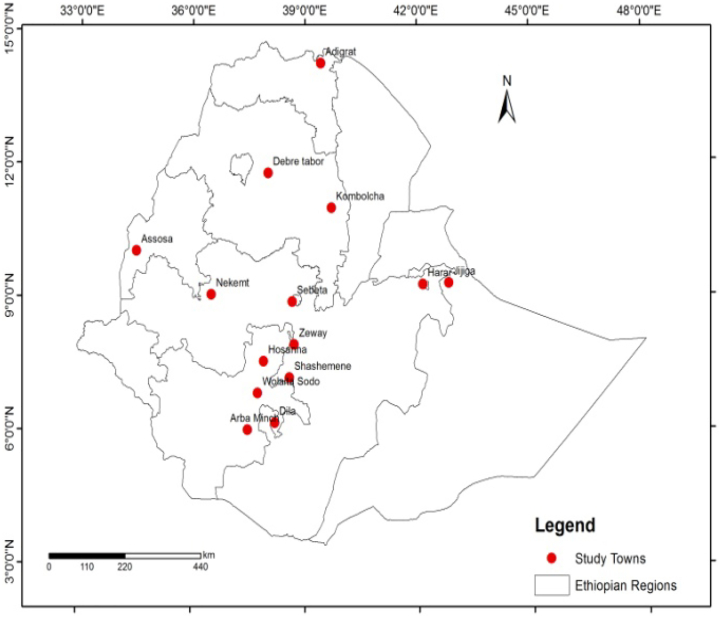
Rapid urbanization and population growth in the past few decades has been worsening the water supply and sanitation problems in Ethiopia putting the current water supply deficit of the country at a staggering 41%. Using Ethiopia as a case of rapidly growing countries in the Global South and struggling with water supply and sanitation management, the objective of this study was to examine the challenges of sanitation in Ethiopia by selecting 14 towns located under different climatic conditions and administrative regions with diversified culture, ethnicity, and religion. Data from these towns were collected through household survey, Focus Group Discussion (FGD), Key Informant Interview (KII) and site visits. The field observation was conducted with representatives from the municipality who have knowledge on the existing sanitation and associated problems. Analysis of the collected data shows that poor water supply, inadequate toilet facilities, poor toilet facility emptying practices, poor community perceptions on sanitation management and inadequate emptying services were major challenges associated with sanitation. Moreover, absence of wastewater dumping site, lack of integration among the different components of sanitation, insufficient collaboration among potential stakeholders and gaps between the existing population and sanitation services were the other key challenges of sanitation exacerbated by inadequate financial resources. From the 14 studied towns the average water deficit was found 35%, and the average households with no toilet facilities were 17%. Only about 20% households have flushed toilets and about 5% practiced open defecation. While 42% of the households use vacuum trucks for emptying wastewaters and about 37% of the households dump wastewater outside of their premises. Among the studied 14 towns, only four towns have their own vacuum trucks, no town possesses wastewater dumping site. The different components of sanitation were managed separately without integration. Moreover, the collaboration among the potential stakeholders of sanitation management was found poor and fragmented. Also, sanitation services have not developed along with the population growth as the finance allocated to sanitation management is much lower compared to other municipal services. Thus, sanitation in the studied towns is poor, though there are progresses when compared with previous decades. To improve the sanitation condition in these towns the water supply should be improved together with raising the perception of the local community. The present study recommends further studies to be conducted on the feasibility of sustainable sanitation and "country-wide comprehensive" study on water supply, sanitation and open defecation in Ethiopian in particular and in developing countries as a whole.
https://cdn.ncbi.nlm.nih.gov/pmc/blobs/1f1a/9898597/c36dd576e408/gr3.jpg
https://cdn.ncbi.nlm.nih.gov/pmc/blobs/1f1a/9898597/b5722fd1bc8d/gr1.jpg
https://cdn.ncbi.nlm.nih.gov/pmc/blobs/1f1a/9898597/64c8d9420235/gr2.jpg
https://cdn.ncbi.nlm.nih.gov/pmc/blobs/1f1a/9898597/c36dd576e408/gr3.jpg
https://cdn.ncbi.nlm.nih.gov/pmc/blobs/1f1a/9898597/b5722fd1bc8d/gr1.jpg
https://cdn.ncbi.nlm.nih.gov/pmc/blobs/1f1a/9898597/64c8d9420235/gr2.jpg
https://cdn.ncbi.nlm.nih.gov/pmc/blobs/1f1a/9898597/c36dd576e408/gr3.jpg
摘要

在过去几十年里,快速的城市化和人口增长使埃塞俄比亚的供水和卫生问题日益恶化,该国目前的供水缺口高达惊人的41%。以埃塞俄比亚作为全球南方快速发展且在供水和卫生管理方面面临困境的国家为例,本研究的目的是通过选取位于不同气候条件、行政区域,有着多元文化、种族和宗教的14个城镇,来审视埃塞俄比亚的卫生挑战。这些城镇的数据通过家庭调查、焦点小组讨论(FGD)、关键 informant 访谈(KII)以及实地考察收集。实地观察由对现有卫生设施及相关问题有了解的市政当局代表进行。对收集到的数据进行分析后发现,供水不足、厕所设施匮乏、厕所设施排空做法不当、社区对卫生管理的认知不足以及排空服务不足是与卫生相关的主要挑战。此外,缺乏废水倾倒场地、卫生设施不同组成部分之间缺乏整合、潜在利益相关者之间协作不足以及现有人口与卫生服务之间的差距,是因财政资源不足而加剧的其他关键卫生挑战。在所研究的14个城镇中,平均缺水率为35%,没有厕所设施的家庭平均占17%。只有约20%的家庭有冲水马桶,约5%的家庭仍露天排便。42%的家庭使用真空卡车排空废水,约37%的家庭将废水倾倒在自家房屋外。在所研究的14个城镇中,只有4个城镇有自己的真空卡车,没有一个城镇有废水倾倒场地。卫生设施的不同组成部分是分开管理的,没有整合。此外,发现卫生管理潜在利益相关者之间的协作很差且分散。而且,由于分配给卫生管理的资金比其他市政服务低得多,卫生服务没有随着人口增长而发展。因此,尽管与前几十年相比有进步,但所研究城镇的卫生状况仍然很差。为改善这些城镇的卫生状况,应在提高当地社区认知的同时改善供水。本研究建议进一步开展关于可持续卫生可行性的研究,以及特别是针对埃塞俄比亚、乃至整个发展中国家的供水、卫生和露天排便的“全国性综合”研究。

相似文献

1
Challenges of sanitation in developing counties - Evidenced from a study of fourteen towns, Ethiopia.发展中国家的卫生设施挑战——以埃塞俄比亚14个城镇的研究为证
Heliyon. 2023 Jan 20;9(1):e12932. doi: 10.1016/j.heliyon.2023.e12932. eCollection 2023 Jan.
2
Environmental health knowledge and practice survey among secondary schoolchildren in Zaria, Nigeria.尼日利亚扎里亚中学生的环境卫生知识与实践调查
Environ Health Perspect. 1994 Mar;102(3):310-2. doi: 10.1289/ehp.94102310.
3
Prevalence of open defecation among households with toilets and associated factors in rural south India: an analytical cross-sectional study.印度南部农村地区有厕所家庭的露天排便率及其相关因素:分析性横断面研究。
Trans R Soc Trop Med Hyg. 2018 Jul 1;112(7):349-360. doi: 10.1093/trstmh/try064.
4
Current state and trends of access to sanitation in Ethiopia and the need to revise indicators to monitor progress in the Post-2015 era.埃塞俄比亚卫生设施普及情况的现状与趋势以及修订指标以监测2015年后时代进展的必要性。
BMC Public Health. 2015 May 2;15:451. doi: 10.1186/s12889-015-1804-4.
5
The Impact of Pro-Poor Sanitation Subsidies in Open Defecation-Free Communities: A Randomized, Controlled Trial in Rural Ghana.《贫困导向卫生设施补贴对无露天排便社区的影响:加纳农村地区的一项随机对照试验》。
Environ Health Perspect. 2022 Jun;130(6):67004. doi: 10.1289/EHP10443. Epub 2022 Jun 8.
6
Sanitation and Hygiene Practices in Small Towns in Tanzania: The Case of Babati District, Manyara Region.坦桑尼亚小城镇的卫生和卫生习惯:以马拉维地区巴巴西区为例。
Am J Trop Med Hyg. 2020 Oct;103(4):1726-1734. doi: 10.4269/ajtmh.19-0551.
7
Health Risk Perceptions Are Associated with Domestic Use of Basic Water and Sanitation Services-Evidence from Rural Ethiopia.健康风险认知与基本水和环境卫生设施的家庭使用有关——来自埃塞俄比亚农村的证据。
Int J Environ Res Public Health. 2018 Sep 26;15(10):2112. doi: 10.3390/ijerph15102112.
8
Spatial and multilevel analysis of sanitation service access and related factors among households in Ethiopia: Using 2019 Ethiopian national dataset.埃塞俄比亚家庭卫生服务可及性及相关因素的空间和多层次分析:使用2019年埃塞俄比亚国家数据集
PLOS Glob Public Health. 2023 Apr 4;3(4):e0001752. doi: 10.1371/journal.pgph.0001752. eCollection 2023.
9
Having a latrine facility is not a guarantee for eliminating open defecation owing to socio-demographic and environmental factors: The case of Machakel district in Ethiopia.由于社会人口和环境因素,拥有厕所设施并不一定能保证消除露天排便:以埃塞俄比亚马卡莱区为例。
PLoS One. 2021 Sep 30;16(9):e0257813. doi: 10.1371/journal.pone.0257813. eCollection 2021.
10
Open Defecation Practice and Its Determinants Among Households Owned Toilet Facilities in Gambela Town, South West Ethiopia.埃塞俄比亚西南部甘贝拉镇拥有厕所设施的家庭中的露天排便行为及其决定因素
Environ Health Insights. 2024 Apr 14;18:11786302241246421. doi: 10.1177/11786302241246421. eCollection 2024.

引用本文的文献

1
Workplace menstrual product policies and worker well-being: Insights from Queensland, Australia.工作场所经期用品政策与工人福祉:来自澳大利亚昆士兰的见解
Dialogues Health. 2025 Apr 20;6:100219. doi: 10.1016/j.dialog.2025.100219. eCollection 2025 Jun.
2
Cholera in Sub-Saharan Africa: Unveiling neglected drivers and pathways to elimination.撒哈拉以南非洲的霍乱:揭示被忽视的驱动因素和消除途径。
PLoS Negl Trop Dis. 2025 Apr 23;19(4):e0013029. doi: 10.1371/journal.pntd.0013029. eCollection 2025 Apr.
3
Predicting determinants of unimproved water supply in Ethiopia using machine learning analysis of EDHS-2019 data.

本文引用的文献

1
Limited access to improved drinking water, unimproved drinking water, and toilet facilities among households in Ethiopia: Spatial and mixed effect analysis.埃塞俄比亚家庭中改善饮用水、非改善饮用水和厕所设施的获取情况有限:空间和混合效应分析。
PLoS One. 2022 Apr 1;17(4):e0266555. doi: 10.1371/journal.pone.0266555. eCollection 2022.
2
Exploring geographical variations and inequalities in access to improved water and sanitation in Ethiopia: mapping and spatial analysis.探索埃塞俄比亚在获取改善的水和卫生设施方面的地理差异与不平等:绘图与空间分析
Heliyon. 2020 Apr 30;6(4):e03828. doi: 10.1016/j.heliyon.2020.e03828. eCollection 2020 Apr.
3
利用2019年埃塞俄比亚人口与健康调查(EDHS)数据的机器学习分析预测埃塞俄比亚未改善供水的决定因素。
Sci Rep. 2025 Apr 4;15(1):11561. doi: 10.1038/s41598-025-96412-w.
4
Vibrio cholerae: Understanding a persistent pathogen in Sub-Saharan Africa and the East Mediterranean Region.霍乱弧菌:了解撒哈拉以南非洲和东地中海地区的一种持续性病原体。
Pathog Dis. 2025 Jan 30;83. doi: 10.1093/femspd/ftaf004.
5
Exploring barriers for public latrine utilization among selected towns in Awi zone, Amhara region, Northwest Ethiopia, 2023.2023年埃塞俄比亚西北部阿姆哈拉州阿维地区部分城镇公共厕所使用障碍研究
BMC Public Health. 2025 Mar 14;25(1):1006. doi: 10.1186/s12889-025-22213-5.
6
A Review on Biohazards Removal in Ethiopia: Efficacy of Existing Treatment Systems and Challenges.埃塞俄比亚生物危害去除综述:现有处理系统的效能与挑战
Environ Health Insights. 2025 Jan 9;19:11786302241312770. doi: 10.1177/11786302241312770. eCollection 2025.
7
A review on emerging pharmaceutical residues in Ethiopia: occurrence, ecotoxicological aspects, and regulatory concerns.埃塞俄比亚新出现的药物残留综述:存在情况、生态毒理学方面及监管问题
Front Microbiol. 2024 Dec 20;15:1499487. doi: 10.3389/fmicb.2024.1499487. eCollection 2024.
8
Compliance of private ventilated improved pit latrines to odour and fly control guidelines: A technical audit in selected regions of Ghana.私人通风改良坑式厕所对气味和苍蝇控制指南的合规性:加纳部分地区的技术审计。
Heliyon. 2024 Jul 2;10(13):e33980. doi: 10.1016/j.heliyon.2024.e33980. eCollection 2024 Jul 15.
9
Prevalence of Open Defecation Practice and Associated Factors Among Households in Geshiyaro Project Implementation Sites in Ethiopia: A Cross-Sectional Study.埃塞俄比亚格希亚罗项目实施地点家庭中露天排便行为的流行情况及相关因素:一项横断面研究
Environ Health Insights. 2024 May 15;18:11786302241252732. doi: 10.1177/11786302241252732. eCollection 2024.
10
Open Defecation Practice and Its Determinants Among Households Owned Toilet Facilities in Gambela Town, South West Ethiopia.埃塞俄比亚西南部甘贝拉镇拥有厕所设施的家庭中的露天排便行为及其决定因素
Environ Health Insights. 2024 Apr 14;18:11786302241246421. doi: 10.1177/11786302241246421. eCollection 2024.
Assessing the Impact and Equity of an Integrated Rural Sanitation Approach: A Longitudinal Evaluation in 11 Sub-Saharan Africa and Asian Countries.
评估综合农村卫生方法的影响和公平性:在撒哈拉以南非洲和亚洲的 11 个国家进行的纵向评估。
Int J Environ Res Public Health. 2020 Mar 10;17(5):1808. doi: 10.3390/ijerph17051808.
4
Health and social impacts of open defecation on women: a systematic review.露天排便对女性健康和社会的影响:系统评价。
BMC Public Health. 2019 Feb 6;19(1):158. doi: 10.1186/s12889-019-6423-z.
5
Access to improved water and sanitation in sub-Saharan Africa in a quarter century.撒哈拉以南非洲地区在二十五年内获得更好的水和卫生设施情况。
Heliyon. 2018 Nov 16;4(11):e00931. doi: 10.1016/j.heliyon.2018.e00931. eCollection 2018 Nov.
6
Access to drinking water: time matters.获得饮用水:时间至关重要。
J Water Health. 2018 Aug;16(4):661-666. doi: 10.2166/wh.2018.009.
7
Understanding the Challenges of Improving Sanitation and Hygiene Outcomes in a Community Based Intervention: A Cross-Sectional Study in Rural Tanzania.了解社区干预中改善环境卫生结果的挑战:坦桑尼亚农村的一项横断面研究。
Int J Environ Res Public Health. 2017 Jun 5;14(6):602. doi: 10.3390/ijerph14060602.
8
Have We Substantially Underestimated the Impact of Improved Sanitation Coverage on Child Health? A Generalized Additive Model Panel Analysis of Global Data on Child Mortality and Malnutrition.我们是否大大低估了改善环境卫生覆盖范围对儿童健康的影响?基于全球儿童死亡率和营养不良数据的广义加性模型面板分析。
PLoS One. 2016 Oct 26;11(10):e0164571. doi: 10.1371/journal.pone.0164571. eCollection 2016.
9
Current state and trends of access to sanitation in Ethiopia and the need to revise indicators to monitor progress in the Post-2015 era.埃塞俄比亚卫生设施普及情况的现状与趋势以及修订指标以监测2015年后时代进展的必要性。
BMC Public Health. 2015 May 2;15:451. doi: 10.1186/s12889-015-1804-4.
10
Descending the sanitation ladder in urban Uganda: evidence from Kampala Slums.乌干达城市地区卫生水平下降:来自坎帕拉贫民窟的证据
BMC Public Health. 2014 Jun 19;14:624. doi: 10.1186/1471-2458-14-624.